Big Woods Deer Density and Why It Is Low
It's a common frustration many of us face when we head deep into Pennsylvania's vast "Big Woods" – the deer sign seems sparse, and actual deer sightings can be few and far between. It feels like you're covering miles of ground for little reward, and you're left wondering why the deer numbers seem so much lower than in other parts of the state. This guide will dive into the ecological reasons behind the lower deer density in Pennsylvania's Big Woods and, more importantly, equip you with the knowledge and strategies to adapt your hunting approach for success in these challenging, yet incredibly rewarding, landscapes.
Understanding Pennsylvania's Big Woods Deer Density
When we talk about Pennsylvania's Big Woods, we're not just referring to any patch of timber. We're talking about the expansive, continuous tracts of forestland that stretch across the northern tier and central mountains of the state. These aren't the fragmented woodlots interspersed with cornfields you might find in the southeast; these are vast, unbroken canopies that can feel almost endless. And while they hold a certain allure and wilderness appeal, they also present a unique set of challenges for the white-tailed deer population, leading to what many hunters perceive as frustratingly low densities.
Defining "Big Woods" Habitat
Pennsylvania's Big Woods are characterized primarily by mature, mixed deciduous forests, often dominated by oaks, maples, cherries, and birches, frequently interspersed with stands of hemlock or pine in the valleys and along drainages. Think of counties like Potter, Tioga, Clinton, Lycoming, and McKean – places where you can walk for miles without hitting a road or seeing a farmhouse. This habitat is often rugged, with steep ridges, deep hollows, and dense undergrowth in some areas, but largely open and mature in others. The key here is maturity and continuity. Unlike younger, more diverse forest habitats, these older growth forests, while beautiful, don't always provide the buffet of food sources that deer need to thrive in high numbers. When you're Hunting Pennsylvania's Big Woods for Deer, understanding this fundamental difference is your first step to success.
The Core Challenge: Sparse Resources
The primary reason deer density is low in these Big Woods regions boils down to one critical factor: limited nutritional resources. Deer are browsers, meaning they primarily feed on the tender shoots, leaves, and buds of woody plants, along with soft mast (like berries) and hard mast (like acorns and beech nuts). In a mature forest, especially one with a dense canopy, sunlight struggles to reach the forest floor. This lack of sunlight inhibits the growth of the low-lying shrubs and saplings that deer prefer to browse. What you often find instead is a "browse line," where deer have eaten everything within reach, leaving little for future generations of deer. It's not that there's no food, but rather that the quality and quantity of year-round browse is often insufficient to support large, healthy deer populations compared to other environments.
Contrasting Big Woods with Farm Country Density
To truly grasp the Big Woods challenge, it helps to compare it with deer populations in other parts of the state, particularly the fertile farm country of southern Pennsylvania. In agricultural regions, deer have access to an almost unlimited buffet of high-energy food sources: corn, soybeans, alfalfa, and winter wheat. These crops provide consistent nutrition throughout the year, fueling larger body sizes, higher fawn survival rates, and often, impressive antler growth. The fragmented nature of farm country also provides abundant edge habitat – the transition zones between fields and forests – which deer love for both food and cover.
Look at a place like WMU 5C, for example, where a healthy deer population thrives on a mix of agriculture and suburban green spaces. The Deer Density by Pennsylvania WMU clearly illustrates this disparity. While farm country might support 25-30 deer per square mile, the Big Woods might only sustain 5-10, or even fewer, depending on the specific area and recent habitat conditions. This stark difference in available nutrition fundamentally alters how deer live and how hunters must approach them.
Key Factors Contributing to Lower Deer Numbers
Beyond the overarching theme of limited resources, several interconnected factors contribute to the lower deer density we observe in Pennsylvania's vast forestlands. It's a complex interplay of habitat, food, and the presence of natural predators that shapes the deer population dynamics in these wilder regions. Understanding these specifics can help you pinpoint where deer might be, even when overall numbers are low.
Habitat Maturity and Limited Nutritional Value
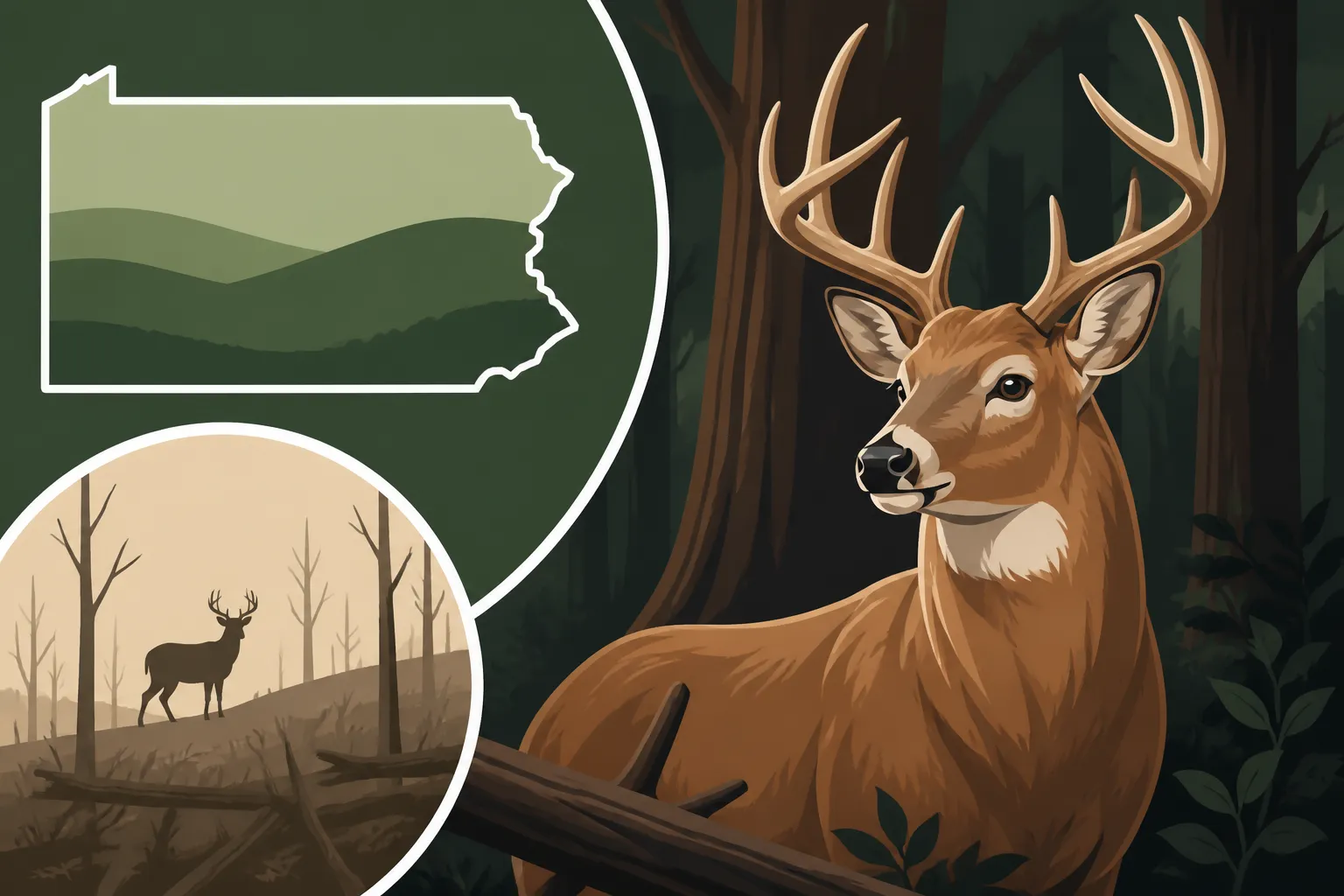
As mentioned, mature forests, while beautiful, are not typically ideal deer habitat. The "climax forest" stage, where large, old trees form a dense canopy, means that very little sunlight penetrates to the forest floor. Without sunlight, the understory – the shrubs, saplings, and herbaceous plants that provide critical browse – simply doesn't flourish. This creates a "biological desert" for deer at ground level. While these forests might produce cyclical mast crops like acorns and beech nuts, these are seasonal and unreliable. A good acorn year is a feast, but a poor one can mean real hardship for deer heading into winter. This lack of continuous, high-quality browse means deer often have to travel significant distances to find enough food, expending more energy and making it harder for them to maintain peak health and productivity. When considering Hunting Clearcuts and Regrowth, you're effectively targeting areas that temporarily reverse this trend, offering a burst of new growth for deer.
The Feast and Famine of Natural Food Sources
In the Big Woods, deer largely rely on natural food sources, which come with inherent unpredictability. Hard mast, primarily acorns from various oak species and beech nuts, can be incredibly important, especially in the fall before winter sets in. However, mast crops are notoriously cyclical; some years are bountiful, while others are busts. When the acorns drop, deer will flock to oak ridges and benches, sometimes traveling from miles around. But what happens Hunting After the Acorn Crop Fails? Deer suddenly have to shift their diets to less nutritious browse, or seek out conifer stands for shelter and whatever meager browse they can find. The availability of Late-Season Food Sources for Whitetails becomes even more critical during these lean times. This feast-or-famine cycle prevents populations from reaching the high, stable numbers seen in areas with consistent agricultural supplementation.
Predation Pressure on Deer Populations
While often debated, predation plays a more significant role in regulating deer populations in areas with lower deer density and larger predator populations, such as Pennsylvania's Big Woods. Coyotes, in particular, are widespread across Pennsylvania and are opportunistic predators. While adult, healthy deer are generally safe, fawns are highly vulnerable. When deer density is high and food is abundant, a certain level of fawn predation might not significantly impact the overall population. However, in areas where deer numbers are already low due to habitat limitations, high fawn mortality from predators like coyotes can further depress the population and hinder its ability to rebound. Black bears also contribute to fawn predation, especially in the spring. Understanding Pennsylvania Coyote Range and Numbers helps paint a fuller picture of the pressures deer face. This isn't to say predators cause low deer density, but they can certainly maintain it at lower levels when other factors are already restrictive.
Adapting Your Approach to Hunt Big Woods Deer Successfully
Given the inherent challenges of low deer density in Pennsylvania's Big Woods, relying on tactics that work in farm country is a recipe for frustration. You simply won't encounter deer at the same frequency. Success in these wilder landscapes demands a more thoughtful, patient, and often more physically demanding approach. It's about covering ground, understanding subtle deer movements, and appreciating the small victories.
Prioritizing Extensive Scouting and Mapping
If you want to find deer in the Big Woods, you have to find their deer – the few that live in a particular drain, on a specific bench, or utilize a certain clearcut. This means scouting is paramount, and it needs to be an ongoing process. Don't just show up on opening day. Spend time in the off-season, during shed hunting season, and in the weeks leading up to your hunt. Look for subtle signs: old rubs, trails leading to water sources, and especially scat, which tells you recent activity.
Utilize modern mapping tools to your advantage. Platforms like GoHunt or the Pennsylvania Mapping Center allow you to pore over aerial imagery, identify potential bottlenecks, benches, saddles, and clearcuts before you even set foot in the woods. Pay close attention to changes in timber type, elevation contours, and proximity to water. These tools can help you develop hypotheses about where deer might be bedding or feeding. For instance, you might identify a specific "bench above a creek bottom" that looks promising, and then you can go in on foot to confirm sign. Finding Where Big Woods Bucks Bed requires this level of meticulous examination.
Mastering Movement and Still-Hunting Tactics
Sitting in a static treestand for hours in low-density woods can be a disheartening experience. While there's a time and place for stand hunting, particularly if you've done extensive scouting and identified a very specific travel corridor or food source, still-hunting often proves more effective in the Big Woods. Still-hunting involves moving slowly, deliberately, and quietly through the woods, taking a few steps, pausing for several minutes to scan, listen, and observe, then repeating. It's less about ambushing deer and more about encountering them as they go about their day.
This tactic requires immense patience and an acute awareness of wind and thermals, especially Wind and Thermals on a Ridge. You're trying to move with the wind in your favor, using the terrain to your advantage, easing along contour lines, or slipping through thickets. When you're Still-Hunting Pennsylvania Big Woods, you're constantly evaluating the landscape for subtle deer sign, listening for rustling leaves, and looking for horizontal lines in a vertical world. It's tiring, mentally taxing, but it increases your odds of covering enough ground to bump into a deer, hopefully before it bumps into you.
Realistic Expectations and the Reward of the Hunt
Finally, managing your expectations is crucial for enjoyment and long-term success in the Big Woods. You're likely not going to see dozens of deer in a day, and you might not even see one every time you go out. The true reward of hunting these areas often transcends the harvest itself. It's about the challenge, the solitude, the immersion in wild Pennsylvania, and the satisfaction of outsmarting an animal in its own, often unforgiving, environment.
The deer you do encounter in the Big Woods are often mature, wilder, and more attuned to their surroundings. Taking one of these truly wild deer is a significant accomplishment. Embrace the journey, the physical exertion of Dragging a Deer Off a Pennsylvania Mountain, and the deep satisfaction that comes from navigating and succeeding in these challenging, yet incredibly beautiful, wild lands. The Big Woods may test your patience, but they offer a unique and profound hunting experience unlike anywhere else in the state.
Disclaimer
This article is for general informational purposes only and does not constitute professional advice. Laws, prices and regulations vary by location and change over time. Consult a qualified professional for guidance on your specific situation.