Potter County Public Land for Deer
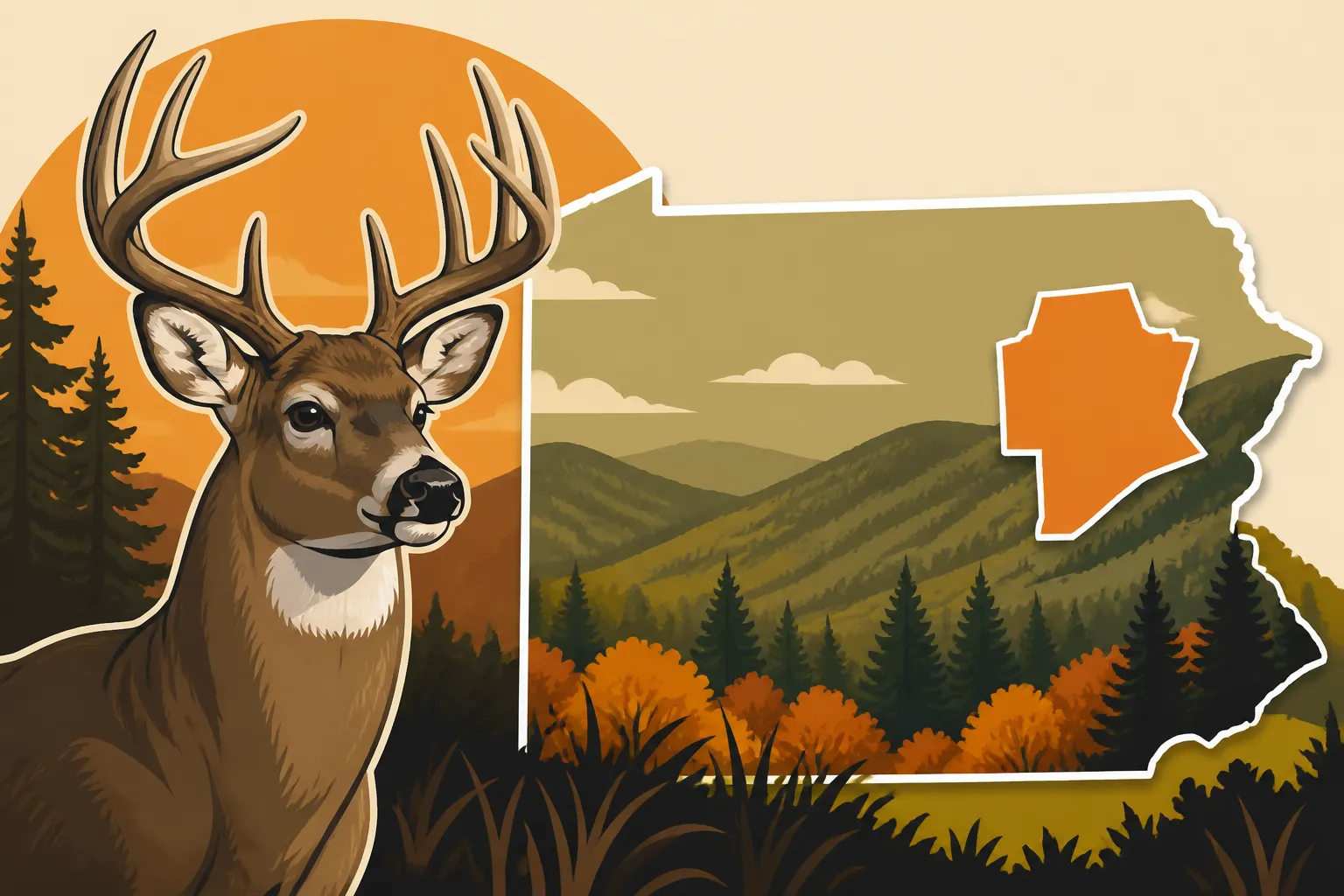
Potter County holds a legendary status among Pennsylvania hunters, but the sheer vastness of its public lands can feel utterly overwhelming when you're trying to find a deer, let alone a mature buck. It's easy to get lost in the endless hardwoods and spend days covering ground without seeing much beyond squirrel sign. This guide is dedicated to helping you unravel the mysteries of Potter County's public land, showing you how to pinpoint those overlooked deer havens and craft effective hunting strategies for a successful season in the "God's Country" of Pennsylvania.
Understanding Potter County's Public Deer Habitat
Potter County is a jewel in Pennsylvania's Northern Tier, renowned for its expansive, rugged terrain and deep, unbroken timber. While it boasts an incredible amount of public land, this isn't farm country hunting where deer might congregate in predictable agricultural fields. Here, deer are creatures of the forest, adapting to the nuances of mountain laurel thickets, mature oak stands, and regeneration cuts. Understanding these habitats is the first step to unlocking success.
The Lay of the Land: Big Woods and Northern Tier Challenges
When you envision Potter County, think "big woods." We're talking about massive tracts of contiguous timber, often with steep elevation changes and dense undergrowth. This landscape presents both a blessing and a curse. The blessing is the sheer amount of undisturbed habitat, offering deer ample cover and security. The curse is that these same features make deer incredibly difficult to find, especially if you're not used to hunting such vastness. Unlike agricultural areas where deer patterns might revolve around food sources like corn or soybeans, in the big woods, deer movement is often dictated by subtle changes in terrain, wind, and pressure. Expect to walk, and walk a lot, often miles from any road, just to get into country where deer feel safe enough to move during daylight hours. This is truly Hunting Pennsylvania's Big Woods for Deer.
The Northern Tier environment also means facing more challenging weather conditions earlier in the season. Cold snaps can arrive quickly, and snow can linger, impacting deer movement and your hunting comfort. You'll often find yourself hunting dense stands of hemlock and pine along creek bottoms, or climbing steep ridges dominated by oak and maple. These distinct microclimates play a huge role in where deer choose to bed, feed, and travel, making local knowledge of the habitat invaluable. Don't underestimate the physical demands of this type of hunting; it's a marathon, not a sprint, and preparation is key.
Food Sources: Acorns, Beech Nuts, and Logging Activity
In the big woods of Potter County, natural food sources are paramount. Acorns, particularly from red and white oaks, are a primary draw when they're available. Deer will travel significant distances to gorge on a good acorn crop. However, acorn availability can be highly variable year to year and even ridge to ridge. One hillside might be raining acorns while a seemingly identical one a mile away has none. This is why scouting for specific food sources is so crucial. Look for fresh droppings, disturbed leaf litter, and even tracks around oak trees.
Beyond acorns, keep an eye out for beech trees. Beech nuts, while less common in some areas, are another highly desirable food source that deer will key in on. Hemlock and other evergreens can also provide crucial browse during lean times, especially in winter. Furthermore, don't overlook logging activity. Recent clearcuts or timber thinnings create a burst of new, tender growth that can be a magnet for deer. These areas offer both food and thick cover, making them excellent places to focus your efforts. These regeneration zones are often overlooked by hunters who stick to mature timber but they can be hotspots.
Water and Sanctuary: Creek Bottoms and Thick Laurel
Water sources are plentiful in Potter County, with countless small creeks, runs, and seeps winding through the valleys and hollows. While deer typically don't seek out specific water holes in the same way they might in arid regions, these creek bottoms and drainages serve as natural travel corridors and often contain thick, protective cover. The cooler, moister air in these low-lying areas can also be appealing to deer, especially during warmer early-season hunts.
Perhaps even more important than water itself are the sanctuary areas that these features often create. Dense mountain laurel thickets, often found on steep hillsides or along rocky benches, provide impenetrable cover where deer can escape hunting pressure. These areas are incredibly difficult for humans to navigate quietly, making them ideal bedding grounds. Learning to identify these "green briar" or laurel jungles, and then scouting their edges for entry and exit points, can reveal overlooked opportunities. Deer will often bed deep within these sanctuaries during the day and only emerge to feed under the cover of darkness, or during peak rut activity when they're less cautious.
Navigating and Scouting Potter County Public Lands
Successfully hunting Potter County's vast public lands isn't about blind luck; it's about intelligent preparation and diligent scouting. With so much ground to cover, you need a systematic approach to narrow down promising areas and avoid wasting precious hunting time in unproductive terrain.
Mapping Tools: Leveraging Technology for Success
Modern mapping applications are absolute game-changers for hunting vast public lands like those in Potter County. Gone are the days of relying solely on paper topo maps, though they still have their place as a backup. Tools like onX Hunt or GoHunt allow you to overlay private and public land boundaries, view topographic lines, and even see timber cut data. This is invaluable for identifying remote public parcels that might receive less pressure simply because they're harder to access or further from roads.
Before you even set foot in the woods, use these apps to study the terrain. Look for subtle benches, saddles, and draws that might funnel deer movement. Identify potential bedding areas in thick cover and possible feeding areas. Mark potential access points, parking spots, and steep climbs. You can pre-plan routes to avoid unnecessary energy expenditure and get directly to promising areas. Remember that cell service can be spotty in the deep woods, so download offline maps for the areas you plan to hunt. A fully charged phone and a backup battery pack are non-negotiable. Scouting With the Pennsylvania Mapping Center is a must before any trip.
Pre-Season Foot Scouting: Reading the Sign
Even with the best mapping technology, there's no substitute for boots on the ground. Pre-season foot scouting is critical for confirming what your maps tell you and finding fresh sign that indicates current deer activity. Head out in the late summer or early fall, long before opening day. Look for active rubs and scrapes, especially along ridge lines, benches, and the edges of thick cover. These are clear indicators that bucks are in the area.
Pay close attention to deer trails – not just the main highways, but the subtle trails that might lead to a secluded feeding area or a hidden bedding thicket. Look for droppings to determine the freshness of the activity and what deer are currently eating. If you find a heavy concentration of deer sign around a specific oak flat, that's where you want to be when the season opens. Also, observe game movements during your scouting trips. Where are deer crossing? What paths do they take up and down the mountain? Understanding these patterns will inform your stand placement and still-hunting routes. This helps in Finding Sign in Mature Timber.
Identifying Low-Pressure Areas
The biggest challenge on public land in Potter County often isn't finding deer, but finding deer that aren't already educated by other hunters. Everyone knows about the big woods, and popular access points can see heavy pressure, especially on opening day. Your goal is to find those nooks and crannies that other hunters overlook or are unwilling to access.
This often means walking further, climbing steeper, or pushing into thicker cover. Look for drainages or benches that are far from roads or established trails. Use your mapping app to find those areas that would require a significant hike to reach, or that are surrounded by dense laurel that deters casual hunters. Sometimes, a subtle, overlooked saddle between two steep knobs, or a small, secluded bench below a major ridge, can hold deer that have learned to avoid the more obvious travel routes. Even a small, isolated patch of public land surrounded by private property that other hunters might disregard can be a gold mine. Consider Finding Ground Others Walk Past by studying topo maps for difficult access points.
Deer Hunting Strategies for Potter County
Once you've done your homework and found some promising areas, it's time to put a strategy into action. Hunting Potter County public land requires patience, adaptability, and a willingness to work harder than the next guy.
Still-Hunting and Stand Placement in the Big Woods
Given the vastness and often thick nature of Potter County's terrain, still-hunting can be an incredibly effective tactic. This involves moving slowly and deliberately through the woods, taking a few steps, pausing to observe, and listening intently. Think of yourself as a predator, blending into the environment. Focus on moving into the wind or crosswind, especially during the rut. Pay attention to cover changes, subtle terrain features, and areas where deer are likely to bed or feed. Still-Hunting Pennsylvania Big Woods requires immense patience and sharp observational skills.
For stand placement, focus on pinch points, saddles, benches, and the edges of thick cover. Deer often use benches and saddles to avoid steep climbs or to travel between drainages. A stand placed on a bench above a creek bottom where deer funnel between bedding and feeding areas can be deadly. Always consider wind direction when choosing your stand location. In the mountains, thermals will play a significant role, often rising in the morning and falling in the evening. A poorly chosen stand can result in your scent blowing directly into a deer's bedding area. Always ensure you have a clear shooting lane and a safe climbing route. Think about Hanging a Stand on an Oak Bench where deer travel.
Utilizing Terrain Features for Deer Movement
In big woods environments, deer are masters at using terrain to their advantage, and so should you. Ridge lines often serve as major travel corridors, especially during the rut when bucks are cruising for does. Look for intersecting ridges or points where deer might cross from one drainage to another. Saddles, depressions, or low spots in a ridge are natural funnels where deer will often pass through.
Creek bottoms and hollows, while often dense and wet, can also act as natural highways, especially for deer moving between feeding areas and bedding cover. The key is to understand how deer navigate these features. Are they skirting the edges of the laurel thickets? Are they dropping down into a specific drainage to cross to the next ridge? Use your knowledge of topography to predict where a deer might appear, not just where you hope it will. Reading a Pennsylvania Hollow for Deer can reveal hidden travel routes.
| Terrain Feature | Deer Behavior | Hunting Strategy |
|---|---|---|
| Ridge Lines | Major travel corridors, especially during rut. | Set up on saddles or points. Still-hunt along edges. |
| Benches | Preferred travel routes and bedding areas below main ridge. | Place stands overlooking trails on benches. |
| Saddles/Crossings | Natural funnels between drainages or ridges. | Ideal stand locations for intercepting deer. |
| Creek Bottoms/Hollows | Travel corridors, thick cover, and sanctuary. | Scout edges for trails. Still-hunt quietly against wind. |
| Thick Laurel/Regrowth | Primary bedding and sanctuary areas. | Hunt the edges and trails leading into/out of. |
Adapting to Hunting Pressure
Potter County's public lands, while vast, still see hunting pressure. Deer learn quickly, and their patterns will change dramatically once hunters hit the woods. Early season, deer might move more freely, but once the firearms season opens, they become much more nocturnal and wary. You need to adapt your strategies to this pressure.
One effective tactic is to hunt midday. Many hunters head back to camp by late morning, leaving the woods quieter in the middle of the day. Deer, pushed out of bedding areas by early morning hunters, might start to move again in the relative calm of lunchtime. Another strategy is to focus on areas that are hardest to reach, or that are deep inside traditional deer drives. Deer often learn to circle around drives or hold tight in the thickest cover, only moving once the pressure has passed. By targeting these out-of-the-way sanctuaries, you might catch a pressured buck trying to escape. Understanding Hunting Pressure on Pennsylvania Game Lands is crucial for success.
Essential Gear and Safety Considerations
Hunting the big woods of Potter County is not a casual affair. The rugged terrain, variable weather, and remote locations demand careful consideration of your gear and a strong emphasis on safety. Being prepared can mean the difference between a memorable hunt and a dangerous situation.
Packing for Mountain Terrain and Variable Weather
Your pack is your lifeline in Potter County. You'll be covering significant distances, often over steep, uneven ground, so a comfortable, well-fitting pack is essential. Fill it with essentials: plenty of water, high-energy snacks, a first-aid kit, a headlamp, a reliable knife, and a compass or GPS (even with phone apps, a dedicated GPS unit can be a lifesaver). Layer your clothing, as temperatures can swing dramatically from morning to midday, and especially if you're hiking hard and then sitting still. Wool or synthetic base layers are key for wicking moisture away, even in cold weather.
Good quality, waterproof, and supportive boots are non-negotiable. Ankle support is paramount on steep, rocky hillsides, and waterproof protection will keep your feet dry when crossing creeks or slogging through damp leaf litter. Boots for Pennsylvania Mountains need to be rugged. Even if it's a sunny day, always pack rain gear. The weather in the mountains can change quickly, and getting soaked miles from your vehicle is a miserable and potentially dangerous experience.
Recovery and Extraction Challenges
You've done the hard work, made a great shot, and now you have a deer down in a deep hollow, miles from the nearest road. This is where the real work begins in Potter County. Recovering a deer in steep, thick terrain can be incredibly challenging and physically demanding. Have a plan for extraction before you even go out. This might involve a deer cart (though they're often impractical on truly steep ground), a deer sled for snow, or simply a good quality drag rope and strong back. Dragging a Deer Off a Pennsylvania Mountain can take hours and multiple people.
Consider the gutless method for field dressing, which can reduce the weight you need to haul out and makes handling the carcass easier in remote locations. If you're hunting alone, be realistic about your capabilities. Sometimes, making multiple trips or taking your time is the safest option. Always carry a sharp field dressing knife and a bone saw. Game bags are a smart choice, especially if you're quartering out a deer or if temperatures are unseasonably warm. Meat Care Gear for Pennsylvania Hunters is vital.
Communicating and Staying Safe
Hunting alone in the remote areas of Potter County carries inherent risks. Always tell someone exactly where you are going, your planned route, and when you expect to return. This is non-negotiable. Carry a fully charged cell phone, but don't rely on it for communication; service is often nonexistent deep in the woods. A satellite messenger device, such as those offered by Garmin inReach or Zoleo, can be a worthy investment, allowing you to send messages and an SOS signal even without cell service.
Dress in the required amount of hunter orange during the appropriate seasons to ensure you are highly visible to other hunters. Pennsylvania Hunter Orange Rules are there for a reason. Be aware of your surroundings and any potential hazards, like steep drops, slippery rocks, or venomous snakes. Familiarize yourself with the area you are hunting, paying attention to landmarks that can help you navigate. Carry a loud whistle in case you need to signal for help. By taking these precautions, you can enjoy the incredible hunting opportunities Potter County offers while ensuring you stay safe and sound.
Disclaimer
This article is for general informational purposes only and does not constitute professional advice. Laws, prices and regulations vary by location and change over time. Consult a qualified professional for guidance on your specific situation.