Clearfield County Public Hunting Ground
Clearfield County offers some incredible public hunting opportunities, but for many hunters, the sheer vastness and ruggedness of its landscape can feel overwhelming when trying to pinpoint where to even begin. Navigating the diverse terrain and understanding the different types of public land, from sprawling state forests to more segmented game lands, requires a solid plan and a bit of local insight. This guide aims to break down the complexities of hunting Clearfield County's public grounds, providing actionable strategies to help you unlock its potential and find success in its challenging yet rewarding woods.
Understanding Clearfield County's Public Hunting Landscape
Clearfield County sits squarely in the heart of Pennsylvania's big woods region, a truly iconic area that evokes images of vast timber, steep ridges, and deep hollows. It’s a place where you can still feel truly wild, far from the sounds of traffic, but that wildness comes with its own set of challenges. This isn't your flat farm country hunting; it's a demanding landscape that tests your physical endurance and your woodsmanship. The public land here is generally characterized by mature hardwoods, mixed conifer stands in some areas, and pockets of regenerating clearcuts that provide critical browse. Understanding this foundational environment is key to planning any hunt.
The Mix of Big Woods and Timbered Valleys
Clearfield County is dominated by the Allegheny Plateau, meaning you're dealing with a lot of rolling hills, steep drainages, and expansive timber. Unlike the more agricultural counties to the south and east, large tracts of open farmland are less common. Instead, you'll find an almost unbroken canopy of oak, maple, and cherry, with rhododendron and mountain laurel choking out the understory in many places. This dense cover can make for tough walking and limited visibility, but it also provides excellent sanctuary for deer, bear, and turkeys. The valleys often hold creeks and more fertile ground, while the ridges offer acorn-producing oaks and natural travel corridors. When you're scouting, pay close attention to the transitions between these terrain features – often, that's where the game will be.
The sheer scale of the timber can be disorienting, even for experienced hunters. You might walk for miles without seeing another person, which is a blessing for those seeking solitude but also a reminder to be prepared for self-sufficiency. Don't underestimate the physical demands; a half-mile hike on a contour map can quickly become a much longer, more strenuous climb or descent in real life. Understanding the topography and how game uses it is paramount. Deer, for example, often travel benches and saddles to conserve energy, avoiding the steepest climbs unless pressured. Knowing this can help you predict their movements.
Primary Game Species and Their Habitat Preferences
Clearfield County is a big game hunter's dream, primarily known for its whitetail deer, black bears, and wild turkeys. Each of these species thrives in different aspects of the big woods environment, and understanding their preferences will guide your hunting strategy.
Whitetail deer here often exhibit different behaviors than their farm country cousins. They tend to be more spread out due to lower population densities in big woods settings and rely heavily on acorns and regenerating browse in clearcuts. While the average antler size might not always compete with farm-fed giants, these bucks are often older, tougher, and incredibly savvy at evading hunters in their vast domain. You'll find them using thick laurel patches for bedding and traveling along ridges and hollows, often using logging roads and old skid trails as their highways. For more insights on this kind of hunting, check out Hunting Pennsylvania's Big Woods for Deer.
Black bears are also plentiful in Clearfield County, utilizing the dense forests for cover and the abundant mast crops for food. Bear sign—like claw marks on beech trees, scat full of berries or acorns, and disturbed ground where they've rooted for grubs—is common, especially in thicker, less disturbed areas. Finding these feeding and bedding areas is crucial for success during bear season. Remember that bears are incredibly adaptable and can be found almost anywhere in the county's timbered regions. If you're specifically targeting bears, understanding their movements around denning areas or prime food sources can be a game-changer. For a deeper dive into bear hunting, refer to Pennsylvania Black Bear Hunting.
Wild turkeys also call Clearfield County home, with both spring and fall seasons offering opportunities. They prefer a mix of mature timber for roosting and open clearings or fields for feeding and strutting. You'll often find them foraging on acorns in the fall or gobbling from the ridge tops in the spring. Scouting for roost trees near water sources or food plots can be highly effective. Fall turkey hunting, in particular, often involves breaking up flocks and calling birds back in, a tactic well-suited to the expansive woods of Clearfield. Learn more by reading Fall Turkey Hunting in Pennsylvania.
Navigating Clearfield County's Public Land Holdings
Clearfield County boasts a substantial amount of public hunting land, offering diverse opportunities for resident and non-resident hunters alike. The two primary categories you'll encounter are State Game Lands (SGLs) and State Forests. Both provide excellent access but come with slightly different regulations and characteristics. Knowing how to locate, research, and effectively use these lands is fundamental.
State Game Lands: Your Go-To Option
Clearfield County is home to several large tracts of State Game Lands, managed by the Pennsylvania Game Commission (PGC). These lands are purchased and maintained with hunter license dollars, meaning they are primarily managed for wildlife habitat and public hunting. SGLs often have a mix of timber stands, food plots, and habitat improvement projects designed to benefit various game species. They are generally well-marked with yellow boundary signs, and access points are often designated with parking areas.
For example, State Game Land 87 in northern Clearfield County is a vast tract known for its rugged terrain and productive timber. It's a prime location for deer, bear, and turkey, but you'll earn every step you take here. Similarly, SGL 90 and SGL 77 also offer significant acreage. These areas are excellent for still-hunting or setting up ambushes along natural travel corridors. While they can see pressure, especially on opening days, their sheer size means you can usually find solitude if you're willing to hike a bit further. Just be sure to familiarize yourself with Pennsylvania State Game Lands Rules before you head out, as specific regulations apply.
The PGC often implements timber management practices on SGLs, creating clearcuts that, after a few years, become dense thickets of regenerating growth. These clearcuts are deer magnets, providing both food and incredible cover. Learning to identify these areas, whether by scouting on the ground or by using digital mapping tools, can put you directly into prime hunting territory.
State Forests: Expansive and Rugged Opportunities
Beyond State Game Lands, Clearfield County also includes significant portions of Pennsylvania State Forests, primarily the Moshannon State Forest. These vast tracts are managed by the Department of Conservation and Natural Resources (DCNR) and are managed for multiple uses, including timber production, recreation, and, of course, public hunting. State Forests often present an even wilder, more remote feel than SGLs due to their sheer scale and sometimes less developed access.
Hunting in State Forests can be a truly immersive experience. You'll find extensive networks of dirt roads, some of which are gated but often allow foot traffic, providing excellent access into deeper country. These roads can be fantastic for still-hunting or for reaching remote stand locations. The Moshannon State Forest offers contiguous blocks of timber that stretch for miles, perfect for those who want to get deep into the woods away from other hunters. Keep in mind that State Forest rules can differ slightly from SGLs, especially regarding camping and vehicle access, so always check Pennsylvania State Forest Hunting Rules.
When planning a hunt in a State Forest, consider the larger ecosystems at play. Rivers like the West Branch Susquehanna and its tributaries cut through portions of the county, creating riparian zones that can be hotbeds of activity. Understanding these features and how game uses them is critical. The larger, older timber often found in State Forests provides excellent roosting habitat for turkeys and mast crops for all big game species.
Using Digital Tools for Public Land Identification
In today's hunting world, digital mapping tools are indispensable, especially when tackling vast public land like that in Clearfield County. Gone are the days of relying solely on paper maps, though carrying one as a backup is always wise. Applications like onX Hunt and GoHunt have revolutionized how hunters locate and navigate public land.
These platforms allow you to overlay property boundaries directly onto satellite imagery or topographic maps, clearly showing State Game Lands, State Forests, and private property lines. This is absolutely crucial for avoiding trespass and for confidently navigating areas with mixed ownership. With onX Hunt, for example, you can see not only public land boundaries but also landowner names on adjacent private parcels, which can be invaluable if you ever need to seek permission to retrieve a downed animal that crosses a line.
| Feature / Benefit | State Game Lands (PGC) | State Forests (DCNR) |
|---|---|---|
| Primary Management | Wildlife habitat & public hunting | Timber, recreation, and public hunting |
| Signage | Yellow boundary signs, often PGC road signs | DCNR signs, sometimes less frequent boundary markers |
| Habitat Features | Food plots, clearcuts, varied timber management | Extensive mature timber, logging roads, more remote |
| Accessibility | Designated parking areas, some gated roads | Extensive dirt road networks (some gated), trailheads |
| Regulations | Specific PGC rules (e.g., treestand rules) | DCNR rules (e.g., camping, motor vehicle restrictions) |
| Experience | Can be busier near access points, good infrastructure | Often more remote, wild, and rugged, true wilderness feel |
Beyond just identifying public land, these apps let you drop waypoints for potential stand locations, mark sign you've found, track your movements, and even check weather conditions. Before you even set foot in Clearfield County, you can spend hours digitally scouting, identifying potential bedding areas, travel corridors, and feeding zones. This kind of pre-hunt preparation, especially when combined with tools like the Using the Pennsylvania Mapping Center for a broader view, dramatically increases your chances of success. Understanding the terrain and elevation changes through contour lines on a topo map is also vital, helping you anticipate deer movement and potential thermal shifts. A good read on this is Reading Aerial Photos for Big Woods Deer.
Strategic Approaches to Hunting Clearfield's Public Ground
Hunting in Clearfield County's vast public lands isn't just about showing up; it's about having a strategy tailored to the environment and the game you're pursuing. This involves diligent scouting, adapting your tactics to the challenging terrain, and always prioritizing safety and adherence to regulations.
Scouting and Accessing Remote Areas
Effective scouting is the bedrock of successful hunting in Clearfield County. With such extensive tracts of public land, you need to narrow down your focus to areas that show promise. This often means walking miles, but it can also be significantly aided by those digital mapping tools we just discussed. Before the season, spend time studying topo maps and aerial photos to identify features like saddles, benches, ridge points, clearcuts, and creek bottoms. These are all potential areas where deer, bear, or turkey might concentrate. Remember, Scouting Pennsylvania Public Land Before Season is not just a suggestion, it's a necessity.
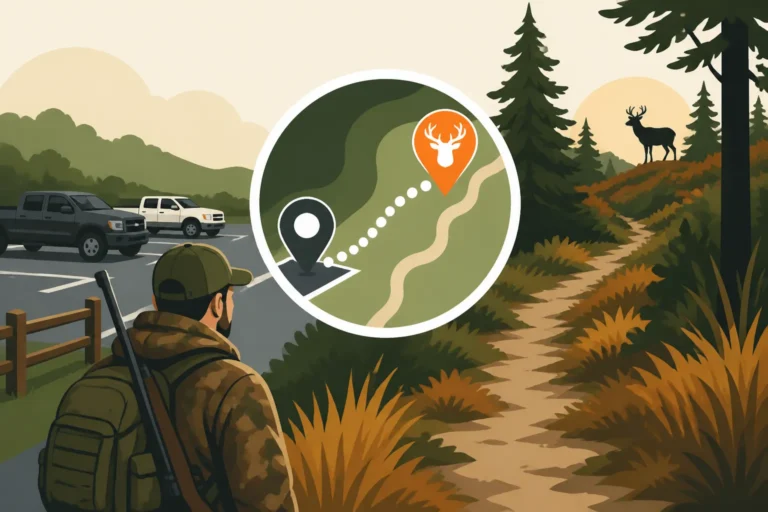
When you're on the ground, look for fresh sign: rubs, scrapes, tracks, droppings, and feeding areas (especially around oak trees during mast years or in clearcuts with young browse). Don't be afraid to push into areas that look dense or hard to access; often, these are the places that hold less pressured animals. Getting a half-mile or even a mile away from the nearest road or parking area can make a huge difference in encountering undisturbed game.
Accessing these remote areas often means hiking logging roads, old gas well access trails, or simply busting brush. Pay attention to how the wind and thermals will affect your chosen spot. In the big woods, thermals can be a big factor, often pulling scent uphill in the morning and downhill in the evening. Understanding how Wind and Thermals on a Ridge behave is critical for stand placement. Also, consider your entry and exit routes to minimize disturbance. You don't want to blow out deer from a bedding area on your way to a morning stand.
Tailoring Tactics to the Terrain and Game
The tactics you employ in Clearfield County should be as varied as the landscape itself. Still-hunting, where you move slowly and deliberately through the woods, stopping frequently to scan ahead, can be incredibly effective, especially after a fresh snow or when you're hunting thick laurel patches. This allows you to cover ground while remaining stealthy. When the leaves are crunchy, still-hunting might be more challenging, but focusing on creek bottoms or areas with softer ground can help.
For stand hunters, finding the right location is crucial. Look for natural funnels, such as saddles between ridges, pinch points where dense cover meets more open timber, or the edges of clearcuts. Setting up a treestand on an oak bench that's dropping acorns can be deadly in the fall. Check out Treestand Setups in Pennsylvania Hardwoods for more ideas. Also, consider the impact of food sources. If the acorn crop fails, deer will shift their feeding patterns, making it important to scout for alternative food sources. Hunting After the Acorn Crop Fails covers this in detail.
For bear hunting, focusing on mast crops (oaks, beech nuts) or dense cover near known travel corridors is key. Bear drives, often involving a group of hunters, can be successful in pushing bears out of thick bedding areas. Turkey hunters will find success by locating birds on the roost in the mornings and using calling techniques to bring them into range, or by breaking up flocks in the fall.
Important Regulations and Safety Considerations
Hunting Clearfield County requires adherence to Pennsylvania's hunting regulations, which can sometimes be complex. Always review the current digest for season dates, bag limits, and specific rules for your chosen weapon and game species. Pay close attention to hunter orange requirements; these vary by season and weapon type.
Safety should always be your top priority. Hunting in vast, remote areas means being prepared for anything.
- Tell someone where you're going and when you expect to return. This is non-negotiable.
- Carry essential gear: A first-aid kit, a reliable compass and GPS (or your phone with onX Hunt downloaded offline), a headlamp, extra layers of clothing, food, and water are all vital.
- Be aware of changing weather conditions. Mountain weather can be unpredictable, with temperatures dropping quickly, especially in late fall and winter. Cold Weather Sitting Strategy is a good one to review.
- Know your limits. Don't push yourself too far into remote areas if you're not physically capable of the hike back, especially if you're planning on dragging out a deer. Dragging a Deer Off a Pennsylvania Mountain is no small feat.
- Be mindful of other hunters. While Clearfield's public lands are vast, popular areas can still see significant pressure, especially on opening day. Always identify your target clearly and be absolutely certain of your background before taking a shot.
Always tag and report your harvest according to PGC guidelines. It's not just a legal requirement; it also contributes to wildlife management efforts that keep Pennsylvania's hunting robust for future generations.
Disclaimer
This article is for general informational purposes only and does not constitute professional advice. Laws, prices and regulations vary by location and change over time. Consult a qualified professional for guidance on your specific situation.