Wyoming State Forest and Nearby Game Lands
It's incredibly frustrating when you're staring at a map, trying to decide where to hunt in Pennsylvania, and the public land patchwork feels like a confusing puzzle. You see big blocks of green for state forests, then smaller, often disconnected pieces of State Game Lands, and it's hard to visualize how they all connect for a solid hunting strategy. This guide aims to clear up that confusion by diving deep into Wyoming State Forest and the surrounding State Game Lands, helping you unlock their full potential for your next hunting adventure.
The Heart of the Hunt: Wyoming State Forest's Unique Appeal
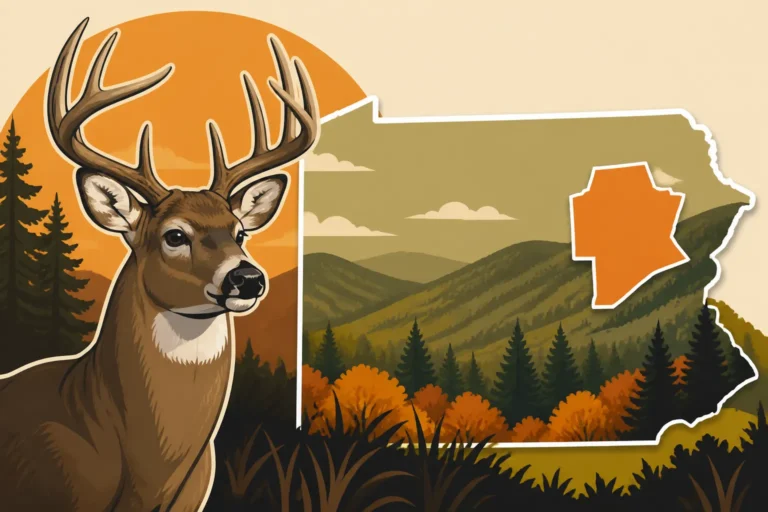
Wyoming State Forest, spanning parts of Luzerne and Wyoming counties, offers a distinct hunting experience compared to the typical State Game Lands. It’s a vast, rugged expanse, often characterized by mature timber, deep hollows, and remote pockets that can be a haven for wildlife and offer a more solitary hunting experience. Unlike some Game Lands that might see intense pressure, the sheer size and topography of a state forest like Wyoming can allow animals to feel a bit more secure, especially away from main roads.
Terrain and Timber: What to Expect Underfoot
When you step into Wyoming State Forest, you're often entering a world of rolling hills, steep ridges, and significant elevation changes. This isn't flat farm country, and your boots will quickly tell you that. The timber is predominantly mixed hardwoods, with oaks, maples, and birches dominating the landscape. You'll find areas of dense undergrowth in places, particularly in regenerating timber cuts or along stream bottoms, which provides excellent bedding and cover for deer and bear. In other sections, especially on higher benches and ridgetops, the woods can open up, allowing for longer sightlines and different still-hunting approaches. Understanding this varied terrain is critical; a ridge that seems impassable on a map might have a subtle bench or saddle that deer regularly use, making it a prime location for a stand or a quiet still-hunt. Still-Hunting Pennsylvania Big Woods can be a highly effective tactic here.
Access and Interior Roads: Getting Deeper Into the Forest
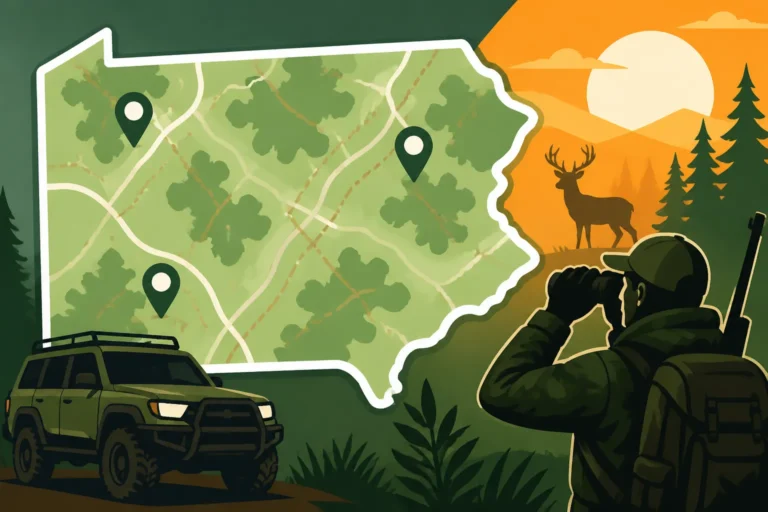
One of the defining features of state forests is their extensive network of unpaved forest roads. While many of these are gated and closed to vehicle traffic for much of the year, they are goldmines for foot access. These old logging roads and fire trails allow hunters to penetrate deeper into the forest, away from the immediate road frontage that often sees the heaviest pressure. Always check the current Public Use Map provided by the Department of Conservation and Natural Resources (DCNR) for any active road closures or special regulations. What might be open in summer could be gated by hunting season. Using a mapping application like onX Hunt can be incredibly helpful here, as it often overlays these forest roads and clearly distinguishes state forest land from other public or private parcels. This allows you to plan long walks in, knowing you're on public ground the entire time.
Rules and Regulations Specific to State Forests
While many hunting regulations are consistent across all public lands, state forests do have some specific rules you should be aware of. For instance, camping is often permitted in state forests, unlike many State Game Lands where it's generally prohibited outside of designated sites. This can be a game-changer for multi-day hunts in remote areas. However, primitive camping usually requires a permit for stays longer than one night, and campfires may be restricted during dry periods. Treestand rules can also differ slightly; while permanent stands are typically forbidden, temporary portable stands are usually allowed but must be removed within a specific timeframe after the season closes. It’s always best to consult the DCNR website or contact the local forest district office directly to confirm current rules before your hunt.
Unpacking the Nearby State Game Lands Network
Surrounding Wyoming State Forest are various State Game Lands (SGLs) that, while potentially smaller in acreage individually, contribute significantly to the overall public hunting landscape. These areas are managed specifically for wildlife and public hunting opportunities by the Pennsylvania Game Commission (PGC), often offering different habitat types and access points.
Understanding State Game Land Characteristics
State Game Lands are purchased and maintained with funds from hunting license sales, and their primary purpose is wildlife habitat and public recreation, with hunting being a key component. You'll often find a more diverse range of habitat management practices here than in a state forest, including food plots, controlled burns, and specific timber cuts designed to benefit game species. This means SGLs can often hold a higher density of certain animals, especially deer, in areas where these management practices have created prime food and cover. However, this also means they can attract more hunters, particularly during peak seasons like Pennsylvania's Two-Week Firearms Deer Season.
| Feature | Wyoming State Forest | State Game Lands |
|---|---|---|
| Managing Agency | PA Department of Conservation & Natural Resources (DCNR) | PA Game Commission (PGC) |
| Primary Purpose | Timber, recreation, watershed protection, general public use | Wildlife management, public hunting & trapping |
| Typical Habitat | Mature hardwoods, deep hollows, old growth areas, remote | Diverse, often actively managed for specific game species (food plots, clearcuts) |
| Access Roads | Extensive network of gated forest roads, foot access only | Varying; some gated roads, well-marked parking areas |
| Camping | Generally permitted (permit often required for >1 night) | Generally prohibited (check specific SGL rules) |
| Hunter Density | Can be lower in remote interior, higher near main roads | Often higher, especially near parking areas and food plots |
| Timber Management | Sustainable timber harvesting, natural forest dynamics | Specific cuts for wildlife habitat, diverse age classes |
Identifying Key Nearby State Game Lands
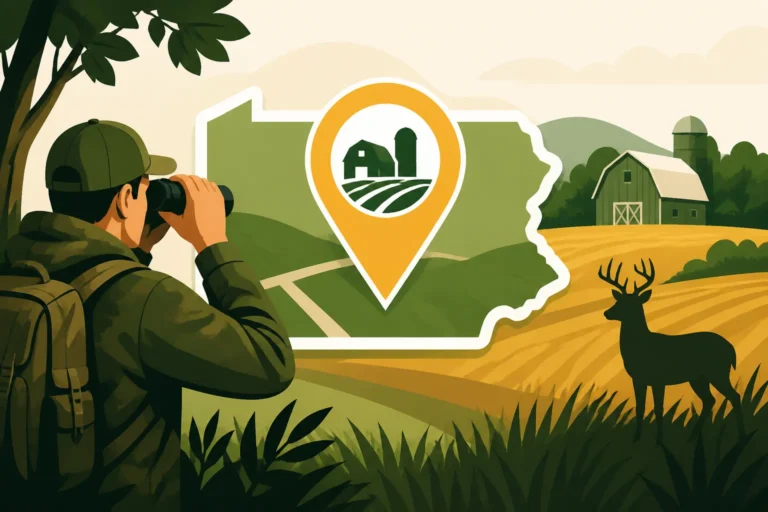
While the exact numbers of nearby SGLs can vary, generally, you'll find several Game Lands scattered around or adjacent to Wyoming State Forest. For example, some SGLs in Luzerne and Wyoming counties might include numbers like SGL 57, SGL 119, or SGL 229, among others. Each of these will have its own unique characteristics. Some might be primarily mountainous timber, mirroring parts of the state forest, while others could incorporate more agricultural land, old fields, or riparian zones. It’s crucial to pinpoint which specific SGLs are within a reasonable driving distance of where you plan to hunt in the state forest. A detailed mapping tool can show you the boundaries, parking areas, and topo lines for these individual parcels, allowing you to identify potential entry points and understand the surrounding landscape.
Navigating Hunter Pressure on State Game Lands
The biggest challenge with many SGLs, especially those easily accessible or near population centers, is hunter pressure. During opening days or peak rut periods, parking lots can fill up fast. This doesn't mean you can't find success; it just means you need a more strategic approach. Hunters often stick to the edges or don't venture far from their vehicles. If you're willing to walk a mile or two, particularly into rugged or overlooked sections, you can often find unpressured pockets of deer and other game. Consider hunting mid-week if your schedule allows, or focus on areas that require more effort to reach. Learning to Read a Pennsylvania Hollow for Deer or understand how animals react to pressure can be vital for success on these busier tracts.
Synergizing Your Hunt: Combining Forest and Game Lands
The real magic happens when you don't view Wyoming State Forest and the surrounding State Game Lands as separate entities but rather as interconnected pieces of a larger hunting puzzle. By understanding the strengths and weaknesses of each, you can develop a dynamic hunting strategy that maximizes your chances of success.
Leveraging the Best of Both Worlds
Imagine a scenario where a large tract of Wyoming State Forest borders a smaller State Game Land with a well-maintained food plot. During the early morning, deer might be feeding in the SGL's food plot. As hunting pressure builds, those deer will often retreat into the security of the deep, thick timber of the adjacent state forest. Conversely, a clearcut in the state forest might draw deer in the afternoon, and they might then move towards a nearby SGL's edge habitat as evening approaches. By scouting both areas, you can anticipate these movements and position yourself accordingly. This requires careful study of maps, understanding transition zones, and being flexible with your hunt plan.
Planning Multi-Day or "Mobile" Hunts
Combining these different public land types is particularly effective for multi-day hunts. You might spend a morning still-hunting the quiet interior of Wyoming State Forest, looking for bedding areas or travel corridors in the mature timber. Then, in the afternoon, you might shift your focus to a nearby SGL, perhaps sitting on an oak ridge or watching a clearcut edge where deer might be feeding. The ability to camp legally in the state forest, if you secure the necessary permits, can be a huge advantage, allowing you to stay close to your hunting grounds and minimize travel time. This "mobile" approach lets you adapt to changing conditions, game movements, and hunter pressure across a broader landscape. Scouting Pennsylvania Public Land Before Season is even more critical when planning to hunt multiple adjacent tracts like this.
Trail Systems and Connecting Corridors
Pay close attention to how the trail systems of the state forest connect to the SGLs. Often, a forest road in Wyoming State Forest will lead directly to or across the boundary of a State Game Land. These connecting corridors are frequently used by wildlife moving between different habitat types or seeking refuge from pressure. While one area might be managed for early successional growth, providing excellent cover, the adjacent area might have older, larger trees dropping acorns, creating a natural food source. Animals will often traverse these boundaries along these connecting trails. Tools like GoHunt or similar mapping platforms can highlight these subtle connections, helping you visualize the larger habitat picture and identify key pinch points or funnels that animals might use when traveling between these distinct land types.
Species to Pursue and Tactical Considerations
Wyoming State Forest and its surrounding State Game Lands are rich in hunting opportunities for a variety of Pennsylvania's game species. While deer and bear are often the primary draw, don't overlook the potential for turkeys, grouse, and even various furbearers in these diverse habitats.
Whitetail Deer: Adapting to Habitat Variation
Deer hunting in this region demands adaptability. In the mature timber of Wyoming State Forest, deer can be more dispersed, making still-hunting or methodical drives (if you have enough hunters) effective. Focus on natural funnels, saddles between ridges, and benches where deer will travel more easily. On the State Game Lands, especially those with habitat work, you might find deer concentrated around food plots, thick clearcuts, or areas of regenerating timber. During archery season, areas with good mast crops in the state forest can be phenomenal, as deer will often key in on acorns. In the rifle season, cold weather and snow can push deer into the thickest cover, often found in either land type. Hunting After the Acorn Crop Fails might require you to shift your focus to evergreen thickets or clearcuts.
Black Bear: Utilizing Remote Sanctuaries
The vast, remote nature of Wyoming State Forest, with its extensive tracts of unbroken timber and dense mountain laurel thickets, makes it prime black bear country. These large animals thrive in areas with minimal human disturbance, and the interior of the state forest provides just that. Bear often travel along old logging roads and through thick cover, especially during the fall when they are gorging on acorns and other mast. Nearby State Game Lands can also hold bears, particularly if they feature dense swamps or large blocks of timber. Successful bear hunting often involves extensive scouting for sign—tracks, scat, and claw marks on trees—and being prepared for long walks into remote areas. Hunting Pennsylvania Black Bear in these environments can be incredibly rewarding.
Wild Turkey: Roosting and Roaming
Both Wyoming State Forest and the adjacent SGLs can offer excellent turkey hunting. Spring gobblers will use the mature timber for roosting, often on high ridges overlooking hollows. The varied terrain provides plenty of opportunities for calling and setting up ambushes. During the fall, flocks will range widely, feeding on acorns or other forest mast, and busting a flock can lead to exciting calling scenarios. In areas where state forests meet farm country or more open SGLs, turkeys might shift between these habitats, using the timber for security and roosting, and the open areas for feeding. Fall Turkey Hunting in Pennsylvania requires different tactics than spring, but both can be productive here.
Other Game: Small Game and Furbearers
Don't forget about small game and furbearers! Ruffed grouse, while declining in some areas, can still be found in the younger forest growth and thickets created by timber management on both state forests and game lands. Squirrels are abundant in the hardwood sections, especially where oaks and hickories drop nuts. For furbearers, the remote corners and deep hollows are excellent for coyote, bobcat, and fox. The blend of dense cover, water sources, and diverse prey animals creates ideal conditions for these elusive predators. Remember to check specific regulations for furbearer hunting and trapping, as permits are often required for species like bobcats and fishers. Predator and Furbearer Hunting in Pennsylvania offers year-round opportunities.
Disclaimer
This article is for general informational purposes only and does not constitute professional advice. Laws, prices and regulations vary by location and change over time. Consult a qualified professional for guidance on your specific situation.