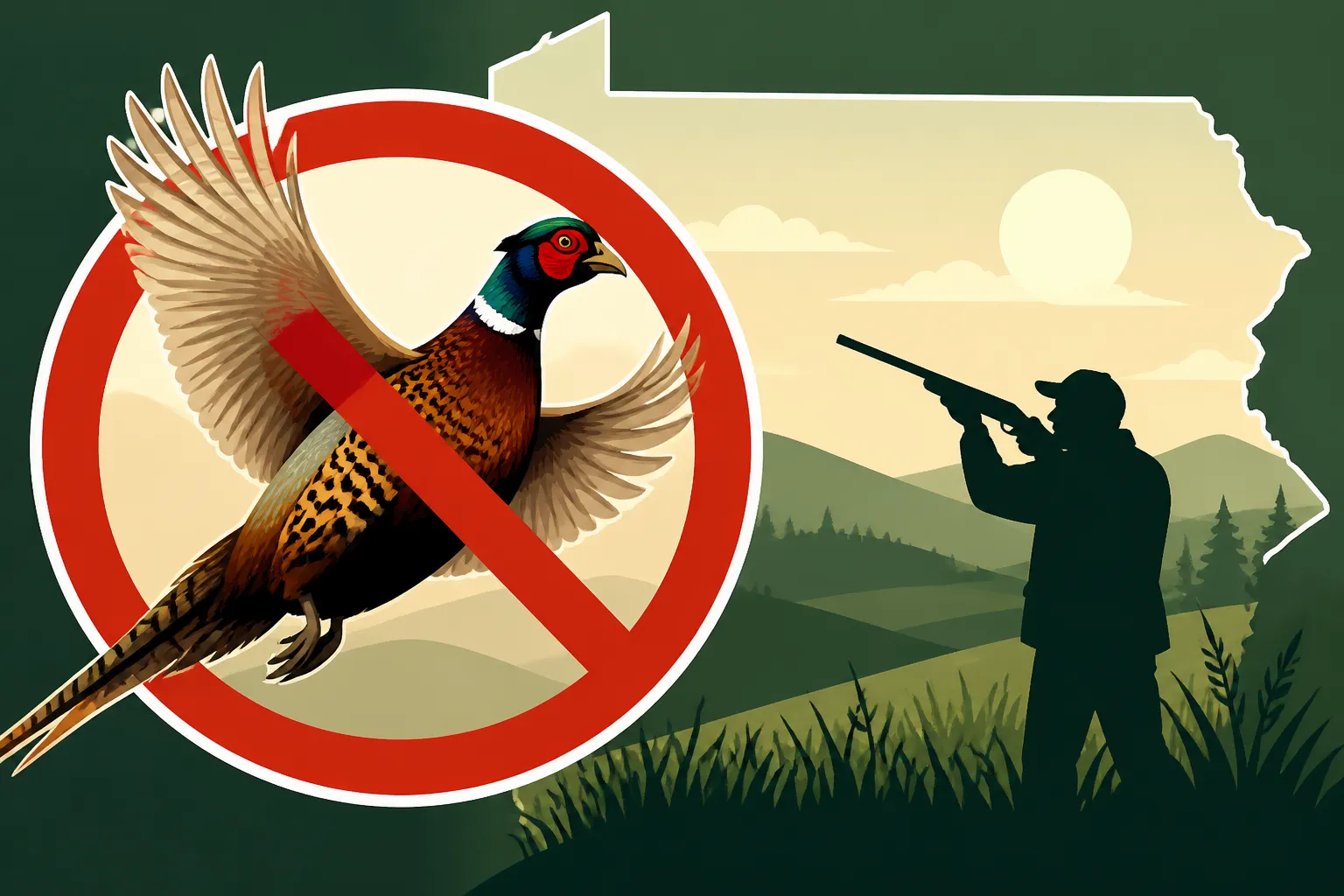
Why Pennsylvania Has No Wild Pheasants
It's a question many of us Pennsylvania hunters have pondered, perhaps with a touch of nostalgia or even frustration: "Where have all the wild pheasants gone?" We hear stories from our fathers and grandfathers about fields flushing with ringnecks, birds that were truly wild, wary, and a challenging quarry. But today, if you want to hunt pheasants in Pennsylvania, you're almost certainly pursuing birds that were raised in a pen and released for the season. This guide will dive deep into the complex reasons behind this shift, exploring the landscape changes, biological hurdles, and management realities that have led to the near disappearance of the wild pheasant in our state.
The Fading Echoes of Wild Pheasant Country
For many, the idea of a wild pheasant is almost mythical. It conjures images of vibrant autumn days in fields bordered by dense hedgerows, a stark contrast to the hunting experience most of us know today. The truth is, the conditions that allowed wild pheasants to thrive in Pennsylvania simply don't exist in most places anymore, and understanding why is the first step in appreciating the current situation.
A Landscape Transformed: Farewell to Small Farms
The narrative of the wild pheasant's decline is inextricably linked to the transformation of Pennsylvania's rural landscape. Back in the day, the state was dotted with small, diverse family farms. These weren't the sprawling monoculture operations we often see today; they were a patchwork of hayfields, cornfields, small grain plots like wheat and oats, pastures, and often, unkempt corners. Crucially, these farms were separated by brushy fence rows, woodlots, and fallow fields left to regenerate. This mosaic of cover and food sources was the absolute perfect recipe for pheasants. They had dense cover for nesting and escape, readily available insects for their chicks, and plenty of waste grain to get them through the winter. Hunters fortunate enough to have walked these lands in their prime speak of truly incredible pheasant populations.
As time marched on, agricultural practices underwent a massive shift. The drive for efficiency and larger yields led to the consolidation of farms and the adoption of modern, intensive farming techniques. Those precious hedgerows, once vital corridors and nesting sites, were often ripped out to create larger, uninterrupted fields for easier planting and harvesting with big machinery. Fallow fields became a rarity, as every available acre was put into production. The diversity of crops dwindled, replaced largely by vast expanses of corn and soybeans. While these crops provide some food, especially after harvest, they lack the diverse cover and consistent insect populations crucial for a pheasant's entire life cycle. It's a landscape designed for production, not for ground-nesting birds.
Adding to this agricultural transformation is the relentless march of urban and suburban sprawl. As communities expand, prime agricultural land is often swallowed up by housing developments, shopping centers, and industrial parks. This development not only eliminates critical habitat outright but also fragments what little remains, creating isolated pockets that are too small or too disconnected to support a viable population of wild birds. A small woodlot might survive, but without the surrounding mosaic of cover, it becomes an island, making it incredibly difficult for pheasants to find all their needs in one safe place, or to disperse and find new mates.
Predators and Pressure: A Losing Battle
Even if some pockets of decent habitat remained, another significant factor contributing to the absence of wild pheasants is the often-overlooked reality of predation. A healthy, self-sustaining wild pheasant population needs to produce more young than are lost to natural mortality, including predation. When habitat is fragmented and sparse, this balance becomes incredibly precarious, tilting heavily against the pheasants.
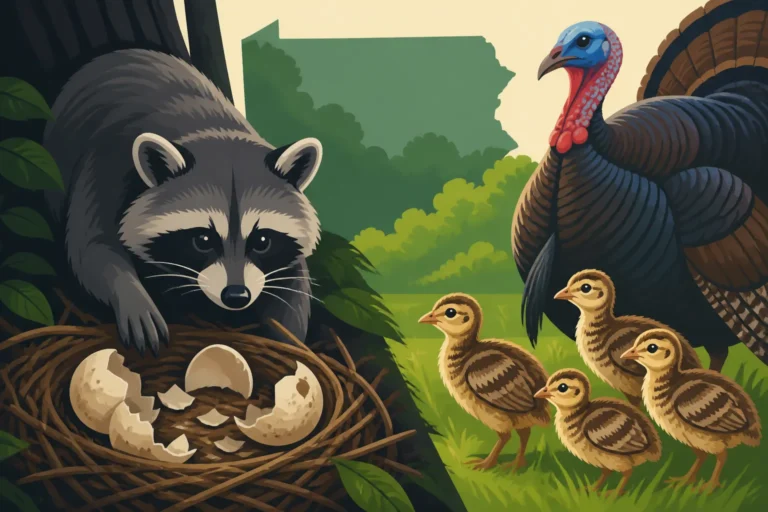
Pennsylvania has seen significant shifts in its predator populations over the years. Coyotes, for instance, have expanded their range and numbers across the state, thriving in landscapes that offer a mix of woods and open country. They are incredibly efficient predators, and ground-nesting birds like pheasants are easy targets, especially during nesting season. Beyond coyotes, we have healthy populations of foxes, raccoons, opossums, and even raptors like great horned owls and various hawks, all of whom consider pheasant eggs, chicks, and even adult birds a ready meal. While these predators are a natural part of the ecosystem, their impact is magnified when the prey species lacks sufficient escape and nesting cover.
The delicate dance of reproduction for a pheasant hen is fraught with danger. She needs a secure, concealed nest site to lay her clutch. If that cover is thin or easily accessible, her eggs are highly vulnerable. Once the chicks hatch, they require dense, insect-rich cover to hide from predators and find the protein they need to grow quickly. Without it, they become easy pickings. Even the most vigilant hen can't protect her brood if they have nowhere to hide. The simple truth is, in a landscape with degraded habitat, the odds of a pheasant nest succeeding, and the chicks surviving to adulthood, are dramatically reduced, making it nearly impossible for a wild population to sustain itself.
Harsh Winters and Biological Hurdles
Beyond habitat and predators, Pennsylvania's climate, coupled with the pheasant's biological needs, presents its own set of challenges. While pheasants did remarkably well here for decades, they are not native to North America. They were introduced from Asia, and while they adapted, they were always somewhat at the mercy of conditions, especially when those conditions pushed the extremes.
Pennsylvania winters, as we all know, can be brutal. Deep snows that persist for weeks, coupled with prolonged periods of ice and bitter cold, are incredibly taxing on wildlife. For pheasants, a lack of accessible natural food sources under deep snow can lead to starvation. Even more critical is the absence of adequate thermal cover. Dense thickets, brushy cover, or tall stands of warm-season grasses provide crucial protection from chilling winds and insulating spaces during blizzards. When these are removed or are too sparse, pheasants expend too much energy trying to stay warm, leaving them vulnerable to exposure and weakening them to the point where they become easy prey or simply succumb to the elements.
The intrinsic biological needs of pheasants also play a role. They require a very specific combination of resources throughout the year: safe nesting cover in spring, abundant insects in diverse vegetation for growing broods in summer, waste grains and seeds for fall and winter food, and dense, secure cover for roosting and thermal protection year-round. Modern Pennsylvania, even in its more rural corners, often falls short of providing this complex patchwork of needs within a small enough area for pheasants to thrive. It’s not just about one missing piece; it’s about a symphony of ecological requirements that our altered landscape struggles to provide consistently.
| Factor | Historical Impact | Modern Reality | Implications for Wild Pheasants |
|---|---|---|---|
| Habitat Loss | Diverse small farms, hedgerows, fallow fields provided excellent cover & food. | Large-scale monoculture, urban sprawl, removed fence rows, lack of diverse cover. | No safe nesting sites, insufficient winter cover, limited food sources. |
| Agricultural Practices | Mixed farming, small grain crops, less intense tillage. | Intensive tillage, cash crops (corn/soy), early mowing of hayfields. | Nests destroyed, broods exposed, minimal insect populations for chick survival. |
| Predation Pressure | Natural predator cycles, perhaps less dense human-altered landscapes. | Increased populations of coyotes, foxes, raccoons, raptors in fragmented areas. | High nest and brood mortality, adult birds vulnerable without dense cover. |
| Severe Winters | Had more natural cover (brush, hedgerows) to provide thermal protection & food. | Less natural cover, leading to higher mortality from cold, snow, and ice. | Vulnerability to starvation and exposure, leading to population crashes. |
| Genetic Diversity | Wild, naturally selected birds with strong survival instincts. | Stocked birds (dominant source) bred for production, lack wild instincts. | Released birds struggle to survive and reproduce in the wild. |
The "Put-and-Take" Reality: Stocked Pheasants Fill the Void
Given the challenges wild pheasants face, it’s clear why the Pennsylvania Game Commission (PGC) has taken on the significant task of a robust pheasant stocking program. For many hunters, this is the only way they’ve ever experienced pheasant hunting, and it's a testament to the PGC's dedication to providing opportunities, even when natural populations can't sustain themselves.
The Pennsylvania Game Commission's Role
The PGC invests considerable resources each year into its pheasant propagation program. We're talking about dedicated farms where pheasants are hatched, raised, and cared for until they reach a suitable size for release. This is a massive undertaking, requiring specialized staff, facilities, and a year-round commitment. The goal of this program is straightforward: to provide hunting opportunities for the thousands of hunters who cherish the tradition of pheasant hunting in Pennsylvania. Without this stocking, the sport would simply not exist in most parts of the state.
The core of the PGC's strategy is what's often referred to as a "put-and-take" model. Birds are released just prior to or during the hunting season onto public lands and cooperating private lands enrolled in access programs. The expectation is that these birds will be harvested shortly after release. They are not released with the primary objective of establishing a wild, self-sustaining breeding population. Instead, they are a resource provided for hunters to enjoy. It's a way to keep a cherished hunting tradition alive and allow new generations to experience the thrill of a flushing pheasant, even if it's a bird that grew up in a pen. How Pennsylvania Stocks Pheasants goes into greater detail on this fascinating process.
It’s important to understand that stocked pheasants behave differently from truly wild birds. Having been raised in a controlled environment, they often lack the innate wariness and survival instincts of their wild ancestors. They might hold tighter, be less prone to running, or perhaps flush differently. While they can still provide an exciting hunt, it’s a different experience than pursuing a bird that has survived predators and harsh weather since hatching in a wild nest. These birds are a product of their upbringing, designed to be robust enough for release, but not necessarily equipped for long-term survival in the complex wild ecosystem.
Why Stocked Birds Don't "Go Wild"
Many hunters might wonder why, with thousands of pheasants being released annually, a significant portion doesn't simply "go wild" and establish breeding populations. The answer lies in a combination of genetic factors, acclimation challenges, and the sheer environmental pressures they face.
Firstly, the pheasants raised for stocking are often bred for specific characteristics that are beneficial for a propagation program – things like growth rate, disease resistance in captivity, and calm temperament. These traits are distinct from the robust genetics that naturally selected wild pheasants possess, which emphasize instincts for survival, predator avoidance, and successful reproduction in a harsh, dynamic environment. While they are still pheasants, their genetic makeup and developmental experience aren't geared towards long-term independence in the wild.
Secondly, acclimation is a huge hurdle. Imagine spending your entire life in a controlled environment with readily available food and water, and then suddenly being dropped into a vast, unfamiliar landscape where you have to forage for every meal, constantly evade hidden dangers, and shelter yourself from the elements. This is essentially what stocked pheasants face. Many simply struggle to adapt. They might not quickly learn to identify natural food sources, recognize and avoid wild predators, or find suitable thermal cover to survive cold snaps. This results in high mortality rates shortly after release, limiting their ability to survive long enough to attempt breeding.
Ultimately, the need for continuous annual stocking underscores the fact that these birds are not establishing viable, self-sustaining populations. The system is designed to provide immediate hunting opportunities, not to rebuild a wild population that the habitat can no longer support. It’s an artificial, but necessary, solution to a complex problem, allowing us to still experience a form of pheasant hunting in a state where wild birds are largely a memory. For those interested in the bigger picture of small game, it’s worth comparing this to species like Pennsylvania Rabbit and Squirrel Numbers which thrive more readily in varied, but often disturbed, habitats.
Glimmers of Hope and Habitat Efforts
While the widespread return of truly wild pheasants across Pennsylvania is unlikely, it doesn't mean efforts aren't being made, or that all hope is lost for localized populations. Conservation groups, private landowners, and the PGC are constantly working to improve habitat, recognizing the immense value it holds for all wildlife, not just pheasants.
Designated Wild Pheasant Recovery Areas
One of the most focused and intensive efforts to bring back wild pheasants is through the establishment of Wild Pheasant Recovery Areas (WPRAs). These are specific geographic regions where the PGC, often in partnership with other conservation organizations and private landowners, implements aggressive habitat restoration and management strategies. The goal within a WPRA is to create conditions so favorable that wild pheasants, often supplemented initially with wild-trapped birds from other states, can establish self-sustaining populations. Wild Pheasant Recovery Areas in Pennsylvania provides more details on these critical initiatives.
The scale of effort required in a WPRA is truly monumental. It's not just about planting a few food plots. It involves extensive projects like planting native warm-season grasses for nesting and brood rearing, restoring wetlands, establishing diverse hedgerows, and managing predation on a localized, intensive basis. These efforts demand significant financial investment, long-term commitment, and careful scientific monitoring. Even within these controlled areas, the path to success is challenging and slow. Hunters can utilize tools like GoHunt to analyze land features and identify potential habitat corridors or restoration efforts, which can be useful even if you’re only targeting stocked birds. Understanding the landscape with such tools helps reveal the subtle changes and opportunities.
It's crucial to manage expectations regarding WPRAs. While they represent a genuine and dedicated effort, they are typically small, isolated islands of intensely managed habitat. They are designed to prove that wild pheasants can survive and reproduce under ideal conditions, but they do not signal a widespread return of wild birds across the entire state. The vast majority of Pennsylvania simply lacks the contiguous, high-quality habitat necessary to support such a comeback. However, the lessons learned and the habitat created within WPRAs have broader benefits for other ground-nesting birds, pollinators, and small game species that thrive in similar cover.
The Broader Habitat Challenge
The overarching challenge for wild pheasants in Pennsylvania remains the sheer scale of the habitat problem. To support a robust and widespread wild pheasant population, you need literally thousands of contiguous acres of diverse, high-quality habitat—a tapestry of small grains, tall grasses, brushy cover, and wetlands, all integrated into the agricultural landscape. Unfortunately, much of Pennsylvania's prime pheasant habitat has been converted to intensive agriculture or developed for human use. This means the sheer acreage needed is simply not available in most regions.
Despite this, collaborative conservation efforts are incredibly important. The PGC works with private landowners through various programs to enhance habitat on their property, often encouraging the planting of native grasses, creation of brush piles, or establishment of food plots. Organizations like Pheasants Forever play a critical role in these efforts, championing habitat restoration not just for pheasants but for all upland game. Every small habitat project, every new acre of warm-season grasses or restored wetland, contributes to the overall health of the ecosystem. While a return to the "good old days" of widespread wild pheasants may be a distant dream, these collective efforts are vital for other species and for preserving the rural character of our state. Habitat Work on Pennsylvania Public Land delves into some of these vital projects.
Even if wild pheasants don't make a grand return across the whole state, the habitat work done in their name benefits a host of other species. Think about the rabbits, quail (where they still exist), songbirds, and even deer that utilize similar cover and food sources. Creating and maintaining diverse, functional landscapes is a win for wildlife across the board. For hunters looking to understand game movement and habitat on both public and private land, services like GoHunt offer detailed mapping layers that can help identify prime cover, food sources, and even historical land-use patterns, invaluable for tailoring your hunting strategy, whether for stocked pheasants or other small game. Pennsylvania Small Game and Furbearer Seasons are often directly impacted by these types of habitat conditions.
Disclaimer
This article is for general informational purposes only and does not constitute professional advice. Laws, prices and regulations vary by location and change over time. Consult a qualified professional for guidance on your specific situation.