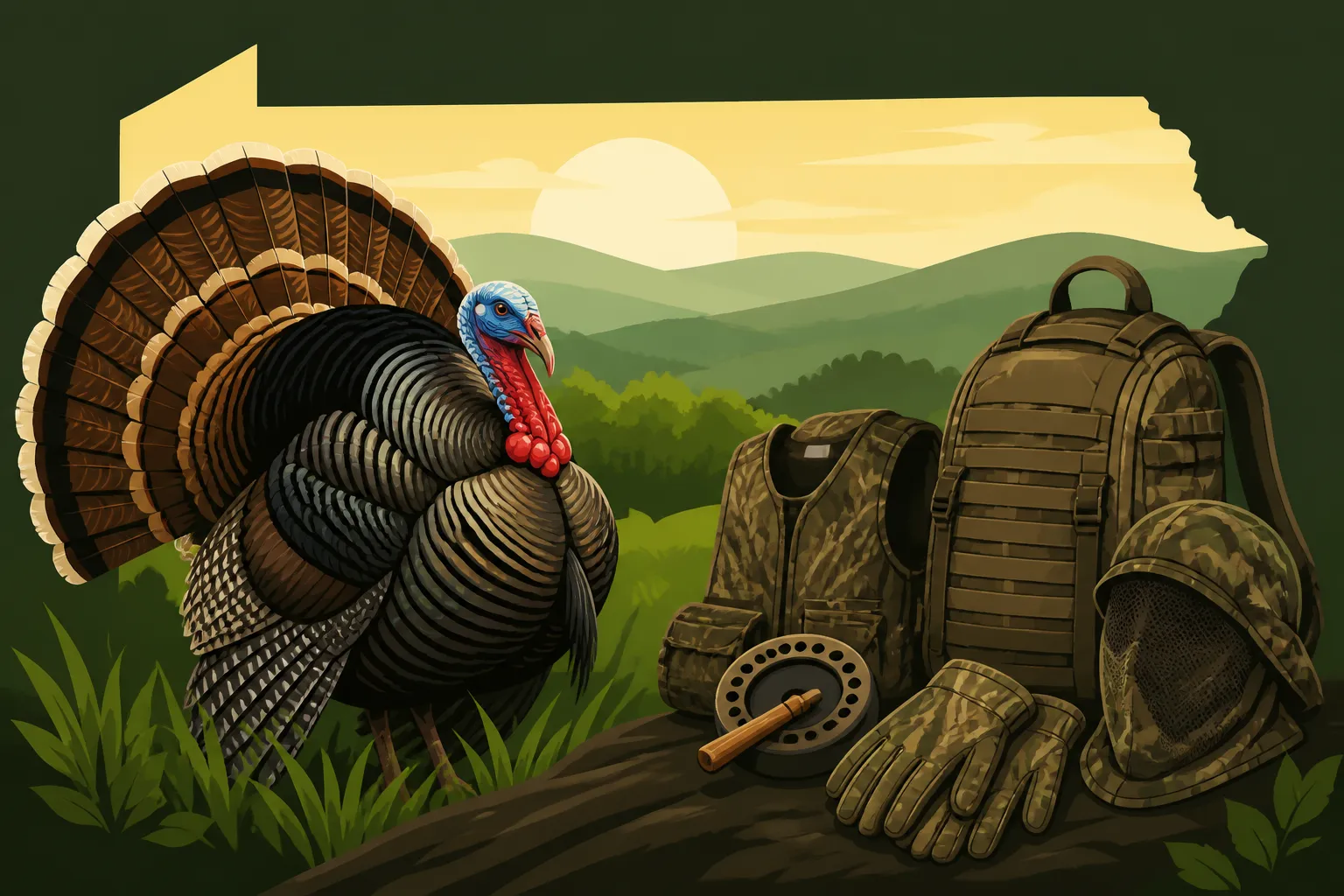
Turkey Gear for a Pennsylvania Spring
The crisp air of a Pennsylvania spring morning, the first hint of daylight painting the ridge, and then – that electrifying gobble. It's a sound that gets deep into your bones, but often, the path to hearing it up close is riddled with frustration. You've scouted, you've practiced your calls, but sometimes it feels like your gear just isn't cutting it, or you're simply overwhelmed by choices. This guide is here to untangle the complexities of turkey hunting gear, helping you choose, organize, and prepare everything you need to confidently pursue spring gobblers in the diverse and challenging landscapes of Pennsylvania.
The Core of Your Spring Turkey Setup: Shotguns and Loads
When it comes to spring gobbler hunting, your shotgun isn't just a firearm; it's a precision instrument designed to deliver a dense pattern of shot to a small, critical area on a turkey's head and neck. Pennsylvania's varied terrain, from dense woodlots to open fields, means your shotgun choice and setup can make a huge difference in your success.
Choosing Your Turkey Shotgun: Gauge, Action, and Fit
The shotgun itself is the foundation of your turkey hunting system. While many hunters might use their deer shotgun, a dedicated turkey gun often offers advantages.
The most common gauges for turkey hunting are 12-gauge and 20-gauge. The 12-gauge has long been king, offering the widest selection of heavy loads and chokes, capable of putting a devastating pattern downrange. However, advancements in ammunition have made the 20-gauge an increasingly popular and highly effective choice, especially for those who prefer a lighter, more maneuverable firearm. A 20-gauge is often lighter to carry through the thick stuff, and with modern tungsten super shot (TSS) loads, it can rival a 12-gauge's performance. For younger hunters or those sensitive to recoil, the 20-gauge is a fantastic option that doesn't sacrifice lethality. Regardless of gauge, a shotgun that fits you well will shoot more consistently, which is paramount when you only get one shot at a gobbler.
Beyond gauge, consider the action. Pump-action shotguns are reliable workhorses, often more affordable, and many hunters appreciate their simplicity. Semi-automatic shotguns offer faster follow-up shots, though rarely needed for turkey, and tend to reduce felt recoil, making those magnum loads a little more comfortable. Single-shot models are lightweight and incredibly simple, but offer no second chance. For many, a dedicated turkey gun will have a shorter barrel, typically 20-24 inches, making it easier to maneuver in dense cover, climb over logs, or get into position in a tight ground blind.
The Critical Role of Chokes and Patterning
This is where the magic happens, or fails to happen. Your choke tube is arguably the most important component in your turkey hunting setup, even more so than the shotgun itself. A turkey choke is designed to constrict the shot column much tighter than a standard full choke, creating a super-tight pattern that delivers maximum pellet energy to the turkey's head and neck. You'll often see terms like "extra full," "super full," or "turkey specific" chokes. These chokes are purpose-built to squeeze every last pellet into a tight, dense circle at typical turkey hunting ranges, usually 30-50 yards.
But simply screwing in a "turkey choke" isn't enough. You absolutely must pattern your shotgun with your chosen ammunition before you ever step foot in the woods. This involves shooting your exact load through your exact choke at various distances (e.g., 20, 30, 40, 50 yards) at a turkey head target. What you're looking for isn't just a tight pattern, but a consistent pattern that places a high number of pellets (typically 100+) in the vital head and neck area at your maximum effective range. Every shotgun, choke, and ammunition combination is unique, and what patterns perfectly in one gun might be a dud in another. Don't assume. Patterning reveals your true effective range, which is critical for making ethical shots. This practice also helps you identify any flyers or gaps in your pattern that could lead to a missed gobbler or, worse, a wounded one.
Selecting the Right Ammunition for Pennsylvania Gobblers
Ammunition technology for turkey hunting has advanced dramatically in recent years. Gone are the days when you simply grabbed a box of lead #4s or #6s. While traditional lead shot is still effective, especially in magnum loads, many hunters are now turning to heavier-than-lead options like Bismuth or, most notably, Tungsten Super Shot (TSS).
TSS is denser than lead and steel, meaning smaller pellets carry more energy, penetrate deeper, and deliver a more consistent pattern. This allows hunters to use smaller shot sizes (like #7, #9, or blended loads) that contain many more pellets per shell, significantly increasing the chances of hitting the vital areas. The downside is the cost; TSS is significantly more expensive than lead, but many argue the increased performance and ethical advantage are worth it. When selecting your load, consider the pellet size and the overall payload weight (e.g., 2 oz, 3 oz). For Pennsylvania's varied terrain, having a load that performs well from 20 to 50 yards is ideal. Always match your ammunition to your choke and pattern extensively. A good resource for understanding load performance and trajectory, or even seeing user-submitted patterning results, can be found on online hunting communities, similar to what you might find by exploring detailed gear reviews on a platform like GoHunt.
Enhancing Accuracy with Optics and Sights
While open bead sights are traditional, many turkey hunters find they can significantly improve their accuracy and target acquisition with a modern optical sight. Red dot sights are incredibly popular for turkey hunting. They offer a single, illuminated aiming point that is fast to acquire, easy to see in low light or against a dark background, and eliminates the need to align a front and rear sight. This means you can focus entirely on the turkey's head. They are also parallax-free within typical turkey hunting ranges, meaning the point of aim remains true even if your eye isn't perfectly centered behind the optic.
Other options include low-power scopes (1-4x) or even fiber-optic bead sights that gather ambient light to provide a bright, easy-to-see aiming point. The key is to choose an optic that is robust, waterproof, and doesn't add excessive bulk or weight. Whatever you choose, it needs to be sighted in precisely with your chosen ammunition and choke, just like you pattern your shotgun. Don't skip this step. A well-sighted red dot can make the difference between a clean kill and a frustrating miss, especially in those nerve-wracking moments when a gobbler closes the distance rapidly.
Mastering the Art of Calling and Decoys
Calling and decoys are the heart and soul of spring turkey hunting. It's how you communicate with a tom, how you entice him to come within range, and often, what distinguishes a successful hunt from a silent morning. Understanding different calls and knowing when and how to deploy decoys is paramount.
A Hunter's Arsenal of Turkey Calls
No single call is a magic bullet, but a versatile collection of calls allows you to adapt to different scenarios, gobbler moods, and weather conditions.
- Friction Calls (Slate, Glass, or Aluminum): These are perhaps the most versatile calls in a turkey hunter's vest. They consist of a pot call surface (slate, glass, aluminum, or even ceramic) and a striker. By dragging the striker across the surface, you can produce a wide range of turkey sounds – yelps, clucks, purrs, and cutts. Slate calls offer a softer, more mellow tone, great for close-in work or when birds are wary. Glass calls tend to be sharper and louder, excellent for reaching out to distant birds or cutting through wind. Aluminum offers a unique, raspy tone. The beauty of friction calls is their versatility and the ability to control volume and pitch, but they require practice to master consistency. Keep your calling surface clean and dry for optimal performance; a piece of sandpaper or a conditioning pad is a must-have.
- Mouth Calls (Diaphragm Calls): These small, horseshoe-shaped calls are held in the roof of your mouth and produce sounds by blowing air across a latex reed. Mouth calls are invaluable because they allow for hands-free calling, meaning you can keep your gun mounted and ready while still communicating with a bird. They are excellent for subtle clucks and purrs when a bird is close, but can also produce loud yelps and cuts. Mastering a mouth call takes significant practice, often involving trial and error with different reed cuts and tensions, but the payoff in terms of stealth and efficiency is huge. They are also incredibly compact and impervious to weather, unlike friction calls which can be affected by moisture.
- Box Calls: The classic box call is known for its loud, resonant sound, making it excellent for prospecting and reaching distant birds. They are easy to use, even for beginners, and can produce very realistic yelps and cutts. The disadvantage is that they are not hands-free and can be bulky to carry. They also need to be kept dry to prevent warping and maintain sound quality. For aggressive, loud calling, a good box call is tough to beat, and can often be heard farther than other call types, making it ideal for reaching birds across large open fields or deep hollows.
- Locator Calls: These aren't turkey sounds at all, but mimic other animals that make turkeys gobble in response. Owl hoots, crow calls, and even coyote howlers are popular. They are primarily used to get a shock gobble from a tom on the roost or to locate a silent bird during the day. Often, a gobbler will respond to a locator call with a gobble, revealing his position without putting him on edge. Knowing Locator Calls for Pennsylvania Gobblers can make a huge difference in finding birds.
It's a good idea to carry at least two different types of calls – for example, a mouth call for close work and a friction call for versatility, plus a locator call. Practice, practice, practice! Turkeys are remarkably good at discerning artificial sounds.
Strategic Decoy Deployment: Fooling Wary Toms
Decoys can be incredibly effective, but they can also be a hindrance if not used correctly, especially with pressured Pennsylvania birds.
- Types of Decoys: You'll typically encounter hen decoys, jake decoys, and gobbler decoys. Hen decoys are the most common and generally safest bet. A single hen or a pair of feeding hens often provides a realistic, non-threatening visual that appeals to lonely toms. Jake decoys (immature male turkeys) are aggressive and can often provoke a dominant gobbler into challenging the intruder. Full-strut gobbler decoys are the most aggressive and can be highly effective at bringing in rival toms, but they can also intimidate subordinate birds or alert wary ones from afar. Some decoys even have realistic movement features, like a fan that can be fanned, which adds an extra layer of realism.
- Decoy Strategy: Placement is everything. Generally, you want to set your decoys so that a gobbler approaching them will be within your shotgun's effective range, ideally 20-30 yards from your position. Position hen decoys facing away from you, as gobblers tend to approach hens from behind, setting them up for a shot. If using a jake or gobbler decoy, place it so the approaching tom sees it clearly and perceives it as a rival he needs to confront. With a jake decoy, place it about 10-15 yards in front of your position, with a hen decoy slightly behind and closer to you. This creates a realistic scene that draws the tom past your position.
- When to Use Decoys: Decoys are most effective in open areas where turkeys can see them from a distance, such as field edges, open timber, or logging roads. They can be less useful or even detrimental in dense woods where visibility is limited, as they may simply get hung up or block your view. Decoys are often best when you know a bird is in the area and needs a visual to commit, or if you're trying to pull a bird across an open field. For wary, call-shy gobblers, sometimes less is more, and a single, subtle hen might be better than a full spread. Knowing Turkey Decoys That Work on Pressured Birds is key in many parts of Pennsylvania.
Remember that decoys attract attention – both from turkeys and other hunters. Always be aware of your surroundings and set up in a safe location with a good backdrop that protects you from other potential hunters.
Dressing for Success: Apparel and Concealment
Spring in Pennsylvania can be wildly unpredictable. One morning it's freezing, the next it's a sweltering humid mess, and rain can pop up at any moment. Your clothing isn't just about comfort; it's a critical part of your concealment system and your ability to stay focused and effective in the field.
Layering for Pennsylvania's Unpredictable Spring Weather
The cardinal rule of outdoor apparel, especially for spring turkey hunting, is layering. You might start your hunt well before dawn in chilly, damp conditions, but by mid-morning, the sun could be beating down, making you sweat.
- Base Layer: Start with a moisture-wicking base layer. This could be lightweight merino wool or a synthetic blend. Its primary job is to pull sweat away from your skin, keeping you dry and preventing that clammy, cold feeling. A good base layer is essential, whether it's cold or warm, as it helps regulate your core temperature.
- Mid Layer: This is your insulation layer. Depending on the forecast, this could be a fleece jacket, a lightweight insulated vest, or a heavier wool sweater. Its purpose is to trap warm air close to your body. For most Pennsylvania spring mornings, a mid-weight fleece or a good quality wool shirt is perfect. If you're doing a lot of Run-and-Gun Turkey Tactics on Game Lands, you might want a lighter mid-layer that you can easily shed.
- Outer Layer: Your outermost layer provides camouflage and protection from the elements. Look for a quiet, durable fabric that won't rustle loudly when you move. It should ideally be water-resistant or waterproof, as spring showers are common. A good turkey hunting jacket or shirt will have plenty of pockets for calls and other gear. If it's going to be wet, a lightweight, packable rain jacket and pants are invaluable to throw over your camo. Having a quiet, breathable outer layer is crucial, as any noise can spook a close-range gobbler.
Head-to-Toe Camouflage and Scent Control
Turkeys have exceptional eyesight, particularly when it comes to detecting movement and breaks in patterns. Head-to-toe camouflage is not optional; it's essential.
- Pattern Choice: Choose a camouflage pattern that breaks up your outline effectively in the varied environments of Pennsylvania. Patterns with strong vertical and horizontal elements, or those mimicking natural bark and leaves, are usually a good bet. Consider the habitat you'll be hunting most often – darker, denser patterns for deep woods, or lighter, open patterns for field edges.
- Concealment: A head net or face mask is an absolute must. Even the slightest glint of skin can give you away. Gloves are equally important to conceal your hands. Your hands and face are often the most exposed parts of your body and the most likely to move while calling or settling the gun. Many turkey vests incorporate a seat cushion that folds out, allowing you to comfortably sit against a tree trunk, which also helps break up your outline.
- Scent Control (Lightly): While turkeys don't have a strong sense of smell like deer, being scent-conscious never hurts. Wearing clean clothes, avoiding strong perfumes or detergents, and using scent-neutral products can contribute to overall stealth, especially if you're also hunting other game. However, for turkeys, visual and auditory concealment are far more critical.
Footwear for Varied Terrain and Long Miles
You'll be doing a lot of walking, often through wet, uneven, and sometimes thorny terrain. Your boots need to be comfortable, supportive, and durable.
- Waterproofing: Absolutely essential. Spring mornings often mean dew-soaked grass, muddy trails, and stream crossings. Waterproof boots, whether rubber or waterproofed leather/synthetic, will keep your feet dry and comfortable. Nothing saps morale faster than cold, wet feet.
- Support and Grip: Good ankle support is crucial for traversing uneven ground, climbing hills, and navigating rocky terrain. The soles should offer excellent traction to prevent slips on wet leaves, mud, or steep inclines.
- Comfort: This goes without saying. Try on boots with the socks you intend to wear, and break them in before the season. Blisters or sore feet will cut your hunt short and make you miserable. Rubber boots are excellent for scent control and waterproofness but can be less breathable for long, warm walks. Lightweight hiking boots offer more breathability and comfort for covering miles, but might require gaiters in really wet conditions. Choose based on the typical conditions you expect and how much ground you plan to cover.
Carrying It All: Vests, Packs, and Essential Organization
Turkey hunting often involves moving frequently, setting up quickly, and having your calls, ammunition, and other necessities instantly accessible. Your carrying system needs to be efficient, comfortable, and well-organized.
The Purpose-Built Turkey Vest: Your Mobile Command Center
The turkey vest is arguably the most specialized piece of gear for turkey hunting, designed with incredible foresight for the unique demands of the sport. It's more than just a vest; it's a meticulously organized system for all your calls, ammunition, and small essentials.
- Pocket Organization: A good turkey vest will have specific pockets for everything: slate calls, box calls, mouth calls (often in an easy-to-access, waterproof pouch), strikers, rangefinder, GPS, water bottle, snacks, and extra shells. The beauty is that each item has its dedicated spot, meaning you're not fumbling around, creating noise when a gobbler is breathing down your neck. Pockets should be easy to open quietly, and often feature magnetic closures or silent snaps rather than noisy zippers.
- Comfort and Fit: You'll be wearing this vest for hours, often while walking long distances or sitting patiently. Look for adjustable straps, padded shoulders, and a design that distributes weight evenly. Some vests include a lumbar support system or hydration compatibility. The fit should allow for unrestricted movement when shouldering your shotgun.
- Integrated Seat Cushion: Many turkey vests include a fold-out, padded seat cushion, a feature that hunters quickly learn to appreciate. This allows you to sit comfortably against a tree, providing cushioning and a barrier against damp or cold ground. Some even feature a kickstand frame, which offers great back support and allows you to sit virtually anywhere. Turkey Vests With a Kickstand Seat are a godsend on public land where you can't bring a chair.
- Game Bag: A large, expandable game bag on the back of the vest is essential for carrying out your gobbler. Look for one that can easily accommodate a full-sized bird without being too cumbersome.
Brands like Primos and ALPS OutdoorZ make popular turkey vests that incorporate many of these features. You can often find detailed reviews and comparisons of these on hunting gear sites, which can help you decide which one fits your style and budget.
Day Packs for the Agile Hunter
While a turkey vest handles most of your immediate needs, some hunters, especially those employing a true run-and-gun strategy or covering vast amounts of ground, might also carry a small day pack.
- Supplemental Storage: A day pack can carry additional layers of clothing, more water, a larger first-aid kit, and perhaps even heavier items like binoculars or a spotting scope if you're hunting more open country and need to glass distant fields. It keeps weight off your vest, allowing for more agile movement.
- Hydration: Many day packs are hydration-bladder compatible, offering a hands-free way to stay hydrated throughout the day, which is crucial on warmer spring mornings.
- Versatility: A small, lightweight day pack can also be useful for carrying out parts of a harvested bird if you're breaking it down in the field, or for stowing your vest if you decide to carry it separately to lighten your load during a long hike back to the truck. When considering a day pack, prioritize quiet materials, comfortable straps, and sufficient capacity without being overly bulky.
Safety and Navigation Gear
Safety should always be your top priority, especially when hunting highly sought-after game like spring gobblers, where multiple hunters may be in the same woods. Navigation tools ensure you know where you are and how to get back, while communication devices are vital for emergencies.
Hunter Orange and Visibility Rules
Pennsylvania has specific hunter orange requirements, and while they vary by season, it's crucial to understand them for spring gobbler.
- Spring Gobbler Specifics: For spring gobbler season, hunter orange requirements are generally more relaxed than for other big game seasons like firearms deer. In most areas, you are not required to wear hunter orange while still-hunting or moving to a calling location during spring gobbler season. However, you are required to wear at least 100 square inches of solid fluorescent orange material on your head when moving after having killed a turkey, or when moving through the woods at any time with a processed turkey. This is to ensure you are highly visible to other hunters after you have completed your hunt and are no longer actively trying to call a bird.
- Safety Precaution: Even where not explicitly required, many seasoned turkey hunters will carry a piece of hunter orange in their vest and deploy it when moving, especially if they have a bird, or if they are moving through high-traffic areas. When you're set up and calling, however, you'll be in full camouflage. Always assume any movement you hear could be another hunter. Never stalk a gobbler; call him in. This is a crucial safety rule.
- Identifying Your Target: Always, always identify your target beyond any doubt before pulling the trigger. Make sure it's a legal, visible tom. Look for the beard, the gobbler's characteristic strut, and don't shoot at sounds or movement in the brush.
GPS and Communication Tools
Pennsylvania's public lands, from State Game Lands to vast State Forests, can be expansive and disorienting, especially in the early morning darkness or in unfamiliar territory.
- GPS Devices/Smartphone Apps: A reliable GPS unit or a smartphone with a robust mapping app (like GoHunt's mapping features or other dedicated hunting apps) is indispensable. These tools allow you to pinpoint your exact location, navigate trails, mark points of interest (like roosting trees, food sources, or your vehicle), and ensure you can find your way back, even in challenging conditions. Download maps for offline use, as cell service can be spotty in many remote hunting areas. Understanding Scouting With the Pennsylvania Mapping Center can give you a huge advantage here.
- Physical Map and Compass: Never rely solely on electronics. Always carry a physical map of your hunting area and a compass. Know how to use them as a backup. Batteries die, and devices can fail. A detailed topographic map can reveal crucial terrain features that might influence turkey movement.
- Two-Way Radios (for groups): If you're hunting with a partner or in a group, two-way radios are excellent for communication. They allow you to coordinate movements, share information about gobbler locations, and maintain contact without relying on cell service. Always use them sparingly and at low volume when actively hunting, so as not to spook game.
- Cell Phone: While service can be unreliable, your cell phone is still a vital communication and emergency tool. Make sure it's fully charged, and consider carrying a portable power bank. Program emergency contacts and local game warden numbers into your phone.
- Whistle/Signaling Device: A loud whistle can be invaluable for signaling other hunters of your presence in an emergency, or if you get separated from your group.
Comfort and Convenience: Gear for the Long Haul
Turkey hunting often demands patience, quiet sitting, and the ability to efficiently handle a harvest. Certain gear items, while not directly related to shooting or calling, significantly improve your comfort, extend your time in the field, and ensure a responsible hunt.
Portable Seating and Support Systems
Sitting still, often against a tree, for extended periods can become uncomfortable, leading to fidgeting and potentially spooking birds.
- Turkey Vest Seat: As mentioned, many turkey vests incorporate a padded seat cushion. This is the most common and convenient solution, allowing you to quickly deploy a comfortable perch. The padding provides insulation from damp or cold ground and prevents discomfort from roots or rocks.
- Portable Stools/Chairs: For hunters who prefer maximum comfort or who hunt from a ground blind, a lightweight, compact folding stool or chair can be a game-changer. These offer back support and elevate you slightly, making it easier to maintain vigilance and reducing fatigue. Look for models that are quiet to deploy and sturdy enough for uneven ground. Some even have swiveling seats, which can be beneficial in a blind.
- Back Support: Even when sitting against a tree, a simple back support strap or a small lumbar pillow can make a huge difference in comfort, allowing you to remain motionless longer. Discomfort leads to movement, and movement often leads to missed opportunities.
Field Dressing and Game Transport Aids
Once you've successfully harvested a gobbler, the work isn't over. You need to properly field dress and transport your bird to preserve the meat and ensure a responsible take.
- Sharp Knife: A sharp, fixed-blade knife is essential for field dressing. You'll need it to remove the entrails (if desired), cut off the feet, and potentially remove the beard for tagging. Keep it clean and sharp, and consider a small sharpening stone or ceramic stick in your kit.
- Gloves: Disposable latex or nitrile gloves are invaluable for field dressing. They maintain hygiene and make cleanup much easier.
- Game Bags/Trash Bags: While most turkey vests have a game bag, a few extra large, sturdy trash bags can be useful. They can protect your vest from blood, or provide an additional layer of protection for the bird if you're carrying it a long distance or need to keep it clean for pictures.
- Turkey Tote/Strap: A dedicated turkey tote or a simple strap with a handle can make carrying a heavy gobbler out of the woods much easier than dragging it. These devices clip onto the bird's feet or neck and allow you to sling it over your shoulder, freeing up your hands and distributing the weight.
- Water/Wipes: A small bottle of water for rinsing hands and a pack of wet wipes are great for personal hygiene after field dressing.
- Cooler: If you're hunting on a warm day, especially in the early part of the spring season, having a cooler with ice in your vehicle is vital for immediately cooling down your bird after the harvest. This is crucial for preserving meat quality. Handling Bear Meat Safely and Cooking Venison From a Pennsylvania Buck emphasize proper meat handling, and the same principles apply to turkeys.
Pre-Season Preparation and In-Season Adaptations
Having the right gear is only half the battle. Knowing how to use it, practicing with it, and being ready to adapt to changing conditions are what truly set successful hunters apart.
Gear Checks and Practice Before Opening Day
Don't wait until the night before opening day to realize something's missing or not working.
- Shotgun Maintenance and Patterning: Clean your shotgun thoroughly, check all components, and pattern it with your chosen ammunition and choke. This cannot be stressed enough. Do it at least a month before the season to allow time for adjustments or new choke purchases.
- Call Practice: Practice your calls regularly. Learn different sounds – yelps, clucks, purrs, cutts – and how to vary volume and tone. Practice soft, close-in calls as well as loud, prospecting calls. Your calling should sound natural, not robotic. Record yourself and listen critically. Calling a Pennsylvania Gobbler Off the Roost requires precision and nuance.
- Gear Inventory and Organization: Lay out all your gear. Check batteries in your headlamp, GPS, and rangefinder. Ensure your first-aid kit is stocked. Organize your turkey vest so everything is in its dedicated spot and easily accessible. Replace anything worn out or broken.
- Physical Conditioning: Turkey hunting involves walking, often up hills, and sitting still for long periods. Get in shape! This will make the hunt more enjoyable and allow you to cover more ground comfortably.
- Decoy Setup Practice: Practice setting up your decoys quickly and quietly. Understand how they look from a turkey's perspective.
Adapting Your Setup for Different Hunting Scenarios
Pennsylvania offers diverse turkey habitats, and a smart hunter knows how to adjust their gear and tactics accordingly.
- Big Woods vs. Farm Country: In dense Hunting Pennsylvania's Big Woods for Deer or steep mountain terrain, mobility is key. You might prioritize a lighter shotgun, a compact vest, and fewer, more subtle decoys or no decoys at all. In open farm country, like Hunting Pennsylvania Farm Country Edges, where birds can see great distances, decoys become more effective, and you might consider a full strut gobbler decoy to draw in dominant birds.
- Weather Conditions: On rainy days, ensure all your electronics are in waterproof bags, and friction calls are protected from moisture. On windy days, calls need to be louder to carry, and you might focus on areas with natural windbreaks where turkeys seek shelter.
- Pressured Birds: If you're hunting public land or areas with heavy hunting pressure, birds will often be more wary. This calls for more subtle calling, smaller decoy spreads (or none), and exceptional concealment. Avoid aggressive tactics that might work on unpressured birds.
- Roost Hunting vs. Mid-Day: For Roost Hunting Pennsylvania Gobblers, a good headlamp is critical, and a locator call will be your best friend. For mid-day hunting, when birds might be scattered or henned up, mobility and scouting for fresh sign become paramount.
Being prepared for any scenario means you're more likely to capitalize on opportunities when they arise. It’s about having the right tool for the job, and knowing when and how to use it.
Disclaimer
This article is for general informational purposes only and does not constitute professional advice. Laws, prices and regulations vary by location and change over time. Consult a qualified professional for guidance on your specific situation.