Pennsylvania State Game Lands
For many of us who cherish the tradition of hunting in Pennsylvania, finding consistent, accessible ground can feel like a never-ending quest. Private land is often locked up, leased, or simply unavailable, leaving a huge portion of the hunting community wondering where they can pursue their passion without constantly knocking on doors. This guide is here to demystify one of our greatest public resources: Pennsylvania State Game Lands. We'll dive deep into what they are, how to navigate them, and how you can make the most of these incredible tracts of land for all your hunting adventures.
What Exactly Are Pennsylvania State Game Lands?
Imagine vast stretches of woodland, swamp, old fields, and brush, all managed with one primary goal: to provide habitat for wildlife and opportunities for hunters, trappers, and other outdoor enthusiasts. That's the heart of Pennsylvania's State Game Lands system. It's a truly remarkable network, owned and managed by the Pennsylvania Game Commission, providing millions of acres of public access across the Commonwealth. These aren't just random patches; they are strategically acquired and actively managed to support a wide array of game species, from whitetail deer and wild turkeys to ruffed grouse and black bears.
The Vision Behind Their Creation
The idea of State Game Lands wasn't born overnight. It emerged from a time when wildlife populations were struggling, and the future of hunting seemed uncertain. Visionary conservationists and hunters recognized the critical need for dedicated public lands that would be perpetually open for hunting and serve as wildlife havens. This foresight led to the passage of legislation that allowed the Pennsylvania Game Commission to purchase land using funds primarily generated by hunting license sales and federal excise taxes on firearms and ammunition. It's a self-sustaining model that ensures hunters directly contribute to the very land they enjoy. This long-term commitment has shaped Pennsylvania's hunting landscape for generations, securing access for countless individuals who might otherwise be shut out. It’s truly a testament to the dedication of Pennsylvania hunters.
How Game Lands Are Funded and Maintained
This is where the direct impact of every hunter really shines through. State Game Lands are primarily funded by you! When you purchase your Pennsylvania Hunting Licences and What They Cost, a significant portion of that money goes directly into the Game Fund, which is used to acquire new tracts of land and manage existing ones. Beyond license sales, the federal Pittman-Robertson Act provides critical funding through an excise tax on firearms, ammunition, and archery equipment. This means every time you buy a box of shells or a new bow, you're directly contributing to the conservation and maintenance of these invaluable public resources. This funding mechanism is what allows the Game Commission to hire biologists, foresters, and land managers to implement habitat improvements, maintain roads, control invasive species, and ensure healthy game populations thrive. It’s not just a feel-good story; it’s a practical, successful model of user-funded conservation. For more on the specifics, explore How Much State Game Land Pennsylvania Owns.
Understanding the "Public Access" Promise
One of the most appealing aspects of State Game Lands is their unwavering commitment to public access. Unlike many private parcels that might be leased or posted, State Game Lands are open to everyone, generally 24/7, for hunting, trapping, fishing, hiking, and other outdoor recreation. This "public access" promise is enshrined in the very purpose of their existence. However, "public access" doesn't mean "no rules." The Game Commission has specific regulations in place to ensure fair chase, safety, and sustainable resource use. These rules, which we'll delve into later, cover everything from vehicle use and camping to how you can place treestands and ground blinds. Understanding these regulations is key to ensuring you're a responsible user and that these lands remain open and healthy for future generations. It’s about sharing the resource respectfully, acknowledging that many different users will be out there enjoying the same wild spaces.
Navigating the Vast Network of Game Lands
Pennsylvania boasts an impressive network of State Game Lands, covering millions of acres across the Commonwealth. From the deep woods of the northern tier to the rolling hills and agricultural fringes of the south, there's likely a Game Land within a reasonable drive, no matter where you are. But knowing where they are and how to effectively use them is often the biggest hurdle for new or even seasoned hunters.
Finding Game Lands Near You and Beyond
The first step in hunting State Game Lands is knowing where to find them. The Pennsylvania Game Commission's website is your official portal, offering interactive maps and a complete listing of all State Game Lands. You can often filter by county, size, or even specific game species managed in those areas. Beyond the official resources, mapping apps have revolutionized how hunters locate and navigate public land. Tools like onX Hunt and GoHunt provide detailed overlays showing property boundaries, ownership information, and even features like topography, satellite imagery, and past timber cuts. These digital aids make it incredibly easy to identify a Game Land, see its boundaries, and start planning your approach from the comfort of your home. Don't be afraid to look beyond the closest parcel; sometimes, driving an extra hour or two can open up entirely new hunting opportunities with less pressure. Consider consulting Scouting With the Pennsylvania Mapping Center for more details on these resources.
Essential Mapping Tools for Public Land Hunters
Gone are the days when a crumpled paper map was your only guide. While carrying a physical map as a backup is always a good idea, digital mapping tools have become indispensable for public land hunters.
- Official PGC Maps: The Pennsylvania Game Commission provides free, downloadable maps for each State Game Land, often showing boundaries, roads, parking areas, and sometimes even habitat types. These are essential for understanding the lay of the land from the official source.
- GPS Devices: Dedicated GPS units are still a reliable choice, especially in areas with poor cell service. They are robust, have long battery life, and provide precise location data, making sure you always know where you stand, literally.
- Smartphone Apps (onX Hunt, GoHunt, etc.): These apps have truly transformed hunting navigation. With a premium subscription, you can download maps for offline use, view public/private land boundaries with color-coded overlays, mark waypoints (like rubs, scrapes, or your treestand), track your movement, and even see landowner names on private parcels adjacent to public land. This information is invaluable for both scouting and in-the-field navigation, helping you find those hidden pockets of public ground that other hunters might overlook. Before you head out, make sure your phone is fully charged, and consider carrying a portable power bank, especially for long days in the woods.
Reading Game Lands Boundary Markings
Once you're actually out there, knowing you're on public land is paramount. State Game Lands are typically marked with specific boundary signs and blazes. These markings are your visual cues that you're within the confines of public hunting ground.
- Painted Blazes: You’ll often find trees along the boundary line painted with a specific color, usually yellow or orange. These blazes are regularly maintained, but weather and time can fade them, so always look for multiple markers.
- Signs: Official "State Game Lands" signs are usually posted at regular intervals, especially where the boundary meets roads or common access points. These signs clearly state that the land is owned by the PGC and outline general rules.
- Stone Monuments or Posts: In older Game Lands, you might encounter stone monuments or metal posts marking corners or turns in the boundary. These are often less obvious than painted blazes but are equally important.
It's crucial to pay attention to these markings, especially when hunting near private property lines. Modern mapping apps, like onX Hunt, can display these boundaries digitally, providing an extra layer of confidence. However, always remember that digital maps are a tool, and physical markers are the ultimate legal indicator. If you're unsure, err on the side of caution and consult your map or retreat to a clearly marked area. For more detailed insights, check out Reading Game Lands Boundary Blazes.
| Feature | Pennsylvania State Game Lands (SGLs) | Pennsylvania State Forests (SFs) |
|---|---|---|
| Primary Purpose | Wildlife habitat & public hunting/trapping | Timber production, recreation, watershed protection |
| Managing Agency | Pennsylvania Game Commission (PGC) | Department of Conservation & Natural Resources (DCNR) |
| Funding Source | PGC Game Fund (license sales), Pittman-Robertson | State General Fund, timber sales |
| Vehicle Access | Limited roads, specific parking areas | More extensive road networks, some open to public |
| Camping | Generally prohibited, with some exceptions | Permitted with free permit for dispersed camping |
| Tree Stands/Blinds | Permitted, specific rules on duration & removal | Permitted, specific rules on duration & removal |
| Target Shooting | Designated ranges only | Prohibited unless at designated PGC ranges |
| ATV Use | Prohibited, except for disabled hunters with permit | Limited designated trails for specific uses |
| Habitat Focus | Diverse habitat for game species | Sustainable timber, old growth, water quality |
General Rules and Regulations on State Game Lands
Hunting on State Game Lands comes with the incredible privilege of public access, but that privilege is balanced by a set of rules designed to ensure safety, conservation, and fair play for everyone. These regulations are not there to make your life difficult; they are safeguards to protect the resource and ensure a quality experience. Ignoring them can lead to fines, loss of hunting privileges, and damage to the very resource we all rely on.
Vehicle Access and Parking Etiquette
Navigating State Game Lands often involves driving, but it's crucial to understand where you can and cannot take your vehicle. Most Game Lands have a network of designated roads and parking areas.
- Designated Roads: Many Game Lands roads are gated or seasonal. Always respect signs indicating "No Motorized Vehicles Beyond This Point" or "Seasonal Road Closure." These closures are often in place to protect sensitive habitats, prevent erosion, or ensure quiet recreation for foot traffic. Driving past a gate or into a closed area can result in fines.
- Parking Areas: Use designated parking lots. These are usually clearly marked and provide safe places to leave your vehicle without blocking access roads or creating hazards. If a lot is full, avoid creating your own spot on the shoulder, which can damage vegetation or impede other users. Consider carpooling or arriving early during peak seasons. For specific guidelines, refer to Vehicle Rules on Pennsylvania Game Lands.
- ATV Use: Generally, ATVs are strictly prohibited on State Game Lands, except for those with a PGC-issued Disabled Persons Permit for specific uses. This rule helps minimize disturbance to wildlife and maintains the quiet nature of the woods for hikers and still-hunters.
Camping and Overnight Stays
This is an area where State Game Lands differ significantly from State Forests. For the most part, camping is not permitted on State Game Lands. The primary purpose of SGLs is wildlife management and day-use recreation, and allowing widespread camping could lead to increased litter, disturbance, and resource degradation. There might be rare, specific exceptions for organized youth groups or special events with prior PGC approval, but for the average hunter, plan on making your camp elsewhere.
If you need overnight accommodations, consider:
- Pennsylvania State Forests: Many State Forests allow dispersed camping with a free permit, offering a more rustic experience.
- Private Campgrounds: Numerous private campgrounds operate near popular Game Lands, providing amenities and dedicated sites.
- Local Hotels/Motels: For those hunting far from home, local lodging options are always available.
Always double-check the specific rules for the Game Land you intend to visit, but generally, expect to be packing in and out each day.
Treestand, Blind, and Trail Camera Policies
These tools are incredibly popular among Pennsylvania hunters, but their use on State Game Lands is subject to strict guidelines to prevent abandonment, damage to trees, and potential conflicts with other users.
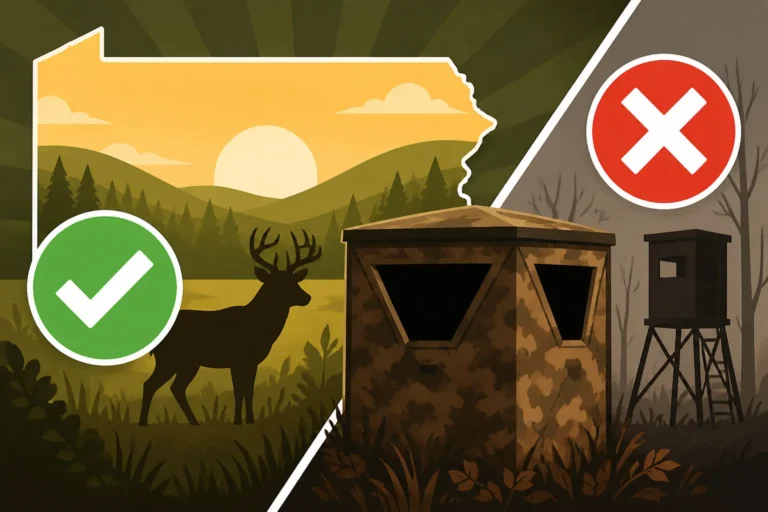
- Treestands and Ladders: You are generally allowed to use portable treestands and climbing aids. However, they must be removed after specific dates, usually within two weeks of the close of the hunting season for which they were used. Leaving stands up year-round is prohibited and can result in confiscation. Additionally, you cannot damage trees by using screws or bolts; only non-damaging attachment methods are permitted. This is critical for protecting the forest health. Learn more from Treestand Rules on Pennsylvania Game Lands.
- Ground Blinds: Portable ground blinds are also permitted. Similar to treestands, they typically need to be removed after the season. When brushing in a blind, you can use natural materials found on the ground, but you cannot cut live vegetation. Be mindful of hunter orange requirements when using ground blinds during rifle seasons. Ground Blind Rules on Public Land has more information.
- Trail Cameras: Trail cameras have become a ubiquitous scouting tool. On State Game Lands, you are generally allowed to deploy trail cameras. However, they must be clearly marked with your PGC customer ID number (or name and address in some cases) and must not damage trees. The PGC generally prohibits the use of "cell cams" that transmit images in real-time, to maintain fair chase principles by not giving hunters an unfair technological advantage over wildlife. This ensures everyone is hunting on a relatively level playing field. Always verify the most current regulations as technology evolves and rules can be updated.
Hunting Opportunities Across Different Game Lands
The beauty of Pennsylvania State Game Lands lies in their incredible diversity. From vast "big woods" tracts to smaller parcels nestled in agricultural country, they offer hunting opportunities for nearly every game species found in the Commonwealth. What you find and how you hunt will often depend on the specific habitat and geography of the Game Land you choose.
Deer Hunting Strategies on Game Lands
Deer hunting is, for many, the quintessential Pennsylvania hunting experience, and State Game Lands offer fantastic opportunities. However, hunting public land deer often requires a different approach than private land.
- Big Woods vs. Farm Country: Some Game Lands are located in the "Big Woods" regions of north-central Pennsylvania, characterized by mature timber, steep ridges, and lower deer densities. Here, patience, still-hunting, and covering ground are key. Look for Hunting Pennsylvania's Big Woods for Deer, focusing on transition zones, old logging roads, and natural funnels. Other Game Lands are interspersed within farm country, often featuring a mix of woods, brush, and old fields. These areas can hold higher deer densities but often come with more hunting pressure. Here, hunting edges, knowing food sources, and using scent control are vital.
- Scouting is Crucial: Deer on public land are often highly pressured and will adapt their behavior to avoid hunters. Pre-season scouting, both in person and using mapping apps like GoHunt or onX Hunt, helps you find secluded bedding areas, less-traveled escape routes, and key feeding areas. Don't be afraid to walk further than others; sometimes the best spots are a mile or more from the road. Finding Ground Others Walk Past offers strategies for this.
- Deer Drives: During the firearms seasons, organized deer drives can be an effective tactic on larger Game Lands, especially in conjunction with friends or family. However, always coordinate with your group, know your shooting lanes, and prioritize safety above all else. Deer Drives on Pennsylvania State Game Lands provides more insight.
Small Game and Upland Bird Hunting
While deer often steal the spotlight, State Game Lands are also a treasure trove for small game and upland bird hunters. Many Game Lands are specifically managed with these species in mind, featuring diverse cover types.
- Rabbits and Squirrels: Look for Game Lands with a good mix of thick brush, briars, and mature timber. Early successional habitat, often created by timber cuts, is prime rabbit cover. For squirrels, target oak and hickory ridges, especially during years with good mast crops. Walking old logging roads and clearings where nut trees are abundant can yield great results. Rabbit Hunting With Beagles in Pennsylvania or Squirrel Hunting Pennsylvania Hardwoods can guide you further.
- Ruffed Grouse and Woodcock: These iconic upland birds thrive in specific habitats. Grouse prefer young forest growth, dense thickets, and areas regenerating from timber harvests. Woodcock are often found in wet, boggy areas with dense, low cover, typically along stream bottoms or swampy edges. Knowing how to identify these covers on a map and then on the ground is key to success. Check out Grouse Hunting Pennsylvania Cover for more tips.
- Pheasants: While wild pheasant populations are rare, many Game Lands are designated pheasant release sites. The PGC regularly stocks pheasants throughout the season, providing excellent hunting opportunities. These areas are usually marked, and stocking schedules are often announced. Expect competition, especially early in the season, and be prepared to walk. You'll need a special pheasant permit in addition to your general hunting license.
Bear and Turkey Hunting Hotspots
Pennsylvania is famous for its robust populations of black bears and wild turkeys, and State Game Lands are often prime locations to pursue both.
- Black Bear: Many of the larger, more remote Game Lands, particularly in the north-central and northeastern parts of the state, are prime bear habitat. Bears gravitate towards areas with abundant hard mast (acorns, beech nuts), thick cover like mountain laurel and rhododendron, and secluded bedding areas. Look for recent timber cuts that provide new forage or swampy areas with consistent water sources. Scouting for sign—tracks, scat, claw marks on trees—is essential. Pennsylvania Black Bear Hunting can give you an edge. Bear hunting on Game Lands often involves covering a lot of ground, still-hunting, or participating in organized drives on larger tracts.
- Wild Turkey: Whether it's spring gobbler season or fall flock hunting, State Game Lands offer fantastic turkey opportunities. Turkeys require a mix of mature timber for roosting, open fields or clearings for feeding and strutting, and dense cover for protection. Scout for roost trees along ridgetops or near water sources. In the fall, focus on areas with good mast crops or agricultural fields adjacent to Game Lands. Spring Gobbler Hunting in Pennsylvania and Fall Turkey Hunting in Pennsylvania are great resources to improve your odds. Public land turkeys can be call-shy, so patience, good camouflage, and strategic setups are crucial.
Specific Management Practices and Habitat
One of the reasons State Game Lands are such productive hunting grounds is the active and deliberate management by the Pennsylvania Game Commission. These lands aren't just left alone; they are constantly being worked to improve habitat, enhance biodiversity, and support healthy game populations. Understanding these practices can help you predict where wildlife might be found and plan your hunts more effectively.
Timber Management and Its Impact on Wildlife
Forest management is a cornerstone of habitat improvement on State Game Lands. The PGC employs foresters to implement various timber harvesting strategies, and while it might look like a mess to an untrained eye, these activities are specifically designed to benefit wildlife.
- Regenerating Forests: Clear-cuts, thinnings, and other timber operations create early successional habitat – young, dense growth that provides critical food and cover for deer, rabbits, grouse, and many songbirds. Deer browse on the regenerating saplings, and the thick cover offers sanctuary from predators and hunters. These areas can be incredibly productive for hunting, especially a few years after the cut when the vegetation is 4-15 feet tall.
- Diversity is Key: The PGC aims for a diverse forest structure, meaning a mix of mature timber, mid-stage forests, and young growth. This variety provides different resources for different species at various times of the year. For example, mature oaks provide acorns, while younger stands offer browse and cover. Understanding the age and type of timber stand can help you zero in on productive areas. Look for maps of recent timber sales or consult the PGC's management plans for specific Game Lands. Hunting Pennsylvania Clearcuts and Regrowth delves deeper into these tactics.
Food Plots and Other Habitat Enhancements
Beyond timber management, the PGC implements a variety of other habitat improvements to boost game populations and provide food sources throughout the year.
- Food Plots: Many State Game Lands feature strategically placed food plots. These cultivated areas are planted with crops like corn, soybeans, clover, or various brassicas. They provide supplemental nutrition, especially during lean times of the year, and act as magnets for deer, turkeys, and sometimes bears. These plots can be fantastic ambush points, particularly during early archery season or the late season when natural food sources are scarce. While they can attract game, they can also attract other hunters, so plan your approach carefully. Food Plots on Pennsylvania Game Lands offers more guidance.
- Edge Feathering and Hedgerow Management: The edges where fields meet forests are crucial transition zones. The PGC often enhances these edges by allowing brushy growth or planting beneficial shrubs, creating more cover and browse. Similarly, maintaining hedgerows provides travel corridors and cover for small game.
- Wetland Restoration: For waterfowl and other wetland-dependent species, the PGC undertakes wetland restoration projects, creating or enhancing marshes, ponds, and riparian zones. These areas are vital for migratory birds and can offer excellent waterfowl hunting opportunities.
Dealing with Hunting Pressure and Finding Solitude
One of the most common complaints about public land is hunting pressure. It’s a reality, especially during peak seasons like the firearms deer opener. However, "pressure" doesn't mean you can't find success or solitude. It just means you need to hunt smarter.
- Walk Further: This is the golden rule of public land hunting. Most hunters won't venture more than a half-mile from their vehicle. If you're willing to put in the effort and walk a mile or two (or more!) into a Game Land, you'll often find less disturbed areas and deer acting more naturally. Use mapping apps to identify deep corners or remote sections of a Game Land.
- Hunt Overlooked Features: Don't just hunt the obvious clear-cuts or food plots. Look for thick, nasty tangles, steep hollows, or isolated benches that are difficult to access. Deer often retreat to these areas when pressure mounts.
- Hunt Mid-Week/Late Season: If your schedule allows, hunting on weekdays can significantly reduce pressure compared to weekends. Similarly, the late archery or flintlock seasons often see far fewer hunters, offering a more peaceful experience.
- Think Differently: Instead of focusing on where you think other hunters will be, focus on where the deer will go when pressured. Often, this means hunting escape routes or security cover adjacent to heavily hunted areas. For more strategies on this, consult Hunting Pressure on Pennsylvania Game Lands.
Making the Most of Your Game Lands Experience
Hunting on State Game Lands isn't just about bagging game; it's about connecting with nature, understanding wildlife, and respecting the shared resource. To truly make the most of your public land adventures, a thoughtful approach, year-round effort, and a deep sense of responsibility are key.
Scouting Year-Round on Public Land
Successful public land hunting starts long before opening day. Year-round scouting is arguably more important on Game Lands because deer and other game are constantly adapting to changing pressure and food sources.
- Post-Season: After hunting season closes, hit the woods to find shed antlers. This helps you understand buck travel patterns, bedding areas, and winter food sources without disturbing game. Look for rubs and scrapes that you might have missed during the season.
- Spring/Summer: As green-up occurs, focus on identifying new food sources, water sources, and potential bedding areas. Observe how deer use different parts of the Game Land as vegetation changes. Use your mapping apps to mark these findings. This is also a great time to evaluate potential treestand locations and clear shooting lanes.
- Trail Cameras (with PGC rules in mind): Strategically placing trail cameras can provide invaluable intel on deer movement, particularly during the summer months when bucks are growing antlers. Remember to follow all PGC regulations regarding camera placement and marking.
- The Pennsylvania Mapping Center: This online tool is your friend. Before you even set foot on a Game Land, you can use the Mapping Center to study topography, aerial photos, and PGC-managed habitat areas. This virtual scouting allows you to narrow down promising areas for in-person visits. Scouting With the Pennsylvania Mapping Center walks you through how to use it.
Respecting the Resource and Other Users
As public land hunters, we are all stewards of State Game Lands. Our actions directly impact the quality of the resource and the experience of others. Practicing responsible outdoor ethics is non-negotiable.
- Leave No Trace: Pack out everything you pack in, and then some. Leave the woods cleaner than you found them. This includes spent cartridges, food wrappers, and anything else that doesn't belong.
- Respect Other Hunters: Public land is for everyone. Be mindful of other hunters. Avoid setting up too close to another hunter’s vehicle or known stand location. If you encounter another hunter, a friendly wave or quiet acknowledgment is usually sufficient. During rifle season, wearing ample hunter orange isn't just a rule; it's a sign of respect for safety.
- Mind Your Noise: Keep unnecessary noise to a minimum, especially during early morning and late evening hours. This includes talking, running ATVs (where allowed), and loud music. We're all out there to enjoy the peace of nature.
- Share Information Wisely: While it's great to share stories, be cautious about publicly revealing highly specific locations of your hunting spots. This can lead to increased pressure and diminish the quality of hunting for everyone.
Preparing for a Successful Hunt on Game Lands
A successful hunt isn't just about harvesting an animal; it's about being prepared, safe, and enjoying the experience. Game Lands can be rugged, and being ready for anything is essential.
- Physical Conditioning: Many Game Lands, particularly in mountainous regions, involve steep terrain and long walks. Being in good physical condition will make your hunt more enjoyable and increase your chances of success.
- Proper Gear: Dress in layers, carry appropriate rain gear, and wear comfortable, broken-in boots suitable for rough terrain. A good backpack with essentials like water, snacks, a first-aid kit, a headlamp, and navigation tools (map, compass, GPS/phone app) is critical. If you harvest a deer, you'll need gear for field dressing and extraction. Consider a Using a Deer Cart on Game Lands or a good frame pack for quartering.
- Safety Plan: Always tell someone where you're going and when you expect to return. Carry a fully charged phone (and a power bank). Hunt with a partner if possible, especially in remote areas. Know the legal shooting hours and always identify your target and what is beyond it.
- Understand Game Laws: Re-read the Pennsylvania Hunting & Trapping Digest every year. Seasons, bag limits, and specific regulations can change. Ignorance of the law is never an excuse.
Challenges and Considerations for Game Lands Hunters
While State Game Lands offer incredible opportunities, they also present unique challenges that private land hunters might not typically encounter. Understanding and preparing for these can make a big difference in your hunting success and overall enjoyment.
Overcoming Crowds on Opening Days
Let's be real: opening day of firearms deer season on many State Game Lands can feel like a small army has descended upon the woods. Parking lots fill up before dawn, and you'll often hear multiple shots throughout the morning. This influx of hunters can be daunting, but it doesn't have to ruin your hunt.
- Adjust Your Expectations: Understand that you likely won't have the woods to yourself. Embrace the shared experience, but stick to your hunting plan.
- Hunt Smart, Not Just Hard: Instead of joining the throngs walking the same ridge, look for escape routes. Deer move when pressured, often seeking the thickest, nastiest cover they can find, or slipping into unpressured pockets. These might be small, overlooked draws or dense swamps that no one else wants to fight through.
- Hunt Mid-Week: If you have the flexibility, hunting on a Tuesday or Wednesday after the initial weekend rush can dramatically reduce the number of hunters you encounter. Deer will also have settled back into more natural patterns by then.
- Go Deep: As mentioned before, putting in the extra mileage can pay off. The further you are from a road or parking lot, the less likely you are to encounter other hunters.
Understanding Local Regulations and WMU Specifics
Pennsylvania's hunting regulations are complex, and they vary by Wildlife Management Unit (WMU) and even by specific State Game Land. What's legal in WMU 2G might not be in WMU 5C, and specific rules on certain Game Lands might supersede general regulations.
- WMU Boundaries: Know which WMU you are hunting in. Antler restrictions, antlerless tag availability, and season dates can all vary significantly by WMU. Many Game Lands span multiple WMUs, so pay close attention to boundary lines.
- Special Regulations Areas: Some Game Lands, particularly those close to urban centers, might fall under "Special Regulations Areas" which have specific rules regarding firearms, safety zones, and other aspects of hunting. Always consult the current Pennsylvania Hunting & Trapping Digest for the specific Game Land you plan to hunt.
- CWD Management Areas: If a Game Land is within a Chronic Wasting Disease (CWD) Disease Management Area (DMA), there will be additional rules regarding deer carcass movement, feeding, and baiting. These rules are crucial for slowing the spread of this devastating disease, so educate yourself and comply fully.
Safety First on Shared Public Ground
Hunting is inherently an activity that demands a high level of safety awareness, and this is amplified when hunting on shared public land with other users.
- Hunter Orange: Pennsylvania has clear hunter orange requirements, particularly during firearms seasons. Ensure you and your hunting party are wearing the required amount of orange to be visible to others. Even during archery season, many hunters choose to wear a small amount of orange when walking to and from their stand.
- Positive ID: Always, always positively identify your target and what lies beyond it before taking a shot. On public land, there could be other hunters, hikers, or even mountain bikers in your shooting lane. Never shoot at sound or movement alone.
- Communication: If hunting with a group, establish clear communication methods and safety protocols, especially if conducting a drive. Know everyone's location and never shoot toward another hunter.
- First Aid: Carry a well-stocked first-aid kit and know how to use its contents for common hunting injuries. On remote Game Lands, emergency services can be a long time coming.
- Stay Found: Use your maps and GPS. Know your surroundings. It's surprisingly easy to get disoriented in unfamiliar woods, especially on large Game Lands with few landmarks. A headlamp is essential for walking out after dark.
By understanding these challenges and proactively addressing them, you can maximize your enjoyment and success on Pennsylvania's incredible State Game Lands. They are a jewel in our conservation efforts, offering unparalleled access to wild places and wild game for all.
Disclaimer
This article is for general informational purposes only and does not constitute professional advice. Laws, prices and regulations vary by location and change over time. Consult a qualified professional for guidance on your specific situation.