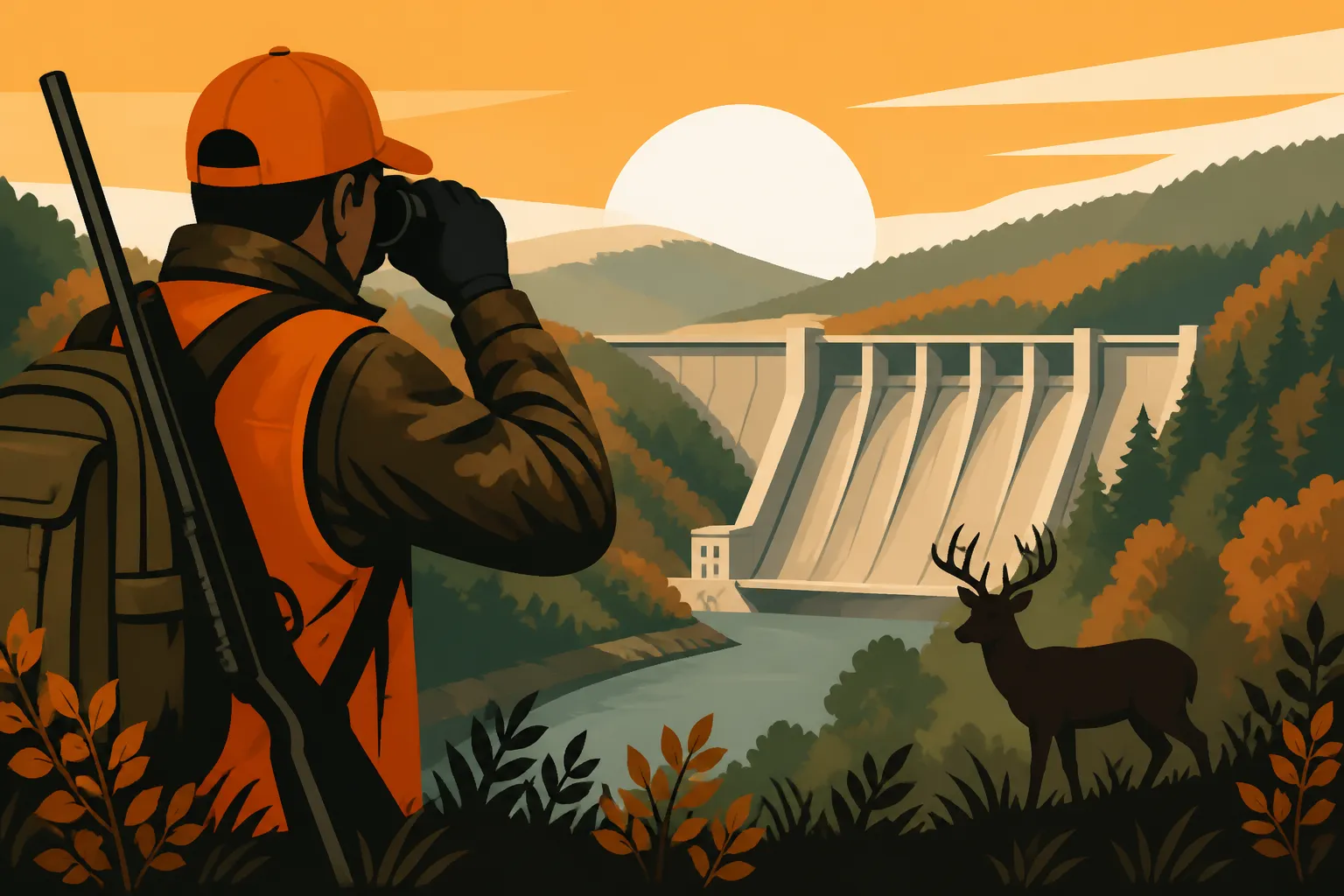
Hunting Around Kinzua Dam
Hunting the vast, often rugged landscape surrounding the Kinzua Dam and the Allegheny Reservoir can feel overwhelming for even seasoned Pennsylvania hunters. The sheer scale of the Allegheny National Forest, combined with the dramatic topography created by the reservoir, presents unique challenges and incredible opportunities. It’s a place where you can truly escape the crowds, but it demands careful planning and a deep understanding of the environment. This guide is designed to cut through that complexity, offering practical advice and insight into how you can successfully pursue game in this iconic corner of the Pennsylvania Wilds.
The Unique Landscape of the Kinzua Dam Region for Hunters
The Kinzua Dam, a massive flood control project on the Allegheny River, created the sprawling Allegheny Reservoir, carving a significant mark on the landscape of northwestern Pennsylvania. This isn't your typical rolling farmland hunting. We're talking about deep valleys, steep hillsides, thick stands of timber, and numerous finger-like coves and points extending into the reservoir. It's a true big woods experience, characterized by vast tracts of public land within the Allegheny National Forest Hunting. This environment offers both solitude and incredible potential for trophy animals, but it certainly doesn't give up its secrets easily.
Understanding the Allegheny National Forest Terrain
The Allegheny National Forest (ANF) encompasses over 500,000 acres, and a significant portion of it hugs the extensive shores of the Kinzua Reservoir. This means you're dealing with a dynamic mix of mature hardwoods, regenerating clearcuts, and dense hemlock or pine thickets. The dominant tree species include various oaks, black cherry, maple, and beech, all of which are critical food sources during certain times of the year. The undergrowth can range from relatively open forest floor in mature stands to nearly impenetrable laurel and rhododendron thickets, especially in damp areas or on steep slopes.
The topography is often brutal, with steep slopes plunging down to the water's edge, creating dramatic elevation changes. This isn't ground you can casually stroll across. It demands physical fitness, careful navigation, and an understanding of how deer and bear use such challenging terrain. The "finger ridges" that extend into the reservoir are particularly important. These natural land features create distinct funnels and travel corridors for game moving between different parts of the forest, but they can also be incredibly challenging to access. Understanding these ridges and the ravines between them is key to predicting animal movement. For instance, deer often move along benches that traverse these steep hillsides, just below the ridgelines, utilizing subtle shifts in elevation as safe travel paths.
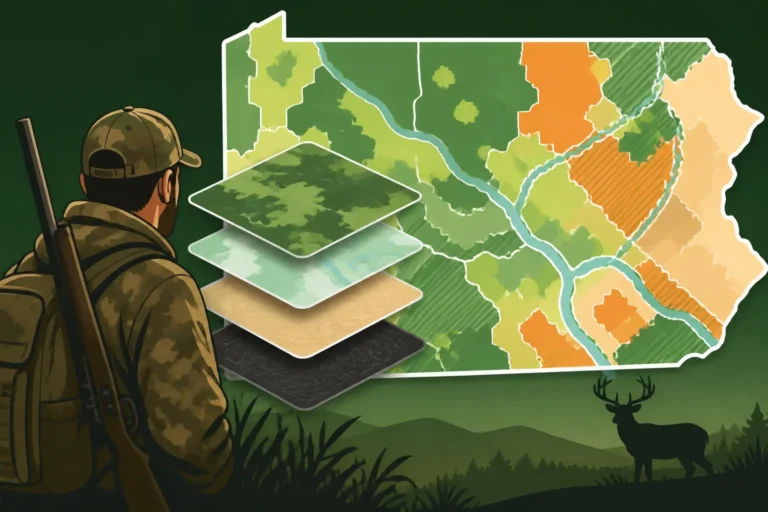
Consider a scenario where you're looking at a topo map or using a digital tool like onX Hunt. You'll see contours tightly packed near the reservoir, indicating those steep drops. Further back from the water, the slopes might ease into more gentle benches, which are often prime areas for deer to feed and bed, especially if there's good mast production. Learning to "read" these maps and translate them into real-world terrain is a skill that will greatly enhance your success in this rugged environment. Animals, especially mature bucks and bears, will use these elevation changes to their advantage, often bedding just below a ridge top to catch thermal drafts that carry scent upwards, giving them an early warning of approaching danger.
The Influence of the Allegheny Reservoir
The Allegheny Reservoir itself is more than just a body of water; it's a major geographical feature that dictates animal movement and hunter access. In some areas, the reservoir acts as a significant barrier, forcing animals to travel around its extensive shoreline, creating natural choke points. In others, particularly where the water narrows or where shallow coves exist, it can become a crucial water source or a natural funnel for game moving between different parts of the forest. The numerous coves and points mean miles of shoreline, much of it only accessible by boat or a rigorous hike through steep, unbroken timber.
This limited access can be a blessing and a curse. It often means less hunting pressure in certain remote areas, offering a more pristine hunting experience. However, it also means a much tougher pack-out if you tag an animal. Hauling a deer or, heaven forbid, a bear, up a steep slope to a distant road or back to a boat launch requires serious preparation and physical exertion. There are several boat launches and designated access points around the reservoir, such as those near the Kinzua Wolf Run Marina or Elijah Run, but even these often lead to challenging terrain once you leave the immediate vicinity of the water. The overall Allegheny Reservoir and Kinzua Country landscape is truly shaped by this massive body of water.
Water levels in the reservoir can also fluctuate throughout the hunting season, especially with the controlled release from the dam for flood control. What might be dry ground and an accessible finger of land in early archery could be under a few feet of water later in the year, impacting trails, potential access points, and even submerging crucial shoreline food sources. Always check current conditions and factor in potential changes when planning your hunt, as what appears on a static map might not reflect reality during peak season.
Primary Game Pursuits: Deer and Bear in Kinzua
The Kinzua Dam area, being part of the Allegheny National Forest, is renowned for its healthy populations of white-tailed deer and black bear. Hunting these animals here is a traditional Pennsylvania experience, demanding skill, patience, and often, a willingness to tackle tough country. Unlike many other parts of the state, the feeling of being in truly wild country is palpable, and the rewards can be significant.
Whitetail Deer Hunting Strategies
Hunting deer around Kinzua Dam means adapting to a big woods environment. Forget about sprawling food plots and easy field edge setups. Here, you're often hunting thick timber, clearcuts, and mountain laurel. Deer densities can be lower than in farm country, but the deer that thrive here are often older and savvier, accustomed to navigating challenging terrain and avoiding predators. Your focus should shift from seeing dozens of deer to patiently seeking out specific travel patterns and sign from mature animals. Focus on finding sign: fresh rubs, active scrapes, and especially well-worn trails that indicate consistent travel. Deer will heavily use benches along steep hillsides, saddlebacks between ridges, and the edges of clearcuts or thick regeneration for both travel and bedding.
Early archery season, especially in September, can be fantastic for targeting bucks still in summer patterns, often relating to specific pockets of food like acorns or beech nuts. These early season hunts require meticulous scent control and silent movement, as the woods are still lush and quiet. As the season progresses into the general firearms season, deer movement becomes more pronounced during the rut. This is when bucks are actively seeking does, often traveling significant distances across ridges and through valleys. Hunters often employ still-hunting tactics, slowly slipping through the woods, observing their surroundings with extreme patience, or setting up treestands or ground blinds along known travel corridors or pinch points. The Hunting Allegheny National Forest for Deer requires a different mindset than hunting smaller, fragmented parcels. Look for areas with a mix of mature timber for bedding and denser cover or recent timber cuts for feeding and security. Pay attention to stands of oaks and beeches; a good mast crop can draw deer from a wide area.
| Game Species | Primary Season Focus | Key Kinzua Considerations |
|---|---|---|
| White-tailed Deer | Archery, Firearms, Muzzleloader | Steep terrain, thick cover (especially laurel and clearcuts), food sources like acorns/beech nuts/wild cherry, limited road access, travel corridors along benches and saddles. High emphasis on scouting for subtle sign. |
| Black Bear | Archery, Early Firearms, Extended Firearms | Dense laurel thickets, remote areas, availability of mast crops (acorns, black cherry, grapevines), difficult recovery in rugged terrain. Look for overturned rocks, claw marks on trees, and well-used game trails. |
| Wild Turkey | Spring Gobbler, Fall | Roosting in mature timber along ridges, often found near water sources or clearings where they feed. Fall hunting often involves breaking up flocks and calling them back. Requires strong legs for covering ground. |
| Small Game | Varies by species | Primarily squirrels in oak/hickory stands, ruffed grouse in young forest/regrowth and along stream bottoms, rabbits in brushy areas near clearcuts. Often requires walking many miles to find concentrated pockets of game. |
Pursuing Pennsylvania Black Bear
The Kinzua region is prime black bear country. The vast, unbroken expanses of the Allegheny National Forest Acreage provide ideal habitat for bears, offering plenty of food sources and undisturbed bedding areas in dense laurel thickets or heavy timber. Bear hunting here can be incredibly challenging and rewarding, often requiring more physical exertion and patience than deer hunting. Like deer, bears will often gravitate towards mast crops like acorns and wild cherries when available, and they'll also seek out berry patches and other natural foods. Learning to identify bear sign is crucial: look for overturned rocks and logs where they've foraged for grubs, claw marks on beech trees where they've climbed to eat nuts, and large, distinct tracks in soft ground.
Bear season often runs concurrently with parts of deer season, and also has dedicated archery and early firearms segments. When bear populations are high, there can be an extended bear season in some WMUs that include parts of the ANF, particularly in more remote sections. Sticking to areas that have good cover and reliable food sources is key. Finding a bear is one thing; getting it out of a steep ravine or dense thicket, especially if you're alone, is another entirely. Be prepared for a physically demanding recovery, and consider hunting with a partner or group. Pennsylvania Black Bear Hunting in this environment is a true test of grit and planning, and proper shot placement is paramount for a quick, ethical recovery.
Navigating Public Access and Regulations Around Kinzua Dam
Hunting successfully around Kinzua Dam largely depends on understanding where you can hunt, how to get there, and what rules apply. The vast majority of the land directly adjacent to the reservoir is part of the Allegheny National Forest, managed by the U.S. Forest Service, but it's crucial to remember that Pennsylvania Game Commission regulations also apply on all public land within the state, including federal forest land.
Understanding Allegheny National Forest Rules
The Allegheny National Forest is managed for multiple uses, including recreation, timber, and wildlife. This means while hunting is generally permitted, there are specific regulations you need to be aware of beyond general state hunting laws. Vehicle access is often limited to designated forest roads, many of which are gated seasonally or permanently, making many prime hunting areas walk-in only. Knowing which roads are open and when is vital. Camping rules can vary across the ANF, with designated campgrounds requiring fees and reservations, while dispersed camping might be allowed in other areas with specific restrictions on duration and location. If you're planning a multi-day hunt, always check the specific rules for the district you'll be in.
Posting treestands and ground blinds also has specific guidelines; typically, stands must be removed at the end of the season and cannot damage trees (e.g., no screw-in steps). It's always best to use hang-on stands with climbing sticks or saddle hunting setups that leave no permanent impact.
It's also worth noting that the ANF is part of a larger Wildlife Management Unit (WMU). You'll need to know which WMU you're hunting in for proper tagging and understanding specific regulations like Pennsylvania Deer Seasons and WMU Rules and antler restrictions. For instance, the antler restrictions in the WMU encompassing Kinzua Dam specify what constitutes a legal buck, typically meaning at least three points on one side, depending on the specific WMU. Always double-check these regulations before heading out, as they can sometimes change or have nuanced interpretations in specific areas. Also, be mindful of any CWD (Chronic Wasting Disease) regulations that might apply to carcass movement if the ANF falls within a Disease Management Area (DMA).
Essential Mapping and Planning Tools
Before you even set foot in the woods, thorough planning is non-negotiable. Traditional paper maps from the U.S. Forest Service or the Pennsylvania Game Commission are excellent resources, showing main roads, trails, and sometimes even habitat features. However, modern digital tools are a game-changer for navigating this complex terrain. Applications like onX Hunt are invaluable for showing detailed topography, property boundaries (critical for knowing precisely where the ANF ends and private land begins, or if you're bordering other public lands like state game lands), and access roads. You can mark waypoints for potential stand sites, bedding areas, water sources, and escape routes, all from the comfort of your home. The ability to cache maps for offline use is especially important in remote ANF areas where cell service is often nonexistent.
While GoHunt is often associated with western big game, its emphasis on research and data-driven scouting can be applied to any challenging hunting area. Understanding how to use satellite imagery to identify clearcuts (which indicate new growth and browse for deer), mature timber (for bedding and mast), and natural funnels, combined with topographical maps to predict animal movement based on elevation, is a skill that will pay dividends around Kinzua. The Pennsylvania Game Commission's Using the Pennsylvania Mapping Center is another fantastic, free resource for overlaying different land types and habitat features. Don't underestimate the power of pre-season e-scouting; it saves boot leather and time, allowing you to narrow down vast areas into manageable hunting zones.
Scouting and Tactics for Success in Kinzua
Success in a challenging environment like Kinzua Dam often boils down to diligent scouting and employing the right tactics for the specific conditions you encounter. It's not just about showing up on opening day; it's about understanding the nuances of the landscape and the animals that live there. The effort you put in beforehand will directly correlate to your chances of success.
Pre-Season Scouting: Laying the Groundwork
Your boots-on-the-ground scouting should start long before the season opener, ideally in the late winter or early spring when vegetation is minimal, making sign more visible. In the vastness of the Allegheny National Forest, knowing where to focus your efforts is paramount. Use your mapping apps to identify potential funnels, benches, and thickets that look promising. Then, get out there and verify. Look for fresh rubs and scrapes, well-worn trails, and areas with abundant mast. Pay attention to water sources, especially during dry spells, as these can concentrate activity. Remember, the Scouting Pennsylvania Public Land Before Season is not a one-time event; conditions change year to year, and new clearcuts or timber operations can drastically alter animal movement.
One crucial aspect of scouting in this region is identifying potential recovery routes. If you're lucky enough to tag a big buck or a bear, you don't want to be caught unprepared on a steep, remote hillside, miles from a road. Knowing the easiest way to get an animal out before you even pull the trigger can save you a tremendous amount of grief. Sometimes, that means scouting a path down a ravine to a boat landing on the reservoir, or identifying a less steep traverse to a forest road. Consider carrying a simple deer drag or even a game cart if the terrain allows, though many areas will be too rugged for a cart.
Hunting Strategies for Steep and Remote Country
Hunting around Kinzua means embracing strategies suited for big, rugged woods. Still-hunting, where you move slowly and deliberately, observing your surroundings, can be very effective. This allows you to cover ground while remaining stealthy, increasing your chances of spotting a bedded animal or intercepting one on the move. When still-hunting, pay close attention to the wind and thermals. In steep country, thermals will typically rise in the morning as the sun warms the earth and fall in the evening as temperatures drop, affecting how your scent travels up or down a hillside. Understanding Wind and Thermals on a Ridge are critical factors that cannot be ignored.
For stand hunting, focus on pinch points created by terrain features, such as saddles between ridge tops, points dropping into the reservoir, or narrow benches that deer use to travel around steep cliffs. Hunting mature timber for deer and bear requires patience and often, a willingness to hike deeper than most other hunters. The farther you get from a road or common access point, the less pressure you're likely to encounter, and the better your odds of finding an unpressured animal. Consider a quality treestand setup that is quiet, safe, and comfortable for extended sits, but always adhere to Treestand Rules on Pennsylvania Game Lands if you venture onto state lands, or ANF regulations on federal land. Your gear should be lightweight but durable, and your footwear must be capable of handling steep, uneven terrain. Dressing in layers is essential for adapting to the fluctuating temperatures of the big woods.
Finally, always be prepared for the unexpected. Carry a first-aid kit, extra water and food, navigation tools, and a reliable communication device. The Kinzua Dam area offers some of Pennsylvania's most rewarding hunting experiences, but it demands respect and thorough preparation.
Disclaimer
This article is for general informational purposes only and does not constitute professional advice. Laws, prices and regulations vary by location and change over time. Consult a qualified professional for guidance on your specific situation.