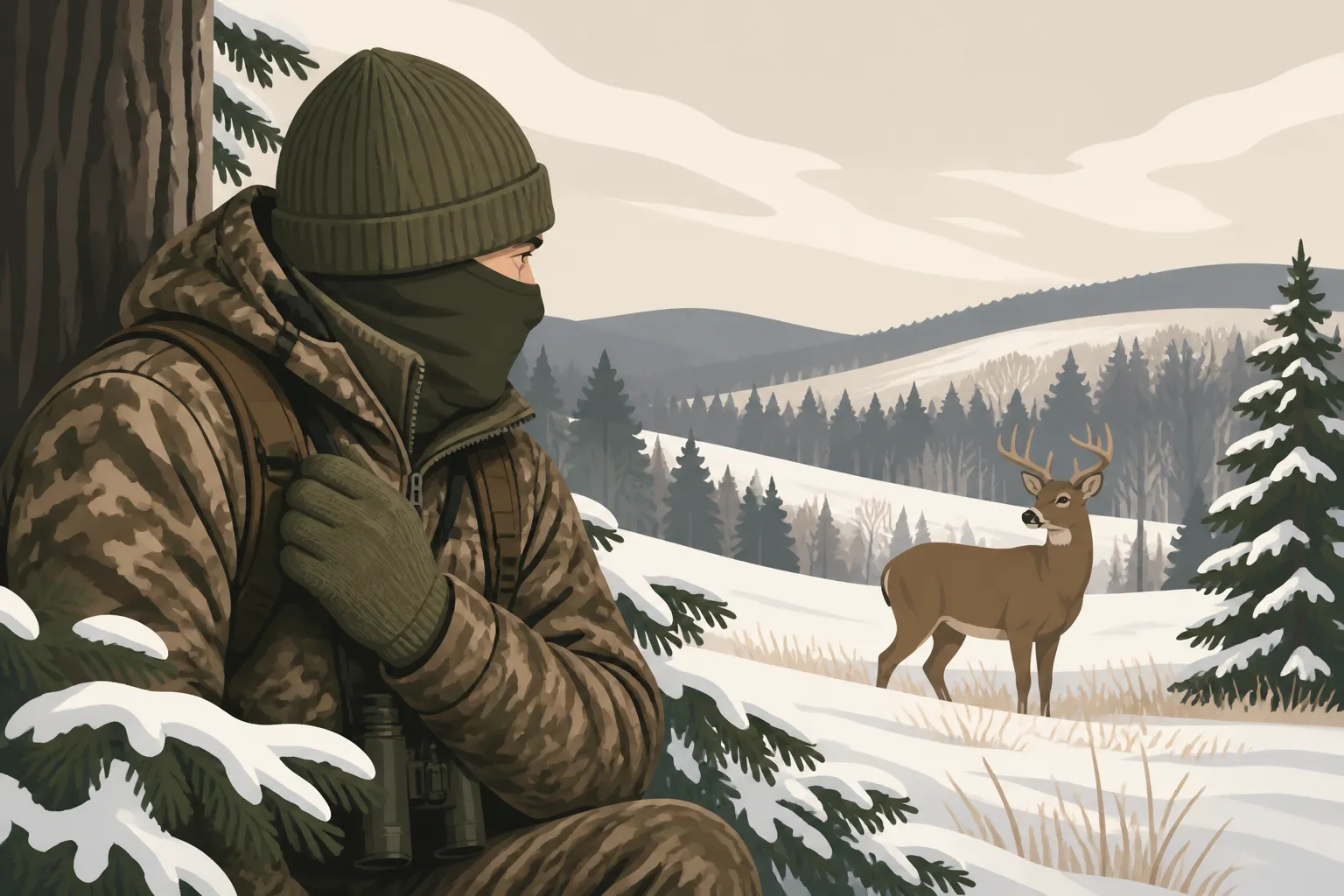
Wool for Wet Snow and Quiet Movement
There's nothing quite like a Pennsylvania late season hunt. The crisp air, the potential for a fresh blanket of snow, and the absolute quiet of the big woods can be magical. But let's be honest, that magic can quickly turn to misery if you're not dressed for the unpredictable, often damp, and certainly chilly conditions. Many of us have shivered through a stand sit, soaked to the bone from melting snow or a sudden freezing rain, all while sounding like a crinkly potato chip bag every time we move. This guide is all about one of the oldest, yet still most effective, materials for beating those elements: wool, and how it can keep you warm, dry, and most importantly, quiet when hunting Pennsylvania's late-season whitetails and other game.
Why Wool Excels in Pennsylvania's Wet, Cold Conditions
Pennsylvania weather is famously fickle, especially during the late fall and winter hunting seasons. One day you might have crisp, dry cold, and the next, a heavy, wet snow or even a freezing rain can roll in. This is where many synthetic materials, while excellent in their own right, start to show their limitations compared to the remarkable properties of wool.
Insulating When Wet: A Game-Changer
One of wool's most celebrated attributes, and a true game-changer for Pennsylvania hunters, is its ability to insulate even when wet. Think about it: you're still-hunting through a thick stand of hemlocks, heavy snow melting on the branches above, dripping steadily onto your shoulders. Or perhaps you're set up on a Hanging a Stand on an Oak Bench and that gentle snowfall turns into a damp, clinging wet snow. With many synthetic fleeces or insulated jackets, once they get wet, they lose a significant portion of their insulating power. You'll feel that chill seep right into your bones, and once you're cold, it's incredibly hard to get warm again.
Wool fibers are naturally crimped and contain tiny air pockets, which are responsible for their insulating properties. Even when the fiber itself absorbs moisture, these air pockets can retain much of their structure, continuing to trap warm air next to your body. This means that if you get caught in a wet snow, a sleet shower, or even just work up a sweat while dragging a deer, your wool layers will still be working to keep you warm. This isn't to say you'll be completely dry and toasty, but the difference in comfort and safety compared to other materials can be profound. For those long walks through damp timber or cold sits, knowing your insulation won't completely fail you is a huge mental and physical advantage.
Natural Moisture Management
Beyond insulating when wet, wool also boasts excellent natural moisture-wicking and management properties. When you're humping it up a steep ridge to get to your favorite Where Big Woods Bucks Bed, you're going to sweat. That sweat, if not moved away from your skin, will chill you rapidly once you stop moving. This is often called the "cotton kills" phenomenon, where cotton absorbs moisture and holds it against your skin, leading to hypothermia.
Wool, particularly finer merino wools, has a natural ability to draw moisture vapor away from your skin, moving it to the outer surface of the fabric where it can evaporate. It does this without feeling clammy or cold against your skin, unlike some synthetics that can feel sticky when saturated. The fibers are hydrophilic, meaning they love water, but they manage it intelligently. This active moisture management means you stay drier, and therefore warmer, both during periods of exertion and when you're sitting still. For a hunter needing to adapt to changing activity levels and unpredictable weather, this natural performance is invaluable.
The Science Behind Wool's Performance
Understanding why wool works so well can help you appreciate its value in your hunting wardrobe. It’s not just an old-school material; modern wool production, especially with merino, has taken its inherent qualities to new levels of comfort and performance.
Merino vs. Traditional Wool: What's the Difference?
When we talk about wool for hunting gear today, we're often talking about merino wool. This isn't your grandfather's scratchy, heavy wool blanket, though traditional wool still has its place for outer layers in some setups. Merino sheep produce incredibly fine fibers, much thinner than traditional wool. This fineness is key to its comfort.
Traditional wool, with its coarser fibers, can feel itchy and bulky against the skin, which is why many hunters used to shy away from it for anything other than outer layers. Merino wool, however, is so fine that its fibers bend when they touch your skin, rather than poking it. This makes it incredibly soft and comfortable, suitable for next-to-skin base layers. Furthermore, merino often has better moisture-wicking properties and can feel lighter weight for its warmth than traditional wool. While both types share the core benefits of insulating when wet and odor resistance, merino offers a superior level of comfort and versatility, making it ideal for the dynamic needs of a Pennsylvania deer hunter who might be still-hunting one hour and sitting patiently the next.
Wool's Temperature Regulation
Wool is truly a marvel of natural engineering when it comes to regulating body temperature. It doesn't just keep you warm; it helps keep you comfortable across a wider range of conditions. This is crucial when you're hunting during the transition periods of late fall or even Hunting the Pre-Rut in Late October, where mornings are frigid but midday can warm up unexpectedly.
The crimped structure of wool fibers creates millions of tiny air pockets. These pockets act as insulators, trapping your body heat when it’s cold outside. But wool also has a remarkable breathability. When your body starts to heat up, wool fibers can release excess heat and moisture vapor, preventing you from overheating and becoming sweaty. It's a two-way street, keeping you warm when you need it and allowing you to cool down before you become a sweaty mess. This dynamic temperature regulation means less layering and de-layering throughout the day, which in turn means less movement and less scent dispersal – both critical factors for a successful hunt. This versatility is a huge advantage when facing the unpredictable swings of temperature that often define a Pennsylvania hunting season.
Achieving Silent Movement: Wool's Stealth Advantage
Beyond warmth and moisture management, one of wool’s most overlooked, yet incredibly important, benefits for a hunter is its inherent quietness. There's nothing worse than getting busted by a wary buck because your clothing rustled at the wrong moment.
The Quiet Fabric Advantage
Imagine you're creeping through a frosty patch of woods on a frigid morning, perhaps Still-Hunting After a Fresh Snow, trying to get within range of a deer you spotted feeding just over the ridge. Every step you take, every time your arm brushes against your side, the sounds your clothing makes can carry surprisingly far in the still air. Many synthetic fabrics, especially those with waterproof membranes or a slick outer finish, can create a distinct "swish" or "crinkle" sound. This sound, while perhaps subtle to human ears, can be like a siren call to a deer.
Wool, on the other hand, is remarkably quiet. Its natural fibers are soft and have a muted texture that doesn't produce the same kind of friction sounds. When you move, wool layers glide against each other, or against brush, with a gentle, almost imperceptible sound. This "quiet fabric advantage" is particularly critical when you're making slow, deliberate movements, drawing your bow, or raising your rifle for a shot. That split second of silence can be the difference between a successful harvest and a deer bolting before you even have a chance. Brands like Kuiu and First Lite are well-known for their wool-based hunting clothing that prioritizes stealth and performance, but even more traditional wool garments offer this core benefit.
Minimizing Snags and Rustles
Hunting in Pennsylvania often means navigating dense cover – thick patches of multiflora rose, tangles of greenbrier, or dense laurel thickets. These aren't just obstacles; they're prime areas where deer hide and feed. Pushing through such cover with noisy clothing can quickly give away your position. Synthetic fabrics, especially those with a tighter weave, can sometimes snag and pull, creating sudden, sharp noises.
Wool's natural drape and softness minimize these issues. While it's not impervious to snags, its fibers are more forgiving. More importantly, when wool brushes against branches or briars, the sound it makes is often a soft, dull rustle rather than a sharp, artificial tearing sound. This subtle auditory signature blends more easily into the natural sounds of the forest, offering a level of concealment that stiff, noisy synthetics simply can't match. When you're trying to Find Ground Others Walk Past or approach a bedding area, every small advantage in stealth, including the sound your clothing makes, is absolutely critical. For serious still-hunters and those who get deep into the thick stuff, this minimal rustle makes wool an indispensable part of their gear.
Building a Wool Layering System for Pennsylvania Hunts
Effective layering is the cornerstone of comfort and adaptability for any hunter, especially in Pennsylvania's varied conditions. Wool excels across all layers, from base to outer, allowing you to build a system that can handle anything from a mild archery morning to a frigid late-season rifle hunt.
Base Layers: The Foundation of Comfort
Your base layer is the first line of defense against the elements and arguably the most important. It’s what sits directly against your skin, managing moisture and initiating warmth. For Pennsylvania hunting, especially in cooler to colder temperatures, merino wool base layers are unparalleled. They are soft, non-itchy (unlike traditional wool), and incredibly effective at wicking sweat away from your body.
When you're hiking into your stand in the pre-dawn darkness or doing some scouting before the season, you'll inevitably work up a sweat. A good merino base layer, whether it's a lightweight 150-gram for milder days or a mid-weight 250-gram for colder conditions, will pull that moisture off your skin, allowing it to evaporate outwards. This prevents that clammy, cold feeling when you stop moving and the chill sets in. Furthermore, merino wool is naturally odor-resistant, meaning you can wear it for multiple days in the field without building up a strong human scent – a huge advantage when deer hunting. Brands like Smartwool, Icebreaker, and even hunting-specific lines offer fantastic merino base layers that will serve as the silent, warm, and dry foundation for your entire hunting outfit. For a cold Late Antlerless Hunting in Pennsylvania morning, starting with a quality wool base layer is non-negotiable.
Mid-Layers: Adding Critical Warmth
Once you have your base layer sorted, your mid-layers are where you add critical insulation to match the ambient temperature and your activity level. Wool, again, shines here. You can choose from various weights and blends of wool to create adaptable warmth. A lightweight merino mid-layer, perhaps a ¼-zip top, can be perfect for early season or higher activity days. As the temperature drops, a heavier wool fleece or a thicker wool sweater becomes indispensable.
Unlike bulky down or some synthetic mid-layers that can compress and lose insulating value when wet or under pressure, wool mid-layers maintain their loft and warmth. This is essential when you're wearing a heavy pack, or if you find yourself sitting for extended periods in a treestand during a damp afternoon. Layering multiple wool mid-layers also allows for fine-tuning your warmth. You can start with a lighter wool top over your base, then add a heavier wool vest or jacket. This modular approach is far more effective than trying to rely on one very thick, non-adjustable layer. Many hunters will even incorporate a blend of wool and synthetic for their mid-layers, getting the best of both worlds, but the core warmth and breathability benefits of wool remain paramount. For long periods of Cold Weather Sitting Strategy, these layers are your best friend.
Outer Layers: Protection and Stealth
Your outer layer serves two primary functions: providing protection from the elements (wind, rain, snow) and offering that final, critical layer of stealth. While many hunters opt for a waterproof/windproof shell made of synthetic materials, incorporating wool into your outer layer design can significantly enhance quietness and warmth. A heavy wool anorak or jacket, especially one with a dense weave, can be surprisingly wind-resistant and can shed light snow and drizzle effectively.
The key benefit here, as we discussed, is silence. A pure wool outer jacket will allow you to move and draw your weapon with minimal sound. If you're going with a waterproof synthetic shell, consider using wool as your primary insulation underneath, and choose a shell with a brushed, quiet face fabric. For those who prioritize ultimate stealth in dry to damp conditions, a quality wool outer garment is hard to beat. When you are performing a Deer Drives With Three or Four Hunters or moving slowly through thick brush, having that quiet outer layer makes a real difference. For serious hunters, investing in high-quality wool outerwear from brands known for their hunting gear, is a wise decision. GoHunt users often plan their hunts with meticulous detail; choosing wool for quiet movement aligns perfectly with a well-thought-out hunting strategy to maximize success in the field.
Caring for Your Wool Gear to Maximize Longevity
Wool gear can be an investment, but with proper care, it will last you for many seasons of successful hunts in Pennsylvania's diverse landscapes. Neglecting it, however, can quickly lead to shrinkage, damage, or a loss of its fantastic properties.
Washing and Drying Best Practices
The biggest fear for many new wool owners is accidentally shrinking their prized sweater or base layer. Thankfully, modern merino wool is often designed to be machine washable, but it’s crucial to follow specific guidelines. Always check the care tag first! Generally, you’ll want to wash wool on a gentle cycle, using cold water, with a mild detergent specifically designed for wool or a gentle, non-biological detergent. Avoid hot water, as heat is the primary culprit for shrinking wool fibers.
When it comes to drying, air drying is almost always the best option for wool. Lay your garments flat on a clean towel or hang them on a drying rack, away from direct sunlight or heat sources. The tumbling action and high heat of a machine dryer can cause significant shrinkage and damage to wool fibers, leading to a loss of shape and performance. If you absolutely must use a dryer, use the lowest heat setting possible or a "no heat" air fluff cycle, but this should be a last resort. Patience here pays off, ensuring your wool retains its form and function for years. Maintaining your gear properly ensures it's ready for any hunting scenario, like Hunting Deer in Deep Pennsylvania Snow.
Storage and Pest Prevention
Once the hunting season is over and your wool gear is clean and dry, proper storage is essential to protect it until next year. The primary concern with wool is pests, specifically moths and carpet beetles, which are attracted to natural fibers, especially if there are any lingering organic residues or scents on the fabric.
Before storing, make absolutely sure your wool items are thoroughly clean and dry. Even a tiny food crumb or body oil can attract pests. Store your wool gear in airtight containers, garment bags, or vacuum-sealed bags. Adding natural deterrents like cedar blocks, lavender sachets, or mothballs (if you don't mind the smell) can provide an extra layer of protection. Avoid storing wool in damp or humid environments, as this can encourage mildew growth. Regularly checking your stored wool for any signs of pest activity is also a good practice. By taking these simple steps, you can ensure your favorite wool hunting layers remain in prime condition, ready to provide warmth, stealth, and comfort for many hunting seasons to come. Even when you're planning your next hunt using tools like GoHunt to scope out new terrain, knowing your gear is ready to perform provides incredible peace of mind.
| Wool Type | Key Characteristics | Ideal Use for PA Hunting | Pros | Cons |
|---|---|---|---|---|
| Merino Wool | Fine, soft, highly breathable, excellent wicking | Base layers, lightweight mid-layers, active outerwear | Comfortable, soft, odor-resistant, good in all temps | More expensive, less durable than traditional wool |
| Traditional Wool | Coarser, durable, very warm, good water resistance | Heavy mid-layers, outer jackets, blankets, camp wear | Very warm, durable, good value, insulates when wet | Can be itchy, heavier, less flexible |
| Wool Blends | Combines wool with synthetics (e.g., nylon, poly) | Mid-layers, durable outerwear, socks, hats | Enhanced durability, faster drying, cost-effective | May lose some natural wool benefits, less odor resistance |
Disclaimer
This article is for general informational purposes only and does not constitute professional advice. Laws, prices and regulations vary by location and change over time. Consult a qualified professional for guidance on your specific situation.