Dragging a Deer Off a Pennsylvania Mountain
There's nothing quite like the thrill of dropping a deer in the beautiful, rugged Pennsylvania mountains. The shot felt good, the deer went down, and then it hits you: the gut-wrenching realization that you're standing hundreds of yards, if not a mile, up a steep slope from the nearest drivable access. Getting that hard-earned venison back to civilization is often the most challenging part of the hunt, turning triumph into an exhausting, muscle-burning ordeal. This guide will walk you through the realities, strategies, and essential gear for safely and effectively dragging a deer off a Pennsylvania mountain.
The Brutal Reality of Mountain Deer Recovery
The moment you find your deer, the adrenaline high often starts to fade, replaced by a growing sense of trepidation as you scan the surrounding terrain. Pennsylvania's mountains, while breathtaking, are not forgiving when it comes to game recovery. They present a unique set of challenges that can quickly turn a successful hunt into an epic test of endurance.
Understanding Pennsylvania's Terrain
Our beloved Pennsylvania mountains are a mix of steep grades, rocky outcrops, and dense vegetation that conspire against an easy drag. You might be navigating a treacherous sidehill, trying to keep your footing on loose shale, or pushing through thick rhododendron and mountain laurel so dense it feels like a wall. Old logging roads might offer a temporary reprieve, but they often turn into eroded gulleys or dead ends. Creek bottoms, while sometimes offering a flatter path, can be notoriously wet, muddy, and tangled with blowdowns, adding another layer of misery. This isn't flat farm country, and expecting a smooth pull is setting yourself up for disappointment. Our article on Hunting Pennsylvania's Big Woods for Deer touches on just how wild and rugged some of these areas can be.
The Weight of the Harvest
A Pennsylvania whitetail, especially a mature buck or a plump doe, can weigh a surprising amount. Live weight can range from 100 to over 200 pounds, and while field dressing helps lighten the load significantly, you're still looking at a substantial carcass. A typical field-dressed adult deer might still tip the scales at 80-150 pounds, a formidable weight to haul over broken ground. Factors like the deer's size, its internal damage (which can affect how easily it slides), and especially the weather conditions play a huge role. Dragging through fresh snow can make it easier, while mud or a tangle of briars can feel like pulling an anchor. The angle of the slope, the density of the undergrowth, and even the type of soil – be it soft loam or sharp rock – all influence how much sheer physical effort it will take.
Essential Gear for Mountain Deer Extraction
You wouldn't go into the woods without your rifle or bow, and you shouldn't embark on a mountain deer recovery without the right gear. Thinking ahead and having these items can literally be the difference between a successful, albeit tiring, extraction and an impossible, potentially dangerous situation.
Dragging Aids and Devices
Forget just a rope; for mountain deer, you need more leverage. A sturdy, purpose-built deer drag harness is paramount. These typically consist of a heavy-duty strap or rope that attaches to the deer's antlers or head, with a padded shoulder harness or waist belt for the hunter. This distributes the load across your back and core, rather than just your arms, saving your shoulders and hands. Some even come with a handle that multiple people can grab.
Deer sleds, like the popular GoHunt sleds or similar models, are excellent for reducing friction, especially over snow, leaves, or semi-smooth terrain. They're essentially tough, molded plastic sheets or tubs that the deer lays in, protecting the hide and making it slide much easier. However, be realistic: a sled is fantastic on a slight downhill grade or flat ground but becomes cumbersome, if not useless, on extremely steep, rocky, or heavily vegetated slopes where it snags on every obstacle. A deer cart, while wonderful for Using a Deer Cart on Game Lands on level paths, is generally a non-starter in true steep mountain terrain unless you find a very old, unmaintained logging road that’s barely passable for even an ATV. It’s critical to assess the specific terrain before relying on one. For our steep, rocky areas, the sled often wins out over the cart for sheer versatility, if not ease of use.
Personal Gear for the Haul
Your personal gear needs to support the physically demanding task ahead. Good quality, waterproof, and supportive boots are non-negotiable. Our guide on Boots and Packs for Steep Country offers excellent advice here. You need solid ankle support to prevent twists and falls on uneven ground, and good traction is key for navigating mud, wet leaves, and loose rock.
Gloves, preferably leather or heavy-duty synthetic, will protect your hands from rope burn, briars, and sharp rocks. Hydration is crucial; even in cold weather, intense physical exertion will make you sweat and dehydrate quickly. Carry plenty of water, and maybe a small snack for sustained energy. Don't forget a reliable headlamp or flashlight, even if you down your deer in the morning. A mountain drag can easily take hours, and you might find yourself still hauling after dark. A multi-tool or a good sharp knife (beyond your field dressing knife) can be invaluable for clearing brush or making impromptu repairs. A small first-aid kit is also a wise addition for those inevitable scrapes and minor injuries.
Strategic Approaches to Getting Your Deer Downhill
Dragging a deer off a Pennsylvania mountain isn't just about brute force; it's about smarts, strategy, and sometimes, a whole lot of teamwork. Rushing in without a plan often leads to exhaustion, frustration, and potential injury.
Solo Dragging Techniques
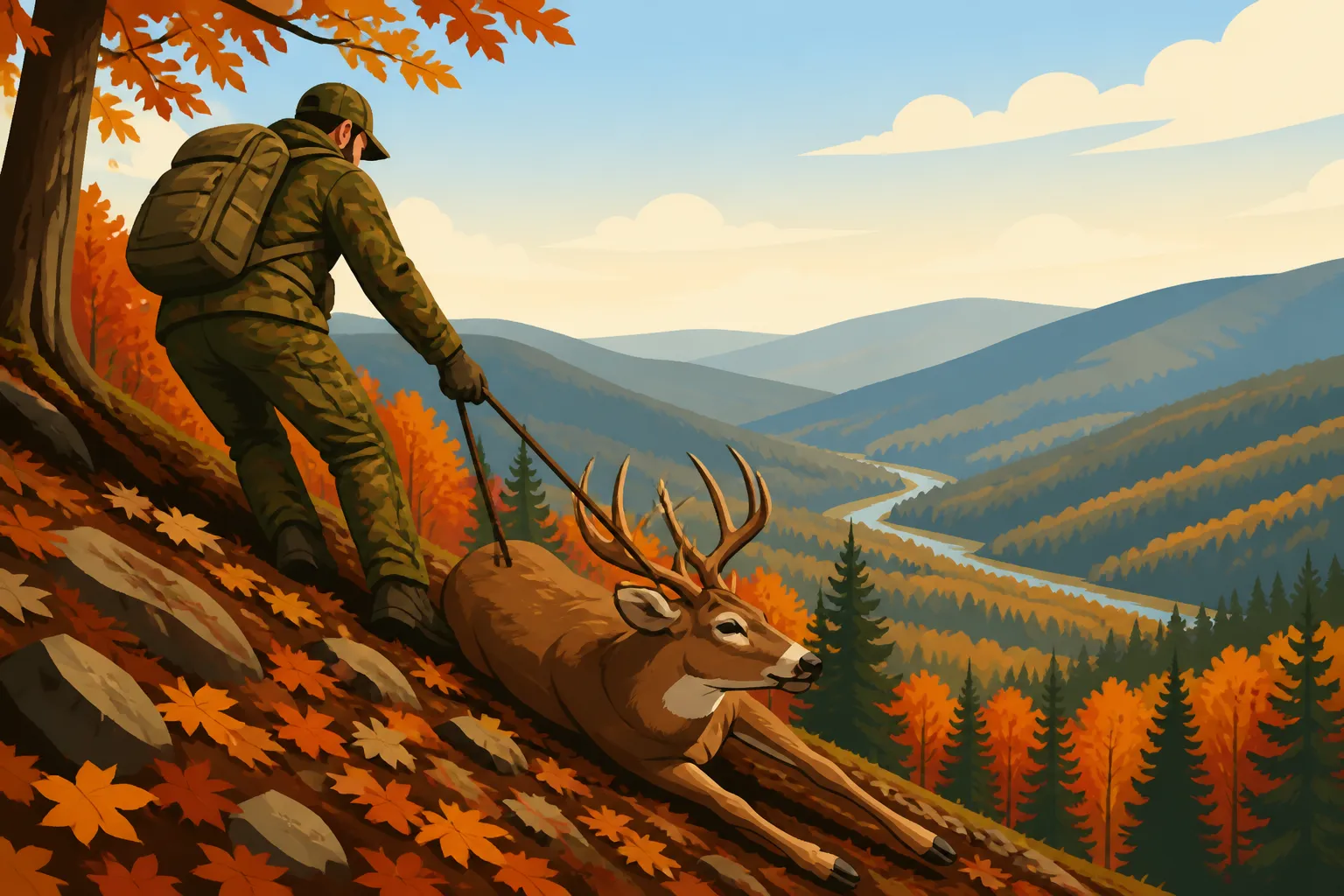
If you're hunting alone, your tactics need to be even more refined. The key is to work with gravity whenever possible, but not let it get away from you. Position the deer so its head is downhill; the antlers or head can act as a natural "plow" or anchor, preventing the deer from sliding uncontrollably and helping to clear some light brush. Use short, controlled bursts of dragging. Take 10-20 steps, then stop, rest, and re-evaluate your path. This conserves energy and allows you to constantly adjust to the terrain.
When you encounter obstacles like fallen trees or large rocks, don't try to drag over them head-on. Instead, try to work around them, or if small enough, use them as leverage. If you need to lift the deer over something, use your legs, not your back, and lift in stages. Sometimes, on a particularly steep section, you might need to "switchback" like a hiking trail, dragging the deer diagonally down the slope instead of straight down. This increases the distance but reduces the grade, making it more manageable. Consider leaving your pack at the deer, making a light trip back to the vehicle, dropping off your rifle, and then coming back for the deer and your pack. Every pound counts.
Teamwork Makes the Dream Work
Hunting with a partner or a group dramatically changes the game. More hands mean less strain per person, and you can tackle more challenging terrain. When dragging with two people, one person takes the lead with a drag harness, and the second person can either help pull from the rear or, more effectively, act as a "pusher" or "lifter" from behind the deer's hindquarters. This pushing action is incredibly powerful, especially over obstacles or up small rises you might encounter.
For larger groups, you can set up a "relay" system. One or two people drag for a set distance, then rest while another pair takes over. This allows everyone to conserve energy. Designate roles: one person might scout ahead for the easiest path, another handles the main drag, and others assist with pushing or clearing obstacles. Communication is vital in a group; call out potential hazards, signal when you need a break, and coordinate efforts when tackling a difficult section. Remember, for those later-season hunts, our guide on Deer Drives With Three or Four Hunters might offer some useful insights into coordinating movement and teamwork in the woods that can be adapted to deer recovery.
Utilizing Natural Advantages and Terrain
Before you even touch the deer, take a moment to survey your surroundings. Are there any old logging roads, even overgrown ones, that might lead down? A quick check on your mapping app, perhaps something from GoHunt or a similar service, can often reveal these faint lines on a topo map that aren't obvious from the ground. Look for game trails; while sometimes circuitous, they often follow the path of least resistance.
If there's snow on the ground, congratulations – you just got a massive advantage. Snow dramatically reduces friction, making a sled or even just a rope drag much easier. Ice, however, is a massive hazard. Always prioritize safety. If you're on a very steep, open slope, letting the deer slide or "tumble" might be an option for a short distance, but this can damage the meat and hide, and quickly get out of control. It's usually a last resort for areas where you absolutely cannot drag it, and the fall is short and relatively clear.
Pay attention to ridges and benches. Often, finding a slightly flatter bench that contours around a mountain can be far easier than a direct descent. Our article on Reading a Pennsylvania Hollow for Deer and Hunting Oak Ridges and Benches delves into understanding these terrain features, which is just as useful for recovery as it is for hunting.
Safety First: Preventing Injury on the Mountain
Dragging a deer is physically demanding and inherently risky. Ignoring safety can lead to serious injury, not just to yourself, but potentially to your hunting partners. Taking precautions is paramount.
Physical Preparedness and Limits
Honestly assess your physical condition before the season, and certainly before attempting a monumental drag. Are you hydrated? Have you eaten? Are you already exhausted from the hunt? Overexertion can lead to muscle strains, heart issues, or even simple fatigue that causes you to lose your footing and fall. Know your limits. If you're struggling, take a break. Hydrate, catch your breath, and let your muscles recover. If you're hunting in the Hunting Pennsylvania's Late Archery Season or late firearms season, cold weather can add another layer of risk, making muscles stiff and increasing the chance of hypothermia if you sweat through your clothes and then cool down rapidly. This is where Cold Weather Sitting Strategy and proper layering become crucial, not just for the hunt, but for the haul out.
Navigating Hazards
Pennsylvania mountains are full of potential dangers. Loose rocks and slippery leaves are notorious for causing falls. Watch your footing constantly, especially when moving downhill with a heavy load. Remember that a deer carcass, especially if still warm, can be quite slick. Ensure your grip on the drag rope or harness is secure.
Weather can turn quickly. A sudden rain or snow shower can make trails slick and visibility poor. Be prepared for changes. Getting lost is also a real concern, particularly if you're so focused on the deer that you lose track of your landmarks or direction. Always have a compass or GPS device (like your phone with a mapping app) and know how to use it. If you're going into the big woods for Hunting the Second Week of Rifle Season, this kind of preparedness is essential. If you start to feel disoriented, stop, take a moment, and consult your map. Don't push on blindly.
When to Call for Help (or an Alternative Method)
Sometimes, despite all your preparation and effort, a full-carcass drag just isn't feasible or safe. Recognizing when to pivot to an alternative method or call for assistance is a sign of experience, not failure.
The Gutless Method and Quartering Out
The "gutless method" is a game-changer for mountain hunting. Instead of field dressing internally, you essentially skin and debone the deer in place, removing the valuable meat in manageable pieces. This dramatically reduces the weight you need to carry. You'll need a sharp knife (or two), game bags to keep the meat clean, and a strong pack. Our guide on Field Dressing a Deer in Cold Weather covers traditional gutting, but the gutless method focuses on external cuts and deboning, leaving the hide and skeletal structure behind.
When quartering out, you separate the deer into its major muscle groups: two hindquarters, two front shoulders, and the backstraps and tenderloins. The head and antlers can be removed separately if desired. This allows you to carry the meat out in multiple trips or with the help of a Frame Packs for Boning Out a Deer on your back. It's cleaner, often faster in the long run for difficult recoveries, and significantly less strenuous than a full drag. It's especially useful for Recovering a Deer on Steep Ground where dragging is nearly impossible.
Specialized Recovery Services
While less common for whitetails, if you find yourself in an absolutely impossible situation – perhaps a deer downed in a deep ravine, an unexpected injury, or extreme weather – there are occasionally local services or fellow hunters who offer recovery assistance. Some taxidermists or processors might have contacts. This is rare, but if it's the difference between losing your deer and getting it out, it might be worth exploring. In some areas, for larger game like elk, specialized pack-out services with horses or ATVs exist, but for deer in Pennsylvania, it's usually a matter of human grit or quartering.
Comparing Deer Recovery Methods for Mountain Terrain
Understanding the pros and cons of different recovery methods can help you make the right choice when faced with a mountain drag.
| Method | Pros | Cons | Best Use Case |
|---|---|---|---|
| Rope/Harness Drag | Simple, minimal gear, works on varied terrain | Extremely physically demanding, slow, causes hide damage | Moderate distances, slight to moderate slopes, 1-2 hunters |
| Deer Sled | Reduces friction significantly, protects hide | Cumbersome on very steep/rocky terrain, can snag | Snow, dense leaves, gentle slopes, multiple hunters |
| Deer Cart | Easiest on flat ground, minimal physical strain | Nearly useless on steep, rocky, or heavily timbered slopes | Old logging roads, flat fields, limited true mountain use |
| Gutless/Quartering Out | Drastically reduces weight, allows multiple trips | More time-consuming on site, requires game bags/pack | Steepest, most rugged terrain, long distances, solo hunter |
No matter how you choose to tackle it, getting a deer off a Pennsylvania mountain is a monumental task. Be prepared, be strategic, and most importantly, stay safe. Your venison will taste all the sweeter knowing the effort you put into earning it.
Disclaimer
The information provided in this guide is for general informational purposes only and does not constitute professional advice. Hunting regulations and safety practices can change, and individual conditions in the field will vary. Always consult the latest Pennsylvania Game Commission regulations and prioritize your safety above all else.