Pennsylvania Legal Shooting Hours
There's nothing quite as gut-wrenching as questioning whether that shot you just heard, or even considered taking, was actually legal. The legal shooting hours in Pennsylvania can feel like a moving target, constantly shifting with the seasons, the specific game you're after, and even your exact location in our vast state. This guide is here to untangle all that confusion, providing clear, actionable information so you can hunt confidently and legally every time you step into the woods.
Understanding the Core Legal Shooting Hours Rule
For most of us, when we talk about hunting in Pennsylvania, we're talking about deer, bear, and turkey. The Pennsylvania Game Commission (PGC) has a pretty consistent baseline rule for legal shooting hours that covers these popular species and a good chunk of our small game. However, like anything in hunting, there are always a few specific exceptions you absolutely need to be aware of.
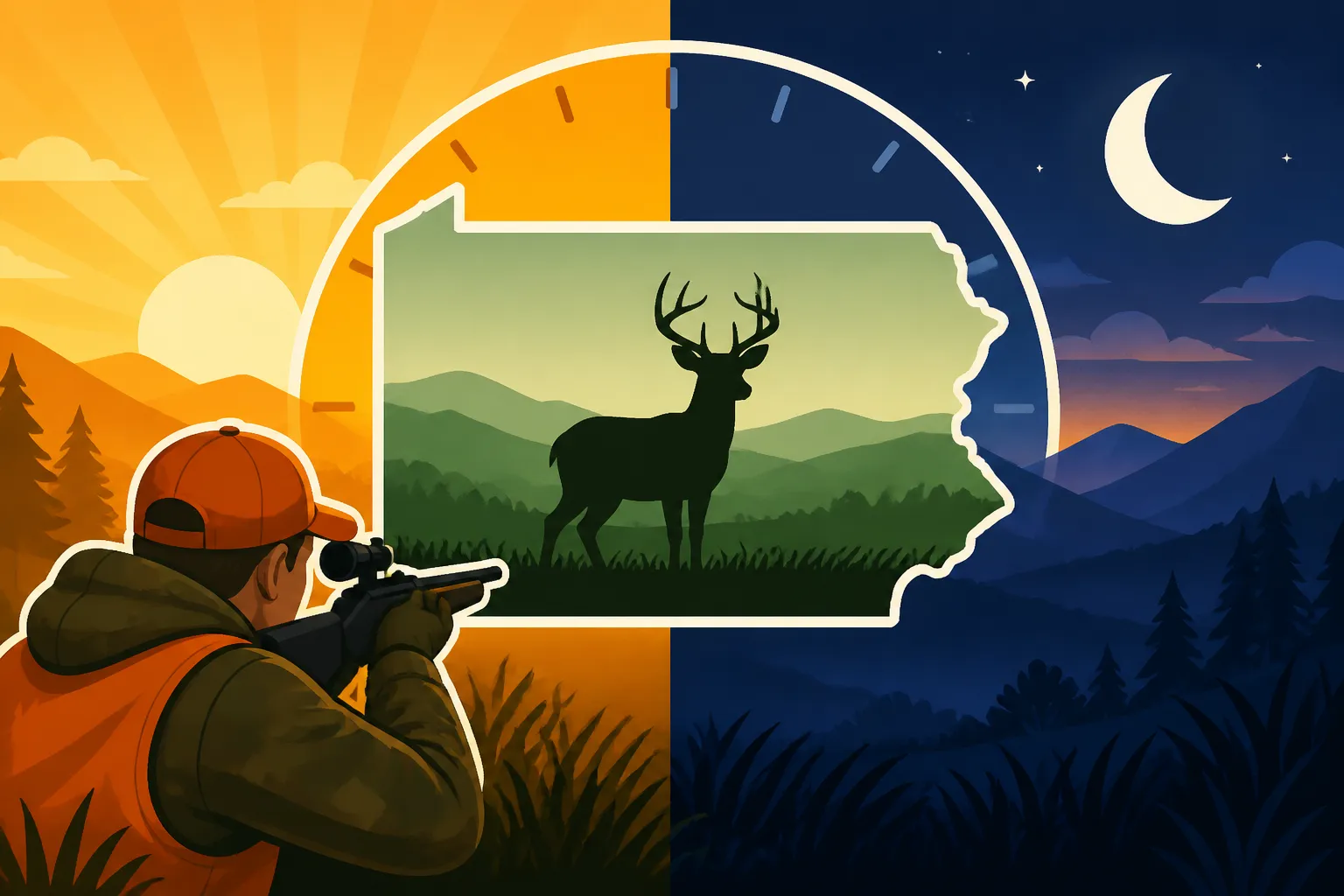
The foundational rule is that legal shooting hours generally run from one-half hour before sunrise to one-half hour after sunset. This is critical for ethical hunting, ensuring sufficient light for positive target identification and clean shots. It's not just about what you can see, but what the regulations demand. Imagine you're deep in the big woods, the last rays of sun are painting the western sky, and a buck steps out. Your internal clock might tell you there's still plenty of light, but the PGC's official sunset time might say otherwise. Miscalculating this can lead to serious violations, not to mention a potentially unethical shot. This rule applies across most of the state's diverse terrain, from the hardwood ridges of the north to the farm country edges of the south. When you're out there, always keep that 30-minute buffer in mind.
Now, it’s worth noting that "sunrise" and "sunset" aren't just generic terms; they refer to the official times published by the U.S. Naval Observatory. These times can vary by several minutes from one side of Pennsylvania to the other, and even from day to day, changing rapidly as the seasons progress. Relying on a general approximation or your phone's default weather app isn't going to cut it when your hunting license is on the line. Being precise about these times is a hunter's responsibility.
Variations by Game Species and Season
While the 30-minutes-before-sunrise to 30-minutes-after-sunset rule is the bedrock, Pennsylvania hunting regulations aren't a one-size-fits-all deal. Different game species, and even different phases of the season, can have their own unique shooting hour stipulations. It's vital to know these specific rules, or you could find yourself in hot water.
Deer, Bear, and Turkey
For the vast majority of our deer, bear, and turkey seasons, that standard one-half hour before sunrise to one-half hour after sunset rule holds true. This includes the major seasons like Bowhunting Pennsylvania's October Archery Season, Pennsylvania's Two-Week Firearms Deer Season, and Flintlock and Muzzleloader Deer Hunting in Pennsylvania. This consistency makes it a little easier, but it doesn't excuse you from knowing the exact sunrise and sunset times for your specific location on any given hunting day.
Think about the crunch time of the rut in November. You might be focused on Hunting the Peak Rut Week in Pennsylvania, and those early morning and late evening hours are often the most productive. A big buck might step into view right at the edge of legal shooting light. Having a reliable method to confirm those times, whether it's a printed table or a hunting app, is non-negotiable. The same goes for bear hunters in the fall, particularly during the archery or extended firearms seasons, where bears might be on the move during those low-light periods.
Small Game and Furbearers
Small game like squirrels, rabbits, pheasants, and grouse also largely follow the one-half hour before sunrise to one-half hour after sunset rule. This means whether you're Rabbit Hunting With Beagles in Pennsylvania or Squirrel Hunting Pennsylvania Hardwoods, you're generally working within the same light parameters as big game hunters. Predator and furbearer hunting, such as Coyote Calling in Pennsylvania Winter, can get a bit trickier, especially with specific night hunting rules for coyotes and foxes, which often require different permits or methods. Always double-check the current digest for these particular nuances.
Migratory Game Birds
This is where things diverge significantly! Migratory game birds, which include waterfowl (ducks and geese), doves, woodcock, and snipe, often have entirely different legal shooting hours set by federal guidelines in coordination with the state. For most migratory bird hunting, legal shooting hours typically begin at sunrise (not a half-hour before) and extend to sunset (not a half-hour after), though specific seasons or areas might have extensions.
For instance, if you're planning on Duck Hunting Pennsylvania Rivers or Goose Hunting Pennsylvania Fields, you need to be very precise with official sunrise and sunset times. Setting up decoys in the pre-dawn gloom, you might see ducks flying, but you absolutely cannot legally shoot until official sunrise. The penalties for shooting migratory birds outside of legal hours are severe, so always consult the annual Pennsylvania Hunting & Trapping Digest or the U.S. Fish & Wildlife Service migratory bird regulations specifically for the species you intend to hunt. This distinction is one of the most common mistakes new waterfowl hunters make.
Here's a quick reference table for general shooting hours:
| Game Category | General Legal Shooting Hours | Key Exceptions/Notes |
|---|---|---|
| Deer, Bear, Turkey | 1/2 hour before sunrise to 1/2 hour after sunset | Check PGC Digest for specific season dates. |
| Small Game (e.g., Rabbit, Squirrel, Pheasant, Grouse) | 1/2 hour before sunrise to 1/2 hour after sunset | Some furbearers (coyote, fox) have separate night hunting regulations. |
| Migratory Birds (e.g., Ducks, Geese, Doves, Woodcock) | Sunrise to Sunset (often) | Crucial Distinction: Often starts at sunrise, and may end at sunset. Check federal and state regulations specifically for migratory species, as some may have extended shooting hours. |
How to Determine Official Legal Shooting Times Accurately
The difference between a legal shot and a violation often comes down to just a few minutes, making precise knowledge of sunrise and sunset times absolutely essential. You can't just guess or rely on a vague sense of how much light is left in the day. The Pennsylvania Game Commission provides hunters with reliable resources to ensure they are always within the legal window.
Using the Pennsylvania Hunting & Trapping Digest
Your absolute best friend in the field, after a good pair of boots, is the current year's Pennsylvania Hunting & Trapping Digest. Every year, the PGC publishes a comprehensive digest that includes detailed tables of sunrise and sunset times. These tables are usually broken down by month and include a correction factor for different longitudes across the state. You'll find sections for specific regions, allowing you to fine-tune the times for your hunting area. It's a bit old-school, but having a physical copy marked up with your hunting dates can save a lot of headaches. Many seasoned hunters will grab a digest, flip to the relevant pages, and circle the dates they plan to hunt, making a note of the exact times.
Online Resources and Mobile Apps
In our modern age, technology offers fantastic tools to keep you legal. The Pennsylvania Game Commission's website is an excellent resource, often providing direct links or search functions for current sunrise and sunset times. Many reliable hunting apps also integrate this data, automatically calculating the precise legal shooting hours for your exact GPS location.
This is where tools like GoHunt really shine. Mobile apps built for hunters can use your phone's GPS to tell you the exact sunrise and sunset times, and subsequently, the legal shooting hours, right down to the minute, for your specific position in the woods. This is incredibly helpful when you're scouting Pennsylvania Public Land Before Season or sitting in your stand. You can check it real-time as the light fades or before the sun even breaches the horizon, eliminating any guesswork. Some apps even factor in moon phase, weather, and other data points that might influence animal movement, giving you a more comprehensive picture for your hunt plan.
However, a word of caution: always ensure your app is pulling data from an authoritative source or is specifically designed for hunting regulations in your state. A generic weather app might give you "pretty good" times, but "pretty good" isn't "legal."
Geographical Considerations
Remember how Pennsylvania is a big state? Well, it's wide enough that sunrise and sunset times can differ significantly from east to west. For example, the sun rises and sets earlier in Philadelphia (eastern PA) than it does in Pittsburgh (western PA). If you're hunting near the state's borders or traveling between different regions, these minor differences can become critically important. Always adjust your times based on your specific hunting location, not just a general idea for Pennsylvania. The PGC digest's correction factors or a GPS-enabled app are your best friends here.
Practical Tips for Hunting During Legal Shooting Hours
Knowing the rules is one thing, but applying them safely and effectively in the field is another. Hunting during those low-light windows, whether it's the magical half-hour before sunrise or the fading light after sunset, requires extra vigilance, preparation, and an unwavering commitment to safety.
Pre-Dawn and Post-Dusk Considerations
Positive Target Identification: This is paramount. Just because it's technically legal to shoot doesn't mean you have sufficient light to positively identify your target. Never, under any circumstances, take a shot unless you are 100% certain of what you are shooting at and that there are no obstacles or other hunters beyond your target. This is not only a legal requirement but an ethical imperative. Use your binoculars to carefully scan and identify.
Gear for Low Light: Good optics are essential. A quality rifle scope with good low-light performance can make a huge difference in those first and last minutes of the day. Similarly, a dependable headlamp or flashlight is crucial for navigating to and from your stand or hunting location in the dark. Make sure to choose one with a red light option to preserve your night vision. When Rifle Scopes for Low-Light Timber are being discussed, this low-light performance is exactly what hunters are talking about.
Entry and Exit Routes: Plan your entry and exit routes meticulously. Knowing the terrain, trails, and potential hazards in the dark will not only prevent you from getting lost but also minimize disturbing game. If you're using a treestand, ensure your safety harness and lifeline are in perfect working order, as falls are more likely in low light. For public land hunters, especially when considering Hunting Pennsylvania's Big Woods for Deer, having a well-marked GPS track on your GoHunt app for your route can be a lifesaver.
Safety Zone Adherence
The legal shooting hours refer to when you can pull the trigger, but don't forget Pennsylvania's safety zone rules. These rules dictate minimum distances you must maintain from occupied buildings, schools, and playgrounds, regardless of the time of day. Even if it's perfectly legal shooting light, you cannot shoot within 150 yards of an occupied building without permission or 50 yards for archery. Always be aware of your surroundings, especially if you're Suburban Deer Hunting in Southeast Pennsylvania or hunting near rural residences.
"Opening Day" and "Closing Day" Considerations
On the first and last days of any season, particularly for firearms deer season, you'll often find many hunters pushing the legal limits of shooting light. This can lead to increased hunting pressure and sometimes, questionable decisions. Be mindful of others in the woods, especially during those busy periods like Opening Day Tactics in Pennsylvania. Stick to your planned legal times and don't feel pressured to take a risky shot because others might be. The same goes for the very end of the season; don't try to squeeze out an extra few minutes if the light isn't there. It's simply not worth it.
Cold Weather Sitting Strategy
When hunting the late season, especially during Hunting Pennsylvania's Late Archery Season or the late antlerless firearm seasons, the cold can be a real factor. The temptation to pack up early or arrive late to avoid the frigid darkness is strong. However, those extreme low-light hours can be incredibly productive for deer seeking late-season food sources. Layering up effectively with proper cold weather gear is crucial to maximize your time during those legal windows. Your ability to sit comfortably during these times directly impacts your opportunity to encounter deer.
Conclusion
Navigating Pennsylvania's legal shooting hours doesn't have to be a source of stress or confusion. By understanding the core rule of one-half hour before sunrise to one-half hour after sunset for most game, recognizing the specific distinctions for migratory birds, and diligently using official resources like the PGC digest or reputable hunting apps like GoHunt, you can ensure every minute you spend afield is both productive and legal. Prioritize positive target identification, plan your movements in low light, and always adhere to safety zones. Hunting is about enjoying the pursuit and respecting the regulations, and being precise with shooting hours is a fundamental part of that respect.
Disclaimer
The information provided in this guide is for informational purposes only and is not a substitute for the official Pennsylvania Game Commission hunting and trapping regulations. Hunters are responsible for knowing and adhering to all current state and federal hunting laws. Always consult the most recent Pennsylvania Hunting & Trapping Digest for the definitive and up-to-date regulations.