The Heaviest Bears Pennsylvania Has Produced
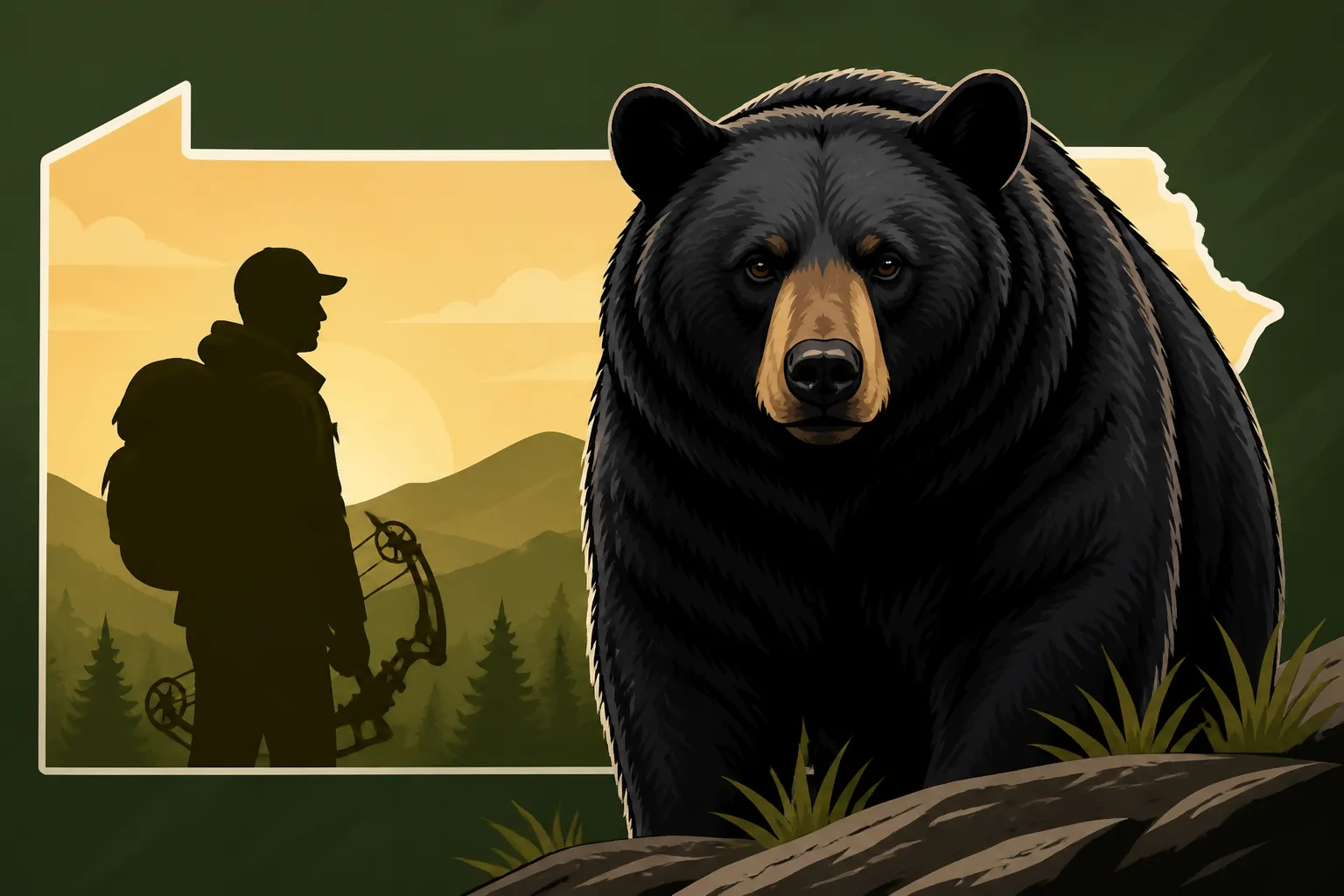
It's no secret that Pennsylvania is home to some truly magnificent black bears. For hunters, there's a certain awe, and perhaps a touch of obsession, that comes with the thought of encountering one of these forest giants. But when we talk about the heaviest bears Pennsylvania has produced, the stories often become legend, leaving many of us wondering about the real, verifiable giants. This guide is here to cut through the campfire tales and delve into the impressive world of Pennsylvania's heavyweight black bears, exploring the official records, the habitats that produce these behemoths, and how aspiring hunters can approach pursuing such a formidable animal.
Understanding Pennsylvania's Black Bear Population and Growth
Pennsylvania's black bear population is not only robust but consistently produces some of the largest bears in North America. We're talking about animals that can top the scales at weights that would make a small car blush. It’s a testament to the diverse and abundant habitat our state offers, from the dense northern forests to the agricultural richness of our southern counties. Understanding how these bears get so big, and how their size is documented, is the first step in appreciating these incredible creatures.
How Bear Size and Weight Are Tracked
When a bear is harvested in Pennsylvania, it needs to be taken to a Pennsylvania Game Commission (PGC) check station. These stations are absolutely critical for gathering biological data. It's not just a formality; it's where the rubber meets the road for wildlife management. At these stations, biologists and staff will weigh the bear, measure it, pull a tooth for aging, and gather other vital information. This data helps the PGC monitor population health, reproductive rates, and, yes, track those incredible maximum weights. Without this diligent record-keeping, those claims of 800-pound bears would just be whispers on the wind.
Think about it: you drag that huge bear out of the woods, probably exhausted, and the first thing you want to do is celebrate. But the PGC check station is your final, crucial stop. They use certified scales, often large industrial ones, to ensure accuracy. This is particularly important for those record-breaking animals, where every pound truly counts. They're not just guessing or using a flimsy bathroom scale; these are professional operations designed for precise data collection, ensuring that when they say a bear weighed 700 pounds, it really weighed 700 pounds. This scientific approach helps confirm the incredible stories that hunters bring in year after year, reinforcing Pennsylvania's reputation for monster bears.
Factors Contributing to Massive Bear Weights
So, what makes a bear grow to such epic proportions in Pennsylvania? It’s a combination of several key factors, really. First and foremost, genetics play a significant role. Some bears simply have the genetic predisposition to grow larger than others, just like in any animal population. Beyond that, age is paramount. Bears don't stop growing after a few years; they continue to put on weight and size well into their prime, often reaching their maximum size between 8 and 15 years old. A bear that lives a long, healthy life has more opportunities to accumulate mass.
But perhaps the biggest contributor in Pennsylvania is food availability. Our state offers an incredible bounty of natural food sources, from vast acorn and beech nut crops in the forested regions to cornfields and orchards in the more agricultural areas. Bears are opportunistic omnivores, and they'll take full advantage of whatever is available. A mild winter followed by a banner acorn crop, for instance, can lead to bears packing on an extraordinary amount of fat reserves, pushing their weights to extreme levels. Access to consistent, high-calorie food sources is really the engine that drives these growth spurts. When a bear finds a reliable food source, whether it's a natural hard mast crop or agricultural offerings, it will often frequent that area, gorging itself to prepare for hibernation, which in turn leads to those jaw-dropping weights.
The Official Giants: Pennsylvania's Heaviest Bears on Record
When you hear hunters swapping stories, you'll inevitably hear tales of bears "the size of Volkswagens." While those might be exaggerations, the official records of Pennsylvania's black bear harvests are genuinely awe-inspiring. These aren't just big bears; these are truly exceptional animals that have grown to legendary status in our state's hunting history.
Top Individual Bear Weights and Their Locations
Pennsylvania is consistently recognized for producing massive black bears, with several individuals tipping the scales well over the 700-pound mark. The current record for the heaviest black bear ever taken in Pennsylvania, according to the Pennsylvania Game Commission, was a colossal male weighing 876 pounds. This monumental bear was harvested in 2010 in the northeastern part of the state, specifically in Monroe County. This animal stands as a testament to the incredible potential of Pennsylvania's bear population.
Other giants include a 774-pound bear taken in Pike County in 2003, a 760-pound bruin from Huntingdon County in 2011, and a 733-pound bear from Lycoming County in 2017. These aren't isolated incidents; trophy-class bears in the 600- to 700-pound range are harvested across the state every year, especially during peak seasons like Pennsylvania Black Bear Hunting. Looking at the counties where these giants were harvested, a pattern emerges: they're often found in areas with a mix of dense forest cover for security and proximity to agricultural fields or abundant natural food sources. The deep woods of the Northeast and Northcentral regions, coupled with the food availability, often create the perfect storm for bears to reach incredible sizes.
Here's a look at some of the most impressive official bear weights recorded in Pennsylvania:
| Year Harvested | Weight (lbs) | County | WMU |
|---|---|---|---|
| 2010 | 876 | Monroe | 3D |
| 2003 | 774 | Pike | 3D |
| 2011 | 760 | Huntingdon | 4A |
| 2017 | 733 | Lycoming | 3B |
| 2019 | 719 | Berks | 4C |
| 2018 | 700 | Clinton | 2G |
| 2013 | 698 | Wayne | 3D |
| 2015 | 697 | Somerset | 2C |
Note: This table reflects some of the heaviest recorded bears but is not an exhaustive list of every large bear harvested.
The Importance of Official Check Stations
I can’t stress enough how vital these official check stations are. They’re not just a place to show off your harvest; they are the backbone of sound wildlife management. Imagine if every hunter just guessed the weight of their bear or used a less-than-accurate scale. The data would be useless! The PGC relies on the consistent, accurate measurements taken at these stations to track the health and size trends of the bear population. This information directly influences decisions about hunting seasons, bag limits, and specific regulations, like those for Pennsylvania Bear Seasons and Licences.
For us hunters, it also provides undeniable proof. When you bring in a truly massive bear, having it officially weighed and documented at a PGC check station solidifies its place in the state's record books and your personal hunting history. It moves your achievement from anecdotal evidence to a verifiable fact. Plus, getting to chat with the biologists and other hunters at these stations is often a fantastic experience in itself, offering insights into the local bear activity and a chance to share in the excitement of others' successful hunts. It truly reinforces the community aspect of hunting in Pennsylvania.
Where to Find Pennsylvania's Big Bears
Finding a bear, any bear, can be a challenge. But targeting a true heavyweight requires a specific understanding of where these giants thrive. It's not just about luck; it's about knowing the optimal conditions and habitats that allow bears to reach monumental sizes.
Geographic Hotbeds for Heavyweight Bears
While big bears can turn up almost anywhere in Pennsylvania, certain regions consistently produce the heaviest specimens. The northeastern counties of Monroe, Pike, Wayne, and Sullivan, as well as parts of Carbon and Luzerne, are prime bear country. These areas feature extensive tracts of public and private forestland, providing ample cover and denning sites. Crucially, they also often sit adjacent to agricultural areas, offering a rich buffet of corn, oats, and other crops that bears readily exploit. This combination of deep woods and agricultural bounty is a recipe for growing large bears.
Another significant area for big bears is the northcentral region, encompassing counties like Lycoming, Tioga, Clinton, and Potter. This is often referred to as Pennsylvania's "Big Woods" country, and for good reason. It's characterized by vast, unbroken forests, steep ridges, and remote hollows, providing the solitude and security that older, larger bears prefer. While perhaps less reliant on agriculture than the northeast, these areas have incredible natural food sources, especially during mast years. Bears in the Big Woods might have to travel further for food, but the sheer abundance of acorns, beechnuts, and berries, coupled with low human disturbance in many areas, allows them to live long and grow large. For those looking to hunt Pennsylvania Black Bear in the Big Woods, understanding these prime habitats is crucial.
Habitat and Food Sources for Record-Breaking Bruins
A heavyweight bear isn't just born; it's made through years of optimal foraging and survival. The ideal habitat for these giants is a mosaic of dense, mature forest for cover and bedding, interwoven with areas rich in diverse food sources. In the spring and early summer, bears will seek out succulent green vegetation, emerging from hibernation to find fresh shoots, skunk cabbage, and tender grasses in bottomlands and clearings. As summer progresses, berry crops—blackberries, raspberries, blueberries—become vital. You'll find them gorging in clearcuts, old fields, and along forest edges where sunlight penetrates.
However, the real key to record-breaking size often lies in the fall mast crop. Acorns, particularly from white oaks, and beechnuts are incredibly high in calories and fat, providing the critical energy reserves bears need for winter. A strong mast crop year can lead to bears entering hibernation at significantly higher weights. Beyond natural foods, bears are incredibly adaptable. Proximity to agricultural fields, especially cornfields, provides an almost unlimited food source. Bears will travel miles to feed on corn as it matures, putting on tremendous weight. Finding consistent food sources that allow a bear to pack on fat for many consecutive years is what truly transforms a healthy bear into a giant. Keep in mind that finding Bear Sign in Mountain Laurel can often lead you to productive feeding or bedding areas.
Hunting Strategies for Trophy Bears
Hunting big bears isn't just about showing up; it's about meticulous planning, understanding bear behavior, and employing the right tactics. These animals are intelligent, wary, and often inhabit some of the toughest terrain.
Scouting for Big Bear Sign
Scouting is paramount when targeting a trophy-class bear. You're not just looking for any bear sign; you're looking for big bear sign. This means focusing on areas with large track sizes—a front paw print wider than 5 inches is a good indicator of a mature boar. Look for claw marks high up on trees, indicating a bear stretching to mark its territory, often significantly higher than a sow or younger bear would reach. Scat piles should be large and consistent with a diverse diet. Pay close attention to rub trees—evergreens or softwoods that bears rub against to leave their scent. Bigger bears leave bigger, more worn rubs.
Furthermore, focus your scouting efforts around prime fall food sources. As the season progresses, identify where the acorns are dropping heaviest, or which beechnut stands are producing. If you find a consistently productive food source, look for travel corridors leading to and from it. These might be heavily worn trails through the brush, broken branches, or even mud wallows. Utilizing mapping tools, like those available through GoHunt, can help you identify remote pockets of prime habitat, potential travel routes between food and cover, and possible bedding areas that other hunters might overlook. Don't be afraid to put in the miles; big bears don't often live close to roads or easy access points.
Tactics for Encountering Large Bears
There are generally two main approaches to hunting big bears in Pennsylvania: still-hunting/stand hunting, and bear drives.
Still-Hunting and Stand Hunting: This tactic is often favored by solo hunters or small groups who prefer a more stealthy approach. It involves slowly and deliberately moving through prime bear habitat, constantly scanning and listening. Key areas to still-hunt include dense thickets adjacent to food sources, creek bottoms, and the edges of clearcuts. When still-hunting, always hunt into the wind and move at a snail's pace, stopping often to glass and listen. For stand hunting, identifying a productive food source or a well-used travel corridor is crucial. Setting up an elevated stand or a ground blind downwind of these areas, especially during the early morning or late afternoon, can increase your odds. Bears are creatures of habit, and if you can pattern their movements between bedding and feeding, you stand a good chance. Patience is absolutely vital for this method.
Bear Drives: This is a traditional and highly effective method for Bear Drives in Pennsylvania, especially in areas of dense cover where still-hunting is difficult. It involves a group of hunters: "drivers" who push through a specific section of cover, attempting to move bears towards "watchers" positioned strategically on likely escape routes. Communication and safety are paramount during a drive. Drivers should move slowly and deliberately, making noise to encourage bears to move. Watchers need to be positioned where they have clear lines of sight, often on benches, ridge lines, or saddles, anticipating where a bear might try to slip through. The key to a successful drive is picking the right piece of cover and ensuring everyone knows their role and positions. This can be an incredibly exciting and effective way to move a large, often nocturnal, bear during daylight hours.
Essential Gear for the Hunt
Chasing heavyweight bears demands the right gear, both for the hunt itself and for the potentially challenging recovery.
Firearms: For bear hunting in Pennsylvania, most hunters opt for powerful centerfire rifles. Popular calibers include the .30-06 Springfield, .300 Win Mag, .308 Winchester, and .270 Winchester. These calibers offer sufficient energy to humanely harvest a large bear. Ensure your rifle is zeroed correctly, and practice shooting from various positions you might encounter in the woods. For more on appropriate calibers, check out Rifle Calibers for Pennsylvania Bear. Shot placement on a bear is critical, aiming for the vitals behind the shoulder.
Optics: High-quality binoculars (8×42 or 10×42) are indispensable for picking apart thick cover and identifying bear sign from a distance. A reliable rifle scope with good low-light performance is also key, as bears are often most active during dawn and dusk.
Clothing and Footwear: Layering is essential for Pennsylvania's variable weather. Good quality waterproof and windproof outerwear is a must. Invest in comfortable, sturdy, waterproof hiking boots with excellent ankle support, especially if you plan to hunt steep, rugged terrain in areas like the Allegheny National Forest.
Navigation: A reliable GPS unit or a smartphone with a robust hunting app like GoHunt is critical. You'll often be deep in remote areas, and knowing your exact location, property boundaries, and how to get back to your vehicle is not just convenient, but vital for safety. Mark your stand locations, potential travel routes, and any significant bear sign you find.
Recovery Gear: This is where many hunters are caught off guard by a truly massive bear. A quality headlamp (with extra batteries) for tracking after dark, flagging tape, a sharp hunting knife, and a bone saw or gutless method kit are essential. For getting the bear out, consider a strong deer drag, a deer cart (if the terrain allows), or even a game sled if there's snow. Remember, an 800-pound bear can easily outweigh two or three grown men. Planning for recovery is as important as the shot itself.
What to Do After the Harvest: Handling a Giant
Successfully harvesting a heavyweight bear is an incredible accomplishment, but the work isn't over. In fact, for a truly massive bear, the real challenge often begins after the shot. Proper handling and reporting are crucial for both ethical reasons and compliance with state regulations.
The Logistics of Recovering a Massive Bear
Let's be blunt: dragging an 800-pound bear out of a remote hollow is an undertaking that will test your physical and mental limits. This is where pre-planning, teamwork, and specialized gear really pay off. First, once the bear is down, approach cautiously and confirm it's expired. Then, mark the spot where the bear fell and the direction you came from with flagging tape or your GPS. This is vital for navigating back to it, especially if you need to leave to gather more help or equipment.
Field dressing should be done as quickly and efficiently as possible, especially if temperatures are mild. This helps cool the carcass and prevent spoilage. You'll want a sharp, sturdy knife and maybe a partner. For a truly massive bear, the "gutless method" can be a lifesaver, allowing you to quarter the animal and pack out the meat without having to physically move the entire carcass. This method is highly recommended for Recovering a Deer on Steep Ground, and applies even more so to large bears. If you plan to skull mount, remember to leave sufficient hide and meat attached to the skull for proper caping later. Then, it’s all about brute force and strategic planning. A large deer cart can be a godsend on relatively flat ground or old logging roads, but on steep, rocky terrain, a heavy-duty game sled or simply breaking the bear down into manageable pieces for pack-out is often the only realistic option. Always prioritize safety; trying to move too much weight with too few people can lead to injuries.
Processing and Reporting Your Trophy
Once you have your bear recovered and transported, the next critical step is getting it to an official Pennsylvania Game Commission check station. This is a mandatory requirement for all bear harvests in Pennsylvania. The PGC uses these stations to collect essential biological data, including weight, sex, and age. This data is fundamental to their bear management program, helping to ensure healthy bear populations for future generations. Check the PGC website for specific check station locations and hours, especially around the Pennsylvania Bear Seasons and Licences dates.
At the check station, your bear will be officially weighed and recorded, and a tooth will be extracted for aging. This is the moment your heavyweight bear earns its official place in the records. You’ll also be issued a tag or confirmation that your harvest has been properly reported. Following the check station, it's time for butchering and meat care. Bear meat is delicious when handled properly, but it's crucial to be aware of trichinella, a parasitic worm that can be present in bear meat. Always cook bear meat thoroughly to at least 160°F (71°C) to kill any potential parasites. This is a critical step for Handling Bear Meat Safely. If you’re not comfortable butchering a large animal yourself, many reputable butcher shops in Pennsylvania offer game processing services.
Ethical Considerations and Conservation
As hunters, we are not just consumers of wildlife; we are its most dedicated stewards. Harvesting a bear, especially a magnificent, heavyweight animal, comes with significant ethical responsibilities and a commitment to conservation.
The Role of Bear Management in Pennsylvania
Pennsylvania’s robust black bear population, and the consistent production of trophy-class animals, is no accident. It's the direct result of decades of careful and effective wildlife management by the Pennsylvania Game Commission. The PGC utilizes scientific data—much of it collected at those mandatory check stations—to make informed decisions about bear seasons, bag limits, and habitat projects. Their goal is to maintain a healthy, sustainable bear population that can thrive across the state while also providing hunting opportunities and managing conflicts with human populations.
This management involves monitoring population trends, assessing habitat conditions, and conducting research into bear biology and behavior. For instance, understanding How Many Black Bears Pennsylvania Has or Where Pennsylvania Bears Range directly influences where and when hunting seasons are opened. By participating in these seasons, following regulations, and reporting our harvests, we, as hunters, are directly contributing to this successful conservation model. It’s a partnership between hunters and wildlife agencies that ensures we can continue to marvel at these incredible animals, and perhaps even pursue one of Pennsylvania's heavyweight legends, for generations to come.
Respecting the Resource
Harvesting a record-book bear is a profound experience, one that should be approached with the utmost respect for the animal and the resource. This means making a clean, ethical shot to ensure a quick and humane harvest. It means dedicating the time and effort to recover every animal, regardless of how challenging the terrain or weather. It also means utilizing the meat and hide from your harvest, honoring the life taken.
Beyond the hunt itself, respecting the resource means supporting conservation efforts, adhering to all hunting regulations, and being a responsible ambassador for hunting. When you're in the woods, whether scouting or hunting, practice Leave No Trace principles. Report any suspicious activities or violations to the proper authorities. The opportunity to hunt black bears in Pennsylvania is a privilege, and by acting responsibly and ethically, we ensure that this privilege endures. The sight of an 800-pound bear is truly a marvel, and our collective actions are what guarantee that future hunters will continue to have the chance to pursue these magnificent animals in the Pennsylvania wilds.
Disclaimer
Please note that hunting regulations, season dates, and specific requirements can change. Always consult the official Pennsylvania Game Commission Digest or website for the most current and accurate information before planning any hunting activity.