Hunting the Pennsylvania Wilds
The Pennsylvania Wilds, that sprawling, rugged expanse of forests and mountains in the north-central part of our state, can feel utterly overwhelming to a hunter unfamiliar with its vastness. It's easy to get lost, literally and figuratively, in the sheer scale of the public land and the challenge of its steep terrain and dense cover. This comprehensive guide will help you understand this incredible hunting ground, from its unique geography and abundant wildlife to the specific strategies and gear you'll need to successfully navigate and hunt this truly wild corner of Pennsylvania.
Understanding the Pennsylvania Wilds Region
The Pennsylvania Wilds isn't just a catchy tourism slogan; it's a recognized region encompassing some of the largest tracts of undeveloped, public land east of the Mississippi. For hunters, it represents a profound opportunity to experience a backcountry hunt without leaving our home state. But this opportunity comes with its own set of challenges, demanding preparation and respect for its formidable nature.
Defining the Geographic Extent and Character
When we talk about the Pennsylvania Wilds, we're referring to a huge area that stretches across 13 counties in the north-central part of the state, including places like Cameron, Potter, Tioga, McKean, Elk, Forest, and Clinton counties. This region is characterized by its unbroken expanses of hardwood forests, deep river valleys, steep mountain ridges, and a relative scarcity of human development. Unlike much of Pennsylvania, which is a patchwork of agriculture and suburbia, the Wilds offers a true "big woods" experience. It’s where you can walk for miles without crossing a road, where the sounds of civilization fade, and where the challenges of elevation and dense forest truly test your grit. The sheer scale means that hunting here isn't about finding a small woodlot; it's about understanding vast ecosystems.
Key State Forests and Game Lands within the Wilds
Within the Pennsylvania Wilds, you'll find an impressive mosaic of public lands, each with its own characteristics and regulations, though all fall under the umbrella of public access for hunting. The largest landowners are the Pennsylvania Department of Conservation and Natural Resources (DCNR), which manages the State Forests, and the Pennsylvania Game Commission (PGC), which manages State Game Lands. You'll also find a significant portion of the Allegheny National Forest here, particularly in the western reaches of the Wilds.
State Forests, such as the Susquehannock, Sproul, Elk, and Tioga State Forests, are managed for multiple uses, including timber, recreation, and wildlife. They often feature extensive networks of unimproved roads, many of which are gated but can be walked, providing access to vast interior tracts. State Game Lands, on the other hand, are acquired and managed primarily for hunting and wildlife habitat. These tracts are generally more focused on hunter access and often feature habitat improvements like food plots or clearcuts. The Allegheny National Forest, a federal property, operates under its own set of rules, though hunting is generally permitted across its expansive timberlands. Understanding these distinctions is crucial, as specific rules regarding things like camping, vehicle access, and even some hunting practices can vary slightly between these different types of public ground. For detailed mapping, a tool like onX Hunt can be invaluable here, helping you discern property boundaries and access points on the ground.
| Public Land Type | Primary Managing Agency | Key Features for Hunters | General Access Notes |
|---|---|---|---|
| State Forests | PA DCNR | Vast, remote, timbered; extensive gated roads | Motorized access restricted on many interior roads; walking, mountain biking encouraged. Camping often permitted with permit. |
| State Game Lands | PA Game Commission | Managed for wildlife habitat; food plots, clearcuts; diverse. | Generally good parking; some seasonal road closures; specific rules on blinds/stands. Camping usually prohibited. |
| Allegheny National Forest | U.S. Forest Service | Mixed hardwoods, some old growth; large, undeveloped tracts. | Varied access, some developed campgrounds, vast backcountry. Specific rules on ATVs/snowmobiles. |
The "Big Woods" Reputation and What it Means for Hunters
The term "Big Woods" isn't just a nickname; it's a description of the prevailing habitat and the hunting experience it offers. Unlike the more fragmented agricultural landscapes of southern Pennsylvania, the Big Woods mean expansive, continuous forests. This translates to lower deer densities in some areas compared to farm country, but often larger, more mature deer that have learned to elude hunters in vast cover. For bears and elk, it's ideal habitat, providing the solitude and resources they need to thrive.
Hunting in the Big Woods requires a different mindset. You won't find many easily accessible field edges or small woodlots. Instead, you'll be navigating steep ridges and deep hollows, often far from roads or trails. This remoteness can be intimidating, but it's also where the biggest rewards often lie. It means longer walks, more physically demanding climbs, and the need for superior navigation skills. Hunters who thrive here embrace the challenge, understanding that success often comes down to covering ground, interpreting subtle sign, and outthinking an animal on its home turf. This is where you truly earn your buck or bear, where the quiet of the forest becomes your closest companion, and where a successful hunt is as much about the journey as the harvest. You'll find yourself relying on every bit of knowledge you've gained, from Reading a Pennsylvania Hollow for Deer to Finding Ground Others Walk Past.
Species and Opportunities in the Pennsylvania Wilds
The Pennsylvania Wilds is a biodiverse region, offering hunters opportunities for a variety of game. While deer are undoubtedly the most pursued species, the Wilds is perhaps best known for its robust populations of black bear and its iconic, growing elk herd. Each species presents its own unique challenge and reward in this rugged landscape.
Whitetail Deer: The Primary Pursuit
While deer densities might not be as high as in the agricultural areas to the south, the Pennsylvania Wilds is home to a significant population of white-tailed deer. What they lack in sheer numbers, they often make up for in maturity and antler growth, especially in areas that receive less hunting pressure. These "big woods bucks" are masters of evasion, utilizing the vast cover, steep terrain, and thick regrowth to their advantage. Hunting them successfully often means understanding their seasonal movements – how they use oak ridges during the acorn drop, or where they might seek shelter in dense clearcuts during harsh weather.
Archery season here can be particularly rewarding, offering a chance to intercept deer still on summer patterns or during the early stages of the rut. Bowhunting Pennsylvania's October Archery Season is a prime time for many. During the firearms season, the sheer size of the landscape means that traditional still-hunting or methodical drives are effective strategies. The biggest challenge for deer hunters is often finding where deer are concentrated in such vastness. Focusing on food sources, thermal cover, and natural travel corridors like benches along hillsides, or saddles connecting ridges, becomes paramount. These deer are not easily fooled, and a successful hunt often comes after many miles hiked and hours spent patiently watching.
Pennsylvania's Black Bear Stronghold
If there's one species that truly defines hunting in the Pennsylvania Wilds, it's the black bear. This region boasts the highest bear densities and historically produces the largest bears in the state. The vast, unbroken forests provide ideal habitat for bears, offering abundant food sources like acorns, beechnuts, cherries, and berries, along with secure denning sites. The thrill of bear hunting in the Wilds is unmatched, as these intelligent animals present a formidable challenge.
Bear season in Pennsylvania is structured to offer various opportunities, from the early archery season to the general firearms and extended seasons. Pennsylvania Black Bear Hunting details the full scope. Successful bear hunting often hinges on intensive pre-season scouting to locate active feeding areas or established travel corridors. Bears are nomadic and will move significant distances for food, so understanding where the mast crops are producing is critical. Many hunters participate in organized bear drives, which can be highly effective in pushing bears out of dense cover in the expansive woods. For solo hunters, still-hunting through prime bear habitat, carefully watching for sign like scat, torn-up logs, or claw marks on trees, can pay off. The key is patience and persistence, knowing that a big bear could be lurking around any bend in the trail or tucked away in a remote laurel thicket.
The Elusive Elk of the Wilds
Perhaps the most iconic species of the Pennsylvania Wilds is the magnificent elk. Once extirpated from the state, elk were successfully reintroduced and now thrive in a specific, though expanding, range within the Wilds, centered around Elk and Cameron counties. Drawing an elk tag is a once-in-a-lifetime opportunity for most hunters, making it one of the most coveted hunts in North America. These impressive animals, especially the bulls during the September rut, offer an unforgettable experience.
While the number of tags is extremely limited, the opportunity to hunt Elk in the Pennsylvania Wilds draws hunters from across the country. Success on an elk hunt requires meticulous planning, often involving professional guides or extensive personal scouting. Elk are large animals that require specific approaches to hunting, shot placement, and recovery. Their habitat largely overlaps with the Big Woods, utilizing vast areas of mature timber, open fields, and thick clearcuts. During the rut, bugling bulls can be located, offering thrilling close encounters. Outside the rut, understanding their feeding and bedding areas, often in remote, steep country, is essential. Even if you don't draw a tag, visiting the Wilds during the September rut to witness the bugling spectacle is an experience every outdoor enthusiast should have.
Other Game: Turkeys, Grouse, and Small Game
Beyond the big game, the Pennsylvania Wilds offers excellent opportunities for other species, adding variety to the hunting seasons. Wild turkeys, particularly in the spring, provide a thrilling challenge. The vast tracts of timber mean birds often roam widely, and hunters must be prepared to cover ground and adapt their calling strategies. Spring Gobbler Hunting in Pennsylvania is a long-standing tradition here, and successful hunters often employ "run-and-gun" tactics, moving until they elicit a gobble. Fall turkey hunting in the Wilds can also be productive, with hunters focusing on breaking up flocks and calling birds back in.
The Ruffed Grouse, Pennsylvania's state bird, historically thrived in the Wilds. While populations have seen declines in some areas, pockets of good habitat – particularly young forest and dense regrowth – still offer opportunities. Grouse hunting here is physically demanding, requiring hunters to navigate thick cover. Success often depends on having a good bird dog to locate and flush birds. Grouse Hunting Pennsylvania Cover is a rewarding, albeit challenging, pursuit. Small game, such as squirrels and rabbits, can also be found, especially on the edges of agricultural clearings or in specific timber types like mature oak and hickory stands. While often overlooked by those focused on big game, pursuing small game can be a great way to explore different areas of the Wilds and enjoy a more relaxed day afield.
Navigating the Terrain: Access and Topography
Hunting the Pennsylvania Wilds means confronting some of the state's most challenging terrain. This isn't flat-land hunting; it's an immersive experience in mountains, valleys, and dense forests that demand physical fitness, sharp navigational skills, and a deep understanding of how animals use the landscape. Without a grasp of the topography and how to access it, you'll be at a significant disadvantage.
Public Access Points and Motorized Vehicle Rules
Accessing the vast public lands of the Pennsylvania Wilds can be both straightforward and incredibly complex. Major state routes and secondary roads often bisect or border these large tracts, providing numerous parking areas and access points. However, the true "backcountry" experience often begins where the paved roads end. State Forests, in particular, have extensive networks of dirt or gravel roads, many of which are gated and closed to public motorized traffic for periods, or permanently. These gated roads are invaluable for foot access, mountain biking, or sometimes even horse access, allowing hunters to penetrate miles into remote areas away from road hunters.
Understanding the specific rules for each land type is critical. On State Game Lands, vehicle access is generally restricted to designated parking areas and established roads. Driving off-road is strictly prohibited. State Forests often have more nuanced rules; some roads might be open seasonally for specific activities, while others are always gated but provide ideal hiking trails. The Allegheny National Forest also has specific regulations regarding off-road vehicles like ATVs and snowmobiles, generally restricting them to designated trails. Always check the managing agency's website for current maps and regulations, or rely on a robust mapping app like onX Hunt, which can show land boundaries, gated roads, and trails. Getting a physical map from the local DCNR office or the PGC is also a wise move, especially since cell service is often nonexistent in the deepest parts of the Wilds. Remember, these lands are a privilege to use, so respecting all signage and regulations is paramount.
Understanding Topography: Ridges, Hollows, and Benches
The topography of the Pennsylvania Wilds is defined by its series of parallel ridges and deep valleys or "hollows." These features dictate how animals move and where hunters should focus their efforts. Understanding them is key to success. Deer and bears, for instance, rarely traverse straight up and down the steepest parts of a ridge unless pressured. Instead, they utilize natural contours.
- Ridges: The high ground offers advantages like thermal updrafts in the morning and downdrafts in the evening, which are critical for scent control. Deer often bed on or near ridge tops for security and to catch the wind. Key areas on ridges include saddles (low points connecting two higher points), which act as natural funnels for animal movement, and points that jut out, offering vantage.
- Hollows: These deep valleys can be thick with cover, providing excellent bedding areas and escape routes. Creek bottoms often run through hollows, offering water sources and sometimes leading to benches or less steep terrain. Hunting hollows effectively often means understanding wind patterns as they swirl and eddy, making scent control even more challenging.
- Benches: These are flat or gently sloping shelves that interrupt the steep angle of a hillside. Benches are absolute magnets for deer and bear, providing easier travel routes and prime bedding locations. They can be subtle and hard to spot, especially in dense timber, but learning to identify them on a topo map or through Reading a Pennsylvania Hollow for Deer can reveal hidden gems. Animals will often feed on one bench and bed on another, using the cover between them for security.
Mastering how to read these topographical features, both on a map and on the ground, will dramatically improve your ability to predict animal movement and position yourself for success.
Remote Hunting: Strategies for Deep Woods Penetration
For many, the appeal of the Pennsylvania Wilds lies in its opportunity for remote hunting – getting deep into areas where hunting pressure is minimal, and animals are less wary. This isn't for the faint of heart and requires specific strategies and preparation. The first step is physical fitness; carrying your gear and a potential harvest out of a remote hollow requires significant stamina.
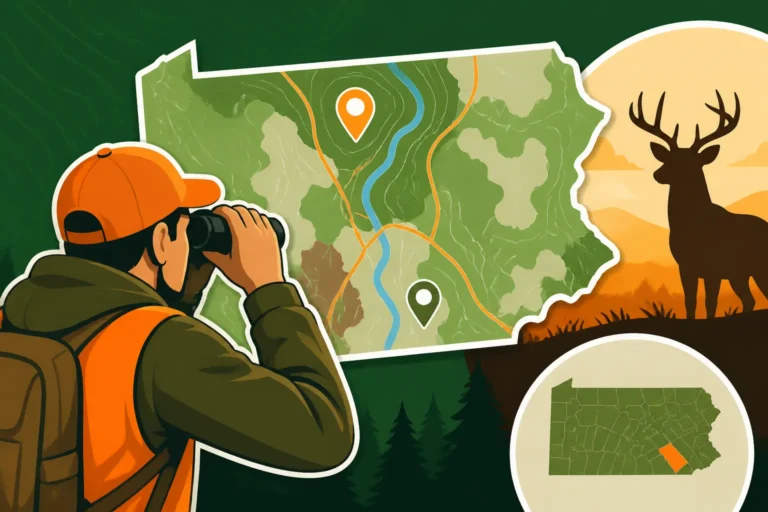
Successful deep woods penetration starts with meticulous map scouting. Use topographical maps or digital tools like onX Hunt to identify areas a mile or more from the nearest road or developed trail. Look for combinations of dense cover, water sources, and potential food sources (like oak flats) that are well off the beaten path. Plan your entry and exit routes carefully, considering wind direction and thermals. Remember, the deeper you go, the more critical your navigation skills become. Carrying a GPS unit, backup compass, and physical map is non-negotiable.
Once in a remote area, your tactics might shift. Instead of waiting on a heavily used trail, you might focus on Still-Hunting Pennsylvania Big Woods slowly through bedding areas or along subtle benches. You might scout for fresh sign, then set up a portable treestand or a ground blind for a patient vigil. Communication with hunting partners, especially if attempting a drive, becomes vital. Two-way radios are a must, but remember their range can be limited by terrain. Above all, embrace the solitude and challenge; the rewards of a truly wild hunt are worth the effort.
Planning Your Hunt: Essential Considerations
A successful hunting trip to the Pennsylvania Wilds isn't just about what you do in the woods; it's about meticulous planning long before you even leave home. The remoteness and challenging conditions of this region demand a higher level of preparation than a typical suburban woodlot hunt. Overlooking these essential considerations can turn an exciting adventure into a miserable, or even dangerous, ordeal.
Licence and Tag Requirements Specific to the Wilds
Before you even dream of setting foot in the Pennsylvania Wilds, you need to ensure all your licensing and tagging is in order. Pennsylvania has specific requirements that apply statewide, but understanding how they relate to the Wilds is crucial. You'll need a general Pennsylvania hunting licence, of course, which covers many small game species and allows you to purchase additional big game tags.
For deer, you'll need a general hunting licence plus the appropriate antlerless deer licences for the specific Wildlife Management Unit (WMU) you plan to hunt. While the Wilds has a lot of public land, antlerless tags are WMU-specific, and some WMUs in the Wilds can sell out faster than others, especially in areas with higher deer densities or less public land. Pennsylvania Antlerless Deer Licences Explained covers this in detail. For black bear, you'll need a separate bear licence in addition to your general hunting licence. If you are one of the fortunate few to draw an elk tag, that’s an entirely separate, highly coveted licence. It's important to remember that all harvested big game must be tagged immediately after the kill and reported to the Game Commission within specific timeframes. Failing to do so can lead to significant penalties. Always check the current year's digest for exact dates, costs, and regulations, as they can sometimes change.
Weather Preparedness and Mountain Conditions
The weather in the Pennsylvania Wilds, particularly during hunting seasons, can be notoriously unpredictable and unforgiving. From early archery in September to late flintlock season in January, you can experience everything from warm, sunny days to driving rain, heavy snow, and bitter cold. The elevation changes in the mountains can also lead to significant temperature drops between the valley floor and ridge tops, and conditions can change rapidly.
Preparation is key. Layering your clothing is paramount, allowing you to add or shed layers to regulate your body temperature. Moisture-wicking base layers, insulating mid-layers, and a waterproof/windproof outer shell are essential. Don't forget a warm hat, gloves, and extra socks. Packing emergency rain gear, even on a clear morning, is always a good idea. Beyond clothing, consider how weather impacts your hunting. Rain can make steep trails slick and dangerous, while heavy snow can make tracking easier but travel much more arduous. Cold temperatures can drain battery life from electronics quickly, so carry spare batteries or a power bank. High winds on ridge tops can make accurate shooting difficult and dampen sound, making it harder to hear approaching animals or calls. Always check the forecast before heading out, but be prepared for conditions to worsen unexpectedly. Clothing for a Pennsylvania December often means being ready for anything.
Safety Protocols for Remote Hunting
Hunting in the remote Pennsylvania Wilds inherently carries more risks than hunting closer to civilization. Cell phone service is often non-existent in the deep hollows and on many ridges, meaning you can't rely on it for navigation or emergencies. Therefore, a robust set of safety protocols is absolutely essential.
Firstly, always tell someone your exact hunting plan: where you're going, your route, when you expect to return, and who you're with. This "float plan" is critical for search and rescue if you don't return on time. Carry a reliable GPS unit with extra batteries, and know how to use it, even in thick canopy. A physical map and compass, and the knowledge to use them, are indispensable backups. A personal locator beacon (PLB) or satellite messenger device, like those offered by Garmin inReach or Zoleo, can be a lifesaver, allowing you to send an SOS signal or communicate via satellite when out of cell range.
Beyond navigation, be aware of wildlife encounters. While generally shy, bears can be unpredictable, especially sows with cubs. Carry bear spray and know how to use it. Be mindful of your footing on steep, uneven terrain, especially when carrying a load. Always practice proper firearm safety, and wear appropriate hunter orange as required by law, even more so when hunting in areas with higher pressure or during deer drives. Pennsylvania Hunter Orange Rules apply to most firearm seasons. An extensive first-aid kit, whistle, fire starter, and emergency shelter are also crucial additions to your pack. The goal isn't to be paranoid, but to be prepared for the realities of hunting in truly wild country.
Tactics for Success in the Pennsylvania Wilds
Hunting the Pennsylvania Wilds isn't just about showing up with a rifle or bow; it's about employing strategies tailored to the unique environment. The vastness of the public land and the wary nature of the animals here demand thoughtful, adaptive tactics. Whether you prefer to hunt solo or with a group, understanding the nuances of the Wilds will elevate your chances of success.
Still-Hunting and Scouting Big Woods
Still-hunting is arguably one of the most effective and rewarding tactics for the Pennsylvania Wilds. It involves moving through the woods extremely slowly and deliberately, pausing frequently to observe, listen, and scan for game. The key is to blend with the environment, becoming part of the landscape rather than an intruder. This method is particularly potent in the Big Woods because it allows you to cover vast areas that might otherwise go unhunted, while also adapting to changing conditions and fresh sign.
Successful still-hunting begins with meticulous scouting, both before the season and as you move. Look for subtle signs: fresh tracks along an old logging road, rubs and scrapes indicating buck activity, disturbed leaves under oak trees signaling recent feeding, or fresh bear scat. Pay attention to how the wind and thermals are behaving in the hollows and on the ridges; this dictates your approach. When still-hunting, move only a few steps, then stop and stand absolutely motionless for several minutes, scanning every tree and shadow. Use your binoculars frequently to pick apart dense cover. Often, the deer or bear you're looking for will be still, allowing you to pick out an ear, a patch of hide, or the curve of an antler that was previously hidden. This method demands patience and acute observation, turning hunting into an art form where you read the forest itself. For specific tips, check out Still-Hunting Pennsylvania Big Woods.
Treestand and Ground Blind Strategies
While still-hunting allows you to cover ground, treestands and ground blinds offer a strategic advantage in areas where you've identified consistent animal activity or natural funnels. The Wilds' dense canopy and rugged terrain offer ample opportunities for both, but their placement and use require careful thought.
Treestands, whether hang-ons, climbers, or even saddle setups, are excellent for gaining an elevated vantage point, which is crucial for seeing through thick undergrowth and getting your scent above a deer's nose. In the Big Woods, look for key features like benches, saddles, or intersections of deer trails. Old clearcuts with new growth on their edges can also be prime locations, as deer will often browse here. When placing a stand, consider your entry and exit routes, aiming to be as stealthy as possible to avoid alerting game. Always use a full-body harness and lifeline for safety. Treestand Setups in Pennsylvania Hardwoods can be a real game-changer. Remember, specific rules apply to treestand use on State Game Lands, generally requiring them to be removed at the end of the day or season.
Ground blinds, whether natural (built from fallen logs and brush) or manufactured pop-up blinds, are effective in areas where treestand placement is difficult or where you want to conceal multiple hunters. They work well along field edges bordering the woods, near natural pinch points, or where heavy cover prevents an elevated shot. In the Wilds, a well-brushed-in ground blind can offer excellent concealment in a laurel thicket or near a well-used game trail in a hollow. Scent control is even more critical with a ground blind, as you are at ground level. Consider wind direction meticulously and use natural terrain to help funnel your scent away from where you expect game to approach.
Group Hunting: Drives and Communication
Given the vastness and dense cover of the Pennsylvania Wilds, group hunting, particularly organized deer or bear drives, can be an extremely effective tactic, especially during firearms seasons. Drives involve a coordinated effort where "drivers" push game from one area of cover towards "standers" positioned at strategic escape routes or travel corridors. This method is common in Pennsylvania deer camps and can be very productive.
Organizing a successful drive requires clear communication and a deep understanding of the terrain. The standers need to be placed in locations where deer or bear are likely to try to escape, often on benches, in saddles, or along logging roads. Drivers must move methodically and consistently, pushing through the cover. Safety is paramount: all hunters must know the location of every other hunter, and shot lanes must be clear and safe. Two-way radios are an invaluable tool for communication, especially in terrain where vocal calls might be difficult or reveal your position too early. However, remember that radio range can be limited by the steep mountains. Deer Drives With Three or Four Hunters can be effective, but larger groups can cover even more ground, which is often needed in the expansive Wilds. Beyond deer and bear, drives can also be used for fall turkeys. The key to any group hunt in the Wilds is planning, discipline, and constant safety awareness, ensuring everyone understands their role and the boundaries of the hunting area.
Gear for the Pennsylvania Wilds Hunter
The challenging terrain and often unpredictable weather of the Pennsylvania Wilds demand gear that is rugged, reliable, and functional. Skimping on quality here can lead to discomfort, inefficiency, and even safety concerns. Equipping yourself properly means focusing on durability, weather protection, and navigational aids suitable for remote, backcountry conditions.
Footwear and Clothing for Rugged Conditions
Your feet are your most important tool when hunting the Pennsylvania Wilds, as you'll be covering many miles over steep and uneven terrain. Therefore, high-quality, supportive, and waterproof boots are non-negotiable. Look for boots with aggressive traction for steep climbs and descents, ankle support to prevent twists, and enough insulation for the temperatures you expect to encounter. Given the potential for wet conditions from rain, snow, or creek crossings, a waterproof membrane (like Gore-Tex or similar) is essential. Carry an extra pair of quality wool or synthetic socks to change into if your feet get wet. Boots and Packs for Steep Country are designed for this kind of environment.
For clothing, the layering system we discussed earlier is paramount. Start with a moisture-wicking base layer to draw sweat away from your skin. Add an insulating mid-layer (fleece, down, or synthetic fill) for warmth, adjusting its thickness based on the temperature. Your outer layer should be durable, waterproof, windproof, and quiet, especially if you're still-hunting. Opt for muted earth tones or camouflage patterns that blend with the Pennsylvania hardwoods. Don't forget a warm hat, gloves or mittens, and a neck gaiter; much of your body heat is lost from your head and extremities. Remember your hunter orange requirements for visibility and safety during specific seasons. Clothing for a Pennsylvania December often means being prepared for temperatures far below freezing, especially if you plan to be stationary for long periods.
Optics and Navigation Tools
In the expansive and often dense cover of the Wilds, quality optics are not a luxury but a necessity. Good binoculars (8x or 10x magnification) will help you pick apart distant ridges, identify game animals hidden in thick brush, and evaluate antler size without making unnecessary movements. Look for binoculars that perform well in low light, as prime hunting times are often dawn and dusk under heavy canopy. A rangefinder is also incredibly useful, especially for confirming shot distances in unfamiliar terrain or across a hollow.
For navigation, relying solely on your phone is a risky gamble due to poor cell service. A dedicated GPS unit is highly recommended. These devices offer robust mapping capabilities, long battery life, and are not dependent on cell signals. Familiarize yourself with how to mark waypoints, record tracks, and navigate back to your vehicle or camp. As a crucial backup, always carry a physical topographical map of your hunting area and a reliable compass. More importantly, know how to use them together. A digital mapping app like onX Hunt, used on your phone or tablet (with downloaded offline maps), can also be a powerful tool, providing detailed property boundaries and satellite imagery, but again, always have a physical backup. Beyond these, a headlamp with spare batteries is vital for pre-dawn hikes in and post-dusk hikes out, allowing you to move safely in the dark.
Meat Care and Retrieval in Backcountry
Successfully harvesting an animal in the Pennsylvania Wilds is only half the battle; getting it out of the woods and caring for the meat is the other, often more strenuous, part. The remote nature of the Wilds means you might be miles from the nearest road, facing steep climbs and difficult terrain.
For meat care, especially during warmer early seasons, bring game bags to protect the meat from insects and dirt. Consider the gutless method for field dressing, which allows you to quarter an animal and pack it out without eviscerating it in the field, making the load lighter and cleaner. Carrying a sharp, durable knife and a bone saw is essential. If you anticipate a long retrieve, a frame pack for hauling quarters is indispensable. For smaller animals or shorter distances on relatively flat terrain, a deer cart or sled might be an option, but these are often impractical in the steepest, most rugged parts of the Wilds. Dragging a Deer Off a Pennsylvania Mountain can be an exhausting endeavor, and having the right tools can make it manageable.
Once out of the woods, ensure you have adequate cooling for the meat, especially if temperatures are warm. Large coolers with plenty of ice are a must. If you've harvested a bear, remember that they must be checked by the Game Commission. Have a plan for this logistical step, as check stations have specific hours and locations. Proper meat care is not just about preserving your harvest; it’s about respecting the animal and ensuring you get quality table fare from your hard-earned success.
Disclaimer
This article is for general informational purposes only and does not constitute professional advice. Laws, prices and regulations vary by location and change over time. Consult a qualified professional for guidance on your specific situation.