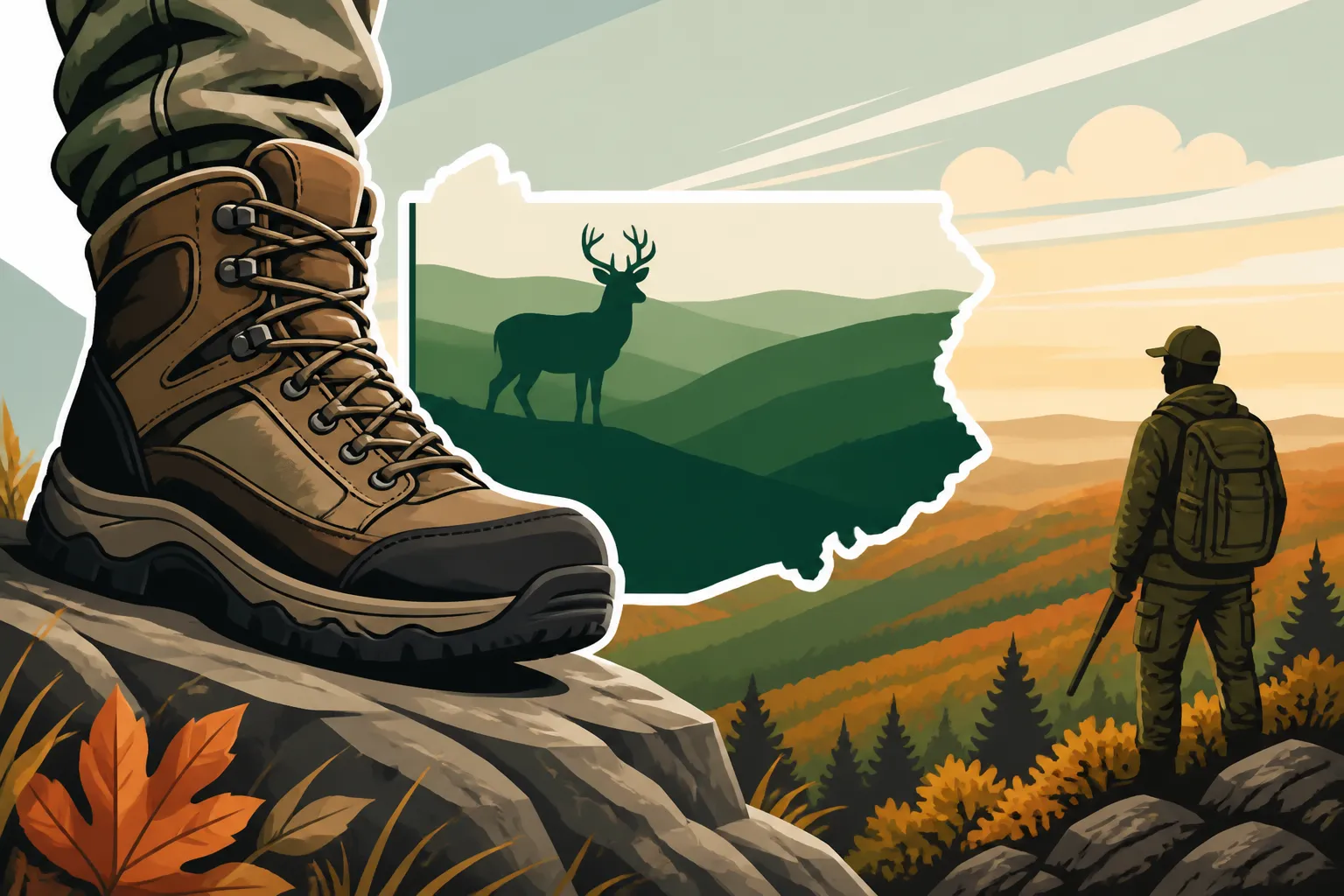
Boots for Walking Pennsylvania Ridges
There’s nothing quite like the feeling of cresting a Pennsylvania ridge, the wind in your face, and the vast hardwoods stretching out before you. But that romantic image can quickly turn into a painful reality if you’re not wearing the right boots. Blisters, twisted ankles, and cold, wet feet are common frustrations that can cut a hunt short or make every step a misery. This guide will delve deep into selecting the perfect footwear to tackle Pennsylvania’s challenging ridge country, ensuring your feet are as ready as your spirit.
The Unique Challenges of Pennsylvania Ridge Walking for Your Feet
Hunting the ridges and mountains of Pennsylvania isn't like strolling through a flat park. Our terrain demands a lot from your footwear, and ignoring these specific challenges is a surefire way to end up with sore feet and a bad attitude. Understanding what your boots are up against is the first step to choosing the right pair.
The Endless Ups and Downs
One of the most defining characteristics of Pennsylvania ridge country is the constant elevation change. You're not just walking; you're climbing steep inclines, traversing side-hills, and descending equally steep grades, often multiple times in a single outing. This relentless vertical movement puts immense strain on your feet, ankles, and calves. Think about a long walk up a rocky logging road, then cutting straight up a steep bank to a bench, followed by a careful descent into a hollow. Each of these movements stresses different parts of your foot and leg.
Without proper support, your ankles can roll on uneven ground, leading to sprains or worse. Your calves will burn, and your shins can take a pounding, especially on steep downhills where your feet are constantly pushing against the front of your boots. This repetitive impact and uneven pressure can quickly lead to painful "shin bang" or bruised toes. You need boots that can handle the push and pull, providing stability and cushioning through every challenging ascent and descent, allowing you to focus on the hunt, not your aching feet. This kind of terrain demands good foot security within the boot to prevent your foot from sliding forward on descents.
Rocky Terrain and Hidden Obstacles
Pennsylvania’s ridges are often littered with loose shale, jagged rocks, tangled roots, and unseen obstacles hidden beneath a carpet of leaves. It’s a minefield for your feet, even on what looks like a well-worn deer trail. Every step is an adventure, and your boots need to be a fortress around your feet. A thin-soled boot might feel comfortable on a flat path, but out here, you'll feel every sharp rock digging into your arch or heel.
The ground is rarely flat, which means your feet are constantly flexing and adapting to uneven surfaces. This can be exhausting and, more importantly, dangerous. A good pair of boots acts as a shield, protecting your soles from punctures and bruising, and providing the torsional rigidity needed to prevent your foot from twisting unnaturally. Imagine stepping on a canted rock or a rolling stone hidden under dry leaves while carrying a pack – a moment of instability can turn into a serious injury if your boots aren't up to the task. You really need to be able to trust your footwear to provide stability and protection against these hidden hazards.
Variable Weather and Ground Conditions
A single day hunting a Pennsylvania ridge can present a multitude of weather and ground conditions. You might start your morning with a heavy dew, making the leaf litter damp and slick, then face a mid-day rain shower that turns trails into muddy chutes. As you climb higher, you might even encounter patches of lingering snow or ice in shaded areas, especially in the late season. The ground beneath you can range from dry, crunchy oak leaves to boggy, spring-fed seeps, all within a few hundred yards.
This unpredictability means your boots need to be versatile. Waterproofing is critical to keep your feet dry, but breathability is equally important to prevent sweat from building up inside your boots during strenuous climbs, which can lead to blisters and cold feet when you stop moving. Wet feet, whether from external moisture or internal sweat, are a hunter's worst enemy. They're prone to blisters, lose warmth rapidly, and can make an otherwise enjoyable hunt miserable. You need a boot that can shed external moisture while still allowing internal perspiration to escape, a delicate balance that quality footwear strives to achieve. When you're Hunting the Pre-Rut in Late October or Cold Weather Sitting Strategy, these conditions become even more pronounced.
Key Features to Prioritize in Ridge Walking Boots
Now that we've laid out the gauntlet your feet will run, let's talk about the specific features that will help your boots conquer it. Choosing the right pair isn't just about brand names; it's about understanding what makes a boot perform in the demanding environment of Pennsylvania’s wild places.
Ankle Support and Stability
This is, without a doubt, one of the most critical features for any boot intended for rugged, uneven terrain like Pennsylvania's ridges. When you're navigating loose rocks, slippery roots, and steep grades, your ankles are constantly at risk of rolling or twisting. A boot with excellent ankle support provides a stable platform, helping to prevent these kinds of injuries and reducing overall foot fatigue. Look for boots with a taller cuff, typically 6-8 inches or more, that can be laced snugly around your ankle. The design of the lacing system is important too; speed hooks or D-rings that hold the laces firmly can make a big difference in how well the boot supports you throughout the day.
Beyond the height, the internal construction of the boot plays a huge role. Many quality hiking and hunting boots incorporate a stiff shank or plate within the sole. This provides torsional rigidity, meaning the boot resists twisting side-to-side, which is invaluable when you're traversing a steep side-hill or stepping on an uneven surface. Without it, your foot can feel like it's trying to conform to every contour, leading to instability. Think about the feeling of your foot trying to hold its position when you’re on a steep incline; a good ankle-supporting boot with a rigid shank helps your foot maintain that stable, level position, reducing strain and the risk of injury. This is especially vital when navigating Entry Routes on Steep Ground.
Sole Design and Traction
The sole of your boot is your direct connection to the ground, and its design dictates how well you’ll stick to challenging terrain. For Pennsylvania ridges, you need an aggressive outsole with deep, multi-directional lugs. These lugs are the "teeth" of your boot, designed to bite into soft earth, shed mud, and provide grip on loose material like shale or wet leaves. A shallow, more cosmetic tread will quickly clog with mud or provide inadequate traction on slippery surfaces, turning a descent into a slide.
The rubber compound used in the outsole also matters. Some rubbers are designed for maximum grip but may wear faster, while others prioritize durability. Look for a balance that offers excellent traction without sacrificing too much longevity. Furthermore, a well-defined heel counter is essential, especially for descents. This prominent heel acts like a brake, digging into the slope and preventing your foot from sliding uncontrollably downhill. Imagine trying to descend a wet, leaf-covered slope without a defined heel – it would be a terrifying experience. A good sole provides the confidence to move deliberately and safely, whether you're climbing up to a prime oak flat or carefully working your way down into a hollow. When you’re using GoHunt to scout and see steep contours, you know you’ll need a sole that can grip that incline.
Waterproofing and Breathability
This is often a tricky balance, but one that is crucial for comfort and foot health in Pennsylvania's varying conditions. You absolutely need boots that are waterproof. Early morning dew, stream crossings, a sudden downpour, or lingering snow patches can all lead to soaked socks and miserable feet if your boots aren't up to snuff. Most quality hunting boots achieve this with integrated waterproof/breathable membranes, such as Gore-Tex or similar proprietary technologies. These membranes prevent external water from entering while theoretically allowing internal moisture (sweat) to escape.
However, the "breathable" part is where the balance gets challenging. During strenuous activity, like climbing a steep ridge to get to your stand before dawn, your feet will sweat. If that sweat can't escape, it condenses inside the boot, making your socks damp and your feet prone to blisters and becoming cold once you stop moving. Look for boots that are designed with materials and construction that promote air circulation, even with a waterproof membrane. Synthetics often breathe better than heavy leather, but full leather boots can also be highly breathable if properly maintained and conditioned. The goal is to keep your feet dry from both external and internal sources, ensuring comfort whether you’re actively Still-Hunting Pennsylvania Big Woods or sitting quietly waiting for a buck to pass.
Comfort and Fit: The Unsung Heroes of a Good Boot
You can have all the high-tech features in the world, but if your boots aren't comfortable and don't fit your feet properly, they're useless. In fact, they'll be worse than useless – they'll be a liability, leading to pain, blisters, and distraction. Comfort isn't a luxury; it's a necessity for long days spent traversing Pennsylvania’s rugged terrain.
Breaking Them In Properly
This step is absolutely critical and often overlooked or rushed. Even the most expensive, well-designed boots need a proper break-in period. They're often stiff out of the box, and the materials need time to conform to the unique shape of your foot. Trying to take a brand-new pair of boots straight to a several-mile ridge hunt is asking for trouble – think blisters, hot spots, and general foot misery.
Start by wearing your new boots for short periods around the house, then on increasingly longer walks around your neighborhood or local park. Pay close attention to any areas that feel tight, rub, or create pressure points. Address these issues early, whether by adjusting lacing, trying different socks, or even using moleskin proactively. It’s much better to discover a hot spot during a casual walk than when you’re miles deep in the backcountry, trying to figure out Where Big Woods Bucks Bed. Think of it as a conditioning period for both the boots and your feet, allowing them to adapt to each other gradually. This break-in period allows the leather or synthetic materials to soften and flex in the right places, ensuring a custom-like fit that supports your foot without causing irritation.
Choosing the Right Sock System
Believe it or not, the socks you wear are just as important as the boots themselves, forming a critical part of your overall "foot system." A high-quality boot can be undermined by poor socks, and conversely, good socks can enhance the performance of even a moderately priced boot. The key is moisture management and cushioning. Cotton socks are an absolute no-go for hunting; they absorb sweat and hold onto moisture, leading to blisters and cold feet.
Instead, invest in performance socks made from wool (like merino) or synthetic blends. Merino wool is excellent because it wicks moisture away from your skin, regulates temperature, and resists odor, even when damp. Synthetics also excel at moisture-wicking and drying quickly. Consider a layering system: a thin liner sock made of silk or a synthetic blend directly against your skin, followed by a thicker wool or synthetic sock. The liner helps to prevent friction, further reducing blister potential, while the outer sock provides cushioning and insulation. The right sock thickness also impacts the fit of your boot; try on boots with the actual socks you plan to hunt in to get the most accurate feel. This attention to detail will keep your feet comfortable, whether you're sitting in a Treestand Setups in Pennsylvania Hardwoods or hiking all day.
Understanding Your Foot Type
Just like everyone has a unique fingerprint, everyone has unique feet. Ignoring your specific foot type – whether you have high arches, flat feet, wide feet, or narrow heels – can lead to chronic discomfort, even in the best boots. A boot that feels great on your buddy might be agony for you. When trying on boots, it’s not enough to just check the length. You need to assess the width, the volume (how much space your foot takes up inside the boot), and the arch support.
Visit a specialty outdoor store if possible, where staff can help you assess your foot shape and recommend brands or models known for certain fits. Always try on boots with the specific socks you'll be hunting in. Walk around the store, go up and down any ramps if available, and really pay attention to how your foot feels inside the boot. Does your heel lift excessively? Are your toes cramped? Is there pressure across the top of your foot? Sometimes, a simple aftermarket insole can make a huge difference, providing crucial arch support or cushioning where the stock insole falls short. Remember, a truly good fit means your foot feels secure but not constricted, allowing for natural movement without slop or pressure points. Using tools like GoHunt's terrain overlays to gauge your expected mileage and terrain difficulty can help you determine just how critical this personalized fit will be for your specific hunting style.
Practical Considerations and Maintenance
Beyond the technical features and the perfect fit, there are some practical aspects to consider when selecting and caring for your Pennsylvania ridge walking boots. These details contribute to the longevity of your investment and your overall comfort in the field.
Weight and Durability
There’s a natural tension between a boot that’s lightweight for easier movement and one that’s robust enough to withstand the abuse of Pennsylvania’s rocky, root-strewn terrain year after year. Ultralight trail shoes might feel great on your feet initially, but they often lack the durability, support, and protection needed for serious mountain hunting. On the flip side, a heavy, stiff mountaineering boot might offer incredible protection and support, but the added weight can be exhausting over many miles of up and down.
The sweet spot for most Pennsylvania ridge hunters is often a mid-weight boot that balances these factors. Look for boots constructed with high-quality, abrasion-resistant materials – whether it’s full-grain leather, durable synthetics, or a combination. Reinforced toe caps and heel counters help protect against bumps and scrapes. Pay attention to the stitching and rand (the protective rubber strip around the base of the boot); these areas are often the first to show wear. A durable boot might have a higher upfront cost, but its longevity and reliable performance will often make it a more economical choice in the long run than repeatedly replacing cheaper, less robust options. Think about how many seasons you want your boots to last, especially if you're frequently Hunting Pennsylvania's Big Woods for Deer.
Material Choices and Care
Boots come in a variety of materials, each with its own benefits and care requirements. Full-grain leather boots are incredibly durable, mold to your feet over time, and can be highly waterproof if properly treated. However, they are often heavier, require a longer break-in, and need regular conditioning to prevent drying and cracking. Synthetic boots (nylon, polyester, Cordura) are typically lighter, often more breathable, and usually require less break-in time. They can also be very durable, but their lifespan might not match that of a well-cared-for leather boot. Many modern hunting boots are a hybrid, combining leather for support and durability in key areas with synthetics for weight reduction and breathability.
Regardless of the material, proper care is paramount. After every hunt, especially if your boots got wet or muddy, clean them thoroughly. Brush off dirt and mud, and use a damp cloth to wipe down the uppers. Allow them to air dry naturally, away from direct heat sources like campfires or heaters, which can damage materials and adhesives. For leather boots, regularly apply a leather conditioner or waterproof treatment to keep the leather supple and maintain its water resistance. For synthetics, a spray-on DWR (Durable Water Repellent) treatment can help maintain the outer shell's water repellency. Proper care not only extends the life of your boots but also ensures they perform their best when you need them most. Even if you're using GoHunt to plan your routes, the success of your day can still hinge on your gear holding up.
Trying Before You Buy
While online shopping offers convenience, when it comes to hunting boots, an in-person fitting at a reputable outdoor gear store is invaluable. You simply cannot replicate the experience of trying on different models, walking around, and getting expert advice from a knowledgeable salesperson through a computer screen. As mentioned earlier, every foot is different, and every boot model has a slightly different fit profile.
Go to the store prepared: bring the type of hunting socks you intend to wear, and be ready to spend some time. Try on several different brands and models, even if you think you know what you want. Walk around the store, and if they have an incline ramp, use it to simulate climbing and descending. Pay close attention to how your heel feels (minimal lift is ideal), how much room your toes have (they shouldn't touch the front of the boot), and if there are any pinch points or uncomfortable pressure spots. Don't be swayed by price alone; the most expensive boot isn't necessarily the best for your feet, and a moderately priced boot that fits perfectly will outperform a high-end boot that doesn’t. Investing your time in finding the right fit is just as important as the financial investment in the boots themselves. Getting this right is crucial for success, whether you're Scouting Pennsylvania Public Land Before Season or just heading out for a quick evening hunt.
| Feature | Importance for PA Ridges | Why it Matters |
|---|---|---|
| Ankle Support | High | Prevents twists on uneven, rocky ground |
| Aggressive Outsole | High | Grip on wet leaves, mud, loose shale, steep inclines |
| Waterproofing | High | Keeps feet dry from dew, rain, stream crossings |
| Breathability | Medium-High | Prevents sweat buildup during strenuous climbs |
| Rigid Midsole/Shank | Medium-High | Protection from sharp rocks, support on side-hills |
| Durable Materials | High | Withstands abrasion from rocks, thorns, dense brush |
| Proper Fit | Critical | Prevents blisters, ensures comfort, avoids foot fatigue |
Disclaimer
This article is for general informational purposes only and does not constitute professional advice. Laws, prices and regulations vary by location and change over time. Consult a qualified professional for guidance on your specific situation.