Camping Rules on Pennsylvania Public Land
It's a common dream for Pennsylvania hunters: waking up deep in the woods, coffee brewing over a crackling fire, ready to hit a fresh scrape line as the sun peeks over the ridge. But the reality of camping on public land in our state can be a confusing maze of permits, prohibitions, and differing regulations depending on whether you're on State Game Lands, State Forests, or federal ground. This guide is here to untangle those rules, help you understand where you can pitch a tent or park a rig, and ensure your overnight hunting adventures are legal, safe, and respectful of our precious natural resources.
Understanding Pennsylvania's Public Lands for Camping
Pennsylvania boasts millions of acres of public land, a true gift for hunters and outdoor enthusiasts. However, not all public land is created equal when it comes to camping. Each managing agency has its own set of rules, often designed to balance recreation with resource protection. Knowing these distinctions is key to planning your hunting trips and avoiding an unwanted surprise from a land manager. The last thing you want after a long day of scouting or hunting is to be told you need to pack up your camp.
For most hunters, the primary public land options will be State Game Lands, State Forests, and the Allegheny National Forest. While they all offer incredible hunting opportunities, their approach to overnight stays varies wildly. This is where a little upfront research can save you a lot of headache and potentially a fine. It’s not just about finding a flat spot for your tent; it's about understanding the ethos of the land you’re on.
Camping Rules on State Game Lands
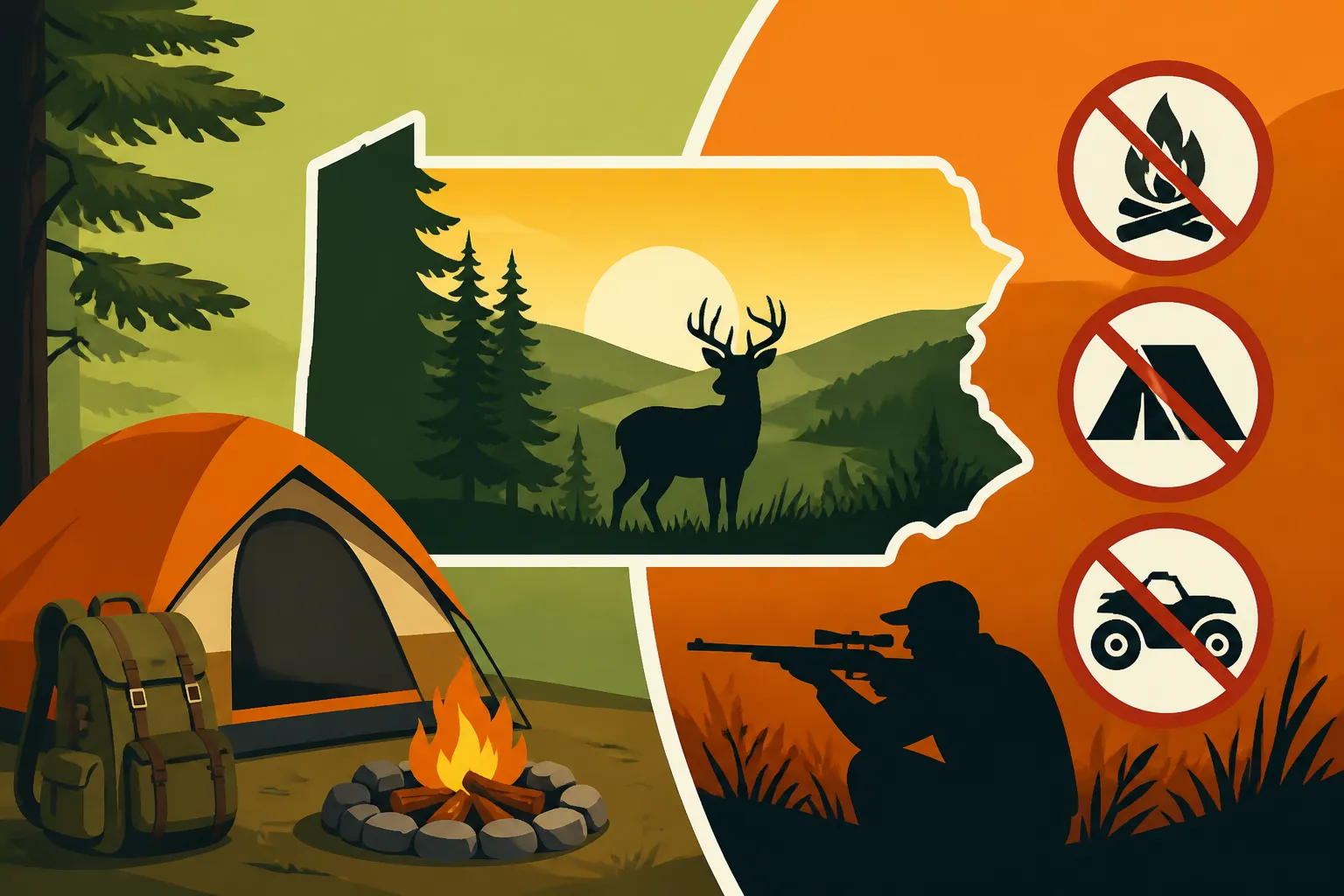
State Game Lands (SGLs) are the backbone of Pennsylvania's public hunting access, managed by the Pennsylvania Game Commission (PGC) primarily for wildlife habitat and public hunting and trapping. With over 1.5 million acres spread across the state, they offer diverse hunting experiences. However, one common misconception among hunters is that you can just set up camp anywhere on an SGL. The truth is, general camping on State Game Lands is strictly prohibited.
The PGC's regulations are quite clear on this. The purpose of SGLs is to provide hunting and trapping opportunities, not extended stays or recreational camping. This means you generally won't find designated campgrounds, and dispersed camping (just picking a spot and setting up) is not permitted. The logic behind this is to minimize impact, prevent long-term occupation, and maintain a focus on hunting-related activities. How Much State Game Land Pennsylvania Owns is impressive, but you need to know the rules.
There are, however, very limited exceptions or situations that might resemble camping:
- Parking vehicles/trailers: You can generally park a vehicle or trailer in designated parking areas on State Game Lands. This is often allowed for the purpose of hunting, but using the vehicle as a primary sleeping accommodation for an extended period, especially in a manner that constitutes a "camp," is usually against the spirit of the rules. The vehicle must be legally parked and not obstructing any access roads or gates. Overnight parking might be tolerated in some areas for active hunters, but this isn't the same as setting up a tent camp. Always check local SGL rules and signage.
- Emergency Situations: In a genuine emergency (e.g., getting lost, injury, severe weather), temporarily sheltering in place is always acceptable for safety. This is not "camping" in the recreational sense.
It’s crucial to understand that SGLs are managed differently than state or national forests. While you might be able to find remote corners, don't assume you can pitch a tent there. Your best bet for multi-day hunts on SGLs is to find lodging nearby or camp on adjacent State Forest or Allegheny National Forest land if available and permitted, then commute to your hunting spots. When you're Scouting Pennsylvania Public Land Before Season, it's also a good time to observe what parking and access are available.
Camping in Pennsylvania State Forests
State Forests, managed by the Department of Conservation and Natural Resources (DCNR), offer a much more welcoming environment for overnight stays and are often the go-to choice for hunters looking to camp close to their hunting grounds. Pennsylvania's State Forests encompass over 2.2 million acres, providing vast areas for dispersed camping, car camping, and even some designated campgrounds. This is where the dream of a backcountry hunting camp can truly become a reality. If you're planning on Hunting Pennsylvania's Big Woods for Deer, camping in a State Forest is often part of the experience.
The DCNR generally allows primitive, dispersed camping within State Forests, but with important stipulations:
- Permit Requirement for Extended Stays: For stays longer than one night at a dispersed campsite, or for groups of 10 or more, a free camping permit from the local DCNR District Forest Office is typically required. These permits help DCNR manage usage, prevent overuse, and ensure compliance with "Leave No Trace" principles. You'll need to specify your campsite location, dates, and number of people. Obtaining this permit in advance is non-negotiable for longer trips. Camping in a Pennsylvania State Forest delves deeper into these specifics.
- Location and Impact: Dispersed camping means you can set up a tent pretty much anywhere, provided you are at least 25 feet from any road, trail, or water source. The key is "Leave No Trace." Pack out everything you pack in, minimize your footprint, and avoid disturbing sensitive areas.
- Firewood and Campfires: Campfires are generally permitted in State Forests, but you must exercise extreme caution. They need to be contained in a stone ring or other fire-safe structure, kept small, and extinguished completely before leaving. Firewood collection is usually allowed for dead and downed wood, but cutting live trees is forbidden. Always check for current fire bans, especially during dry periods.
- Vehicle Access: Many State Forest roads are open to public vehicles, allowing for car camping or easier access to more remote areas. However, some roads are gated or seasonal, so always consult a DCNR Motorized Vehicle Use Map (MVUM) for the specific forest district you plan to visit. Using mapping tools like onX Hunt can also help identify legal access roads and potential camping spots while being mindful of nearby private land boundaries. Finding Pennsylvania Property Lines is crucial for this.
For hunters, camping in a State Forest means you can be right where the action is. Imagine hunting deep into a hollow, knowing your warm camp is just a short walk away. This proximity can be a game-changer, especially during rifle season or late archery hunts when cold, dark mornings and evenings make a distant drive less appealing.
Allegheny National Forest Camping Options
The Allegheny National Forest (ANF) is Pennsylvania's only National Forest, covering over 500,000 acres in the northwestern part of the state. Managed by the U.S. Forest Service, it offers a blend of primitive camping opportunities and developed campgrounds, with rules that differ from both State Game Lands and State Forests. For hunters interested in Hunting Allegheny National Forest for Deer or Allegheny Forest Bear Country, understanding the camping rules here is paramount.
The ANF is quite accommodating for primitive, dispersed camping:
- Dispersed Camping Freedom: Similar to State Forests, dispersed camping is generally allowed throughout the ANF, provided you are at least 200 feet from any road, trail, or developed recreation site. There's no permit required for dispersed camping in most areas, making it very flexible for quick, overnight hunting trips. The "Leave No Trace" principles are paramount here too.
- Length of Stay: Dispersed camping is typically limited to 14 consecutive days in one location, after which you must move at least one mile to a new site. This prevents long-term occupation and ensures equitable access.
- Campfires: Campfires are usually permitted unless specific fire restrictions are in place. Always build a safe fire ring, keep fires small, and ensure they are dead out before leaving. Use only dead and downed wood for fuel.
- Developed Campgrounds: For those who prefer amenities, the ANF offers numerous developed campgrounds with facilities like picnic tables, fire rings, and often vault toilets or potable water. These sites usually require a fee and reservations, especially during peak seasons. They're excellent for family trips or when you want a base camp with a bit more comfort.
- Backcountry Camping: Specific areas, such as the Hickory Creek Wilderness, have their own primitive camping regulations, often emphasizing minimal impact and requiring a higher degree of self-sufficiency. Always check the ANF website or local ranger stations for current rules in these special areas.
The flexibility of dispersed camping in the ANF makes it an attractive option for hunters who want to spend multiple days deep in the woods. The ability to just pull off a forest road, walk in a couple hundred feet, and set up a basic camp simplifies logistics immensely for a rugged hunting trip. Allegheny National Forest Acreage offers plenty of room to roam and set up a secluded camp.
Comparative Overview of Public Land Camping Rules
To help clarify the differences between Pennsylvania's primary public land types, here's a quick comparison of their general camping regulations for hunters. Remember, these are general guidelines, and it's always best to consult the specific managing agency (PGC, DCNR, USFS) for the most current and localized rules before your trip.
| Feature | State Game Lands (PGC) | Pennsylvania State Forests (DCNR) | Allegheny National Forest (USFS) |
|---|---|---|---|
| Dispersed Camping | Generally Prohibited (except limited emergencies) | Generally Permitted (with permit for >1 night/10+ people) | Generally Permitted (no permit for <14 days) |
| Permit Required | No (as camping is generally not allowed) | Yes, for stays >1 night or groups >9 | No, for dispersed camping <14 days |
| Developed Campgrounds | Very few, if any, designated sites | Some designated sites (often with fees/reservations) | Many developed campgrounds (with fees/reservations) |
| Campfires | Prohibited outside of designated areas (if any exist) | Generally Allowed (with caution; check for bans) | Generally Allowed (with caution; check for bans) |
| Firewood | No gathering (as fires are generally not allowed) | Dead & downed wood for campfires allowed | Dead & downed wood for campfires allowed |
| Vehicle Camping | Parking allowed in designated lots; no "camping" in vehicle | Allowed on open roads; permit for primitive sites often required for extended stays | Allowed on open roads; specific rules for vehicle-based dispersed camping |
| Max Stay | N/A (as camping is generally not allowed) | Dependent on permit (typically 14-21 days) | 14 days in one location |
| "Leave No Trace" | Essential for all outdoor activities | Essential, strictly enforced | Essential, strictly enforced |
Important Considerations for Hunters Camping on Public Land
Camping on public land while hunting presents a unique set of challenges and responsibilities. Beyond the regulations, there are practical considerations to ensure a successful and safe trip.
Planning Your Campsite and Access
When scouting for a hunting camp, think about strategy. You want to be close enough to your hunting area to minimize travel time but far enough not to spook game or intrude on other hunters. Consider factors like terrain, water sources, and prevailing winds. A mapping tool like onX Hunt is invaluable here. It allows you to overlay public and private land boundaries, topo maps, and aerial imagery, helping you pinpoint ideal camping locations and Entry Routes on Steep Ground while ensuring you're legally on public land.
For those deep in the big woods, planning your camp might be as involved as planning your hunt. Are you looking for a spot accessible by vehicle for an easier camp setup, or are you willing to hike a few miles in for a truly remote experience? Remember, if you’re parking a vehicle on State Game Lands, you must adhere to Vehicle Rules on Pennsylvania Game Lands.
Respecting Other Hunters and Private Land
Public land often means shared use. Be mindful of other hunters, especially during busy seasons. Avoid setting up your camp right on a main trail or too close to established parking areas or known hunting spots. The goal is to enhance your hunt, not detract from someone else's.
It’s also crucial to be absolutely certain of property lines, especially if your public land camp borders private land. Even an accidental trespass with your camp could lead to an unpleasant encounter or legal trouble. Again, this is where a reliable mapping app like onX Hunt is an absolute game-changer. It clearly defines boundaries, allowing you to confidently set up your camp without worry. You definitely don't want to be setting up a Treestand Setups in Pennsylvania Hardwoods right on a boundary from a questionable camp.
Safety and Preparedness at Camp
Being in the backcountry, even for a night or two, requires careful preparation.
- Weather: Pennsylvania weather can change rapidly. Pack appropriate gear for rain, cold, and unexpected temperature drops. A reliable tent, sleeping bag, and layering system are critical, especially during the colder hunting seasons. For those Cold Weather Sitting Strategy days, a warm camp is essential.
- Water: Always have a plan for potable water. This could mean carrying enough for your entire trip, bringing a reliable water filter or purification tablets, or knowing where safe water sources are located.
- Food Storage: Properly store food to prevent attracting wildlife, especially bears. Bear canisters or hanging food from a tree are often recommended in bear country. Pennsylvania Black Bear Hunting often goes hand-in-hand with smart food storage.
- First Aid: A comprehensive first-aid kit is non-negotiable. Know how to use it, and consider taking a wilderness first-aid course if you plan on spending significant time deep in the woods.
- Communication: Cell service can be spotty or nonexistent in many public land areas. Carry a fully charged cell phone, but also consider a satellite communication device (like a Garmin inReach or similar) for emergencies. Let someone know your itinerary, including your planned camping location and return time.
- Fire Safety: If campfires are allowed, build them in a safe location, away from overhanging branches and dry brush. Never leave a fire unattended, and always ensure it's "dead out" – cool to the touch – before you leave it, even for a short hunt.
Leave No Trace Principles
This is more than just a rule; it's an ethic. When you camp on public land, aim to leave no trace that you were ever there.
- Pack it in, Pack it out: This includes all trash, food scraps, and even biodegradable items like orange peels.
- Dispose of Waste Properly: Human waste should be buried in a cathole 6-8 inches deep and at least 200 feet from water, trails, and camp. Pack out all toilet paper.
- Minimize Campfire Impacts: Use established fire rings if available. Keep fires small. Ensure fires are completely extinguished.
- Respect Wildlife: Observe wildlife from a distance. Never feed animals.
- Respect Sensitive Areas: Stay on durable surfaces. Avoid walking on fragile vegetation.
By adhering to these principles, we ensure that our public lands remain beautiful and accessible for generations of hunters and outdoor enthusiasts to come. For those using tools like GoHunt to find remote areas, the responsibility to leave no trace often feels even more important to preserve those wild places.
Ultimately, camping on Pennsylvania public land can add an incredible dimension to your hunting experience, offering deeper immersion in nature and greater flexibility in pursuing game. Just remember to do your homework, understand the specific rules for the land you're on, and always prioritize safety and responsible outdoor ethics.
Disclaimer
This article is for general informational purposes only and does not constitute professional advice. Laws, prices and regulations vary by location and change over time. Consult a qualified professional for guidance on your specific situation.