Insulated Boots for All-Day Sits
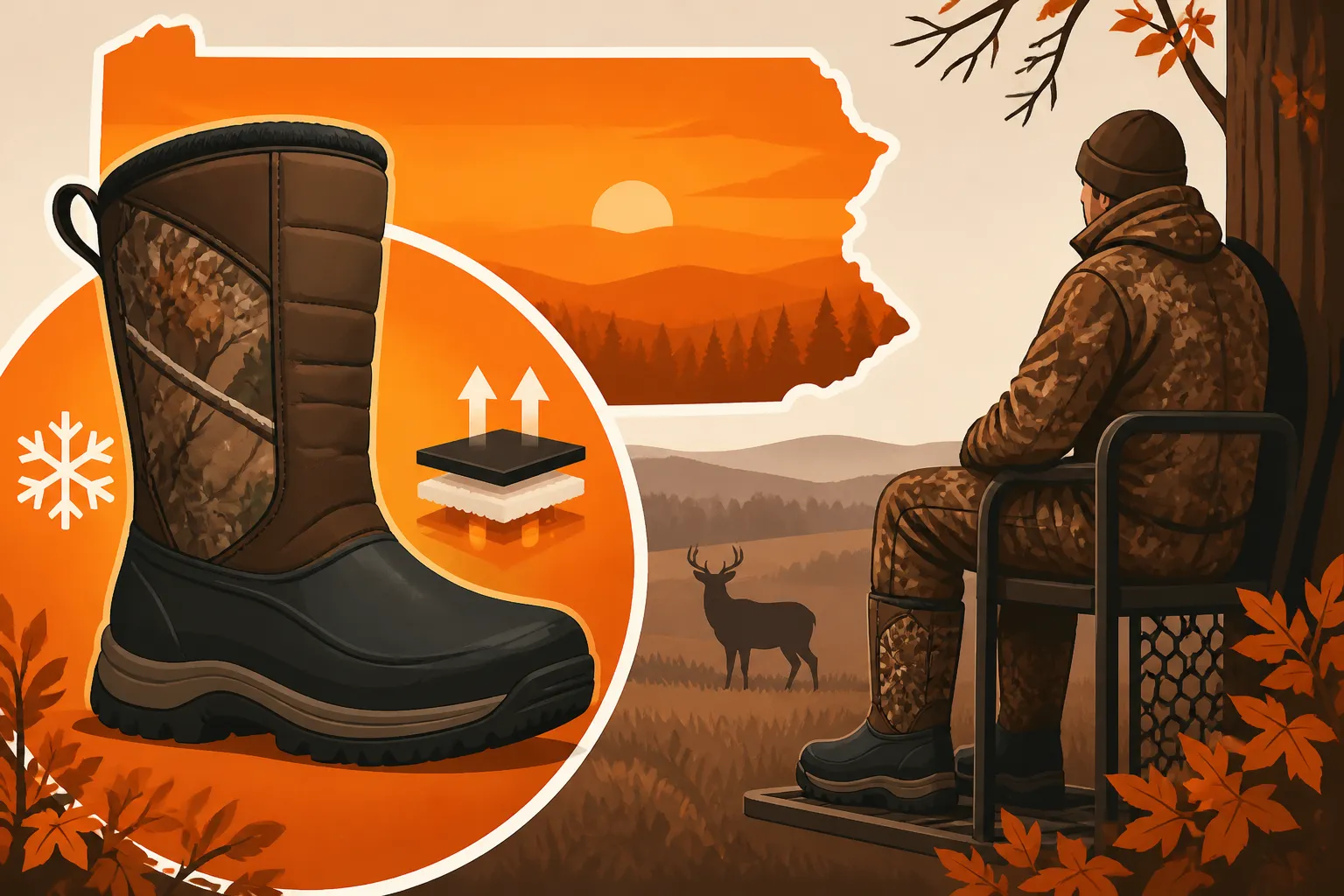
There are few things that can ruin an otherwise perfect day in the Pennsylvania woods faster than frozen feet. You bundle up, layer on the warmest clothing, but after an hour or two on stand, that bone-chilling cold creeps into your toes, making every minute feel like an eternity. This isn't just discomfort; it's a genuine problem that can cut your hunt short, diminish your focus, and even put your safety at risk. This guide is dedicated to helping you understand why your feet get cold, how insulated hunting boots are designed to combat that, and what features to look for so you can stay out longer and enjoy your hunts in our often frigid and damp Pennsylvania seasons.
The Unbearable Cold: Why Your Feet Are Always Freezing
The quest for warm feet during a long day of hunting in Pennsylvania is a battle many of us have fought, and sometimes lost. It’s not simply a matter of the air temperature; there’s a complex interplay of environmental factors and physiological responses that conspire to turn your toes into icy lumps, even when the rest of your body feels adequately warm. Understanding these factors is the first step toward conquering the cold from the ground up.
The Pennsylvania Chill Factor
Our Pennsylvania climate is famously diverse, but one constant through much of our hunting season, especially from late October through the end of January, is a damp, penetrating cold. It’s not always the dry, crisp cold you might find out west. Here, the air often carries moisture, whether it's from recent rain, melting snow, or just high humidity. This moisture, combined with biting winds, creates a "chill factor" that makes even moderate temperatures feel much colder than they are. When your boots aren't up to the task, that damp cold can wick heat away from your feet at an alarming rate. Imagine sitting on a breezy ridge in November, the damp air seeping through any weak points in your footwear. That’s the Pennsylvania chill in action, and it demands specialized protection.
Furthermore, hunters often find themselves traversing wet ground, crossing shallow streams, or slogging through snow-covered fields. If water breaches your boot, even a small amount, your foot will get cold very quickly, no matter how much insulation you have. The ground itself can also be a massive heat sink. Frozen earth, icy rocks, and cold mud will continuously draw warmth from your feet through the sole of your boot. That's why having a boot designed to create a barrier against this conductive cold, in addition to trapping your body heat, is absolutely essential for comfort and endurance.
The Impact of Immobile Sitting
For many Pennsylvania deer hunters, particularly during the archery season and the firearms season, hunting from a treestand or ground blind involves prolonged periods of immobility. You might climb into your stand before dawn and not move more than a few inches for three, four, or even six hours. This lack of physical activity dramatically reduces blood circulation, especially to your extremities. Your body's core prioritizes keeping your vital organs warm, often at the expense of your fingers and toes.
When you're sitting still, your muscles aren't generating heat, and the blood flow to your feet slows considerably. This reduced circulation means less warm blood is being pumped to your toes, making them incredibly vulnerable to the cold. It’s a stark contrast to still-hunting or tracking, where constant movement keeps your blood flowing and your body warmer. For these extended, static sits, standard boots simply don't cut it. You need footwear that provides an extraordinary level of thermal retention to compensate for your body's decreased heat production in those distant appendages. This is where dedicated insulated boots shine, giving you the ability to tough out those long hours and wait for that perfect shot without agonizing over freezing feet. If you plan for Cold Weather Sitting Strategy, your boots are a primary factor.
Decoding Insulation: What Numbers and Materials Mean
When you start looking at insulated hunting boots, you'll quickly encounter terms like "gram weight" and different material names. It can feel like a foreign language, but understanding these concepts is crucial to making an informed decision that will keep your feet warm in the Pennsylvania woods. It's not just about more insulation; it's about the right insulation for your specific hunting style and the conditions you expect to face.
Understanding Thinsulate and Gram Weights
The most common way to measure a boot's insulation level is by its "gram weight," often referring to the amount of Thinsulate or similar synthetic insulation packed into the boot. This number represents the weight of insulation material per square meter. So, when you see "400g Thinsulate," it means there are 400 grams of insulation material per square meter. The higher the gram weight, the more insulation the boot contains, and generally, the warmer it will be.
Here's a quick breakdown of common gram weights and their typical applications:
- 200-400 grams: This level is often considered for active hunting, like early archery season in September or October, or if you're doing a lot of walking or Still-Hunting Pennsylvania Big Woods. It provides a good balance of warmth without causing your feet to overheat and sweat excessively, which can actually lead to cold feet later on.
- 600-800 grams: This is a versatile mid-range, suitable for cooler late-archery days, or moderate firearms season temperatures where you might be sitting for a few hours but also moving. It offers a solid step up in warmth for those who might be Hunting the Pre-Rut in Late October or early November.
- 1000-1200+ grams: This is the heavy-hitter category, designed for stationary hunting in severe cold, deep snow, or extended Late Antlerless Hunting in Pennsylvania. If you're planning on all-day sits in a treestand during December or January, especially for Flintlock Hunting in Pennsylvania Snow, boots in this range are what you'll want. They are bulkier but provide maximum thermal protection when movement is minimal.
It's important to remember that these are guidelines. Factors like your personal metabolism, sock choice, and activity level will all influence how warm a particular gram weight feels to you. Tools like GoHunt can help you research specific boot models and user reviews to get real-world insights on how different insulation levels perform in varying conditions.
The Role of Waterproofing in Warmth
Insulation is only part of the equation; waterproofing is equally, if not more, critical for maintaining warmth. Wet feet get cold incredibly fast, regardless of how much insulation surrounds them. A boot might have 1,200 grams of insulation, but if water seeps in from a puddle or melting snow, that insulation will become saturated and lose most of its ability to trap heat. The same goes for sweat. If your feet sweat excessively and that moisture can't escape, your socks will get damp, leading to evaporative cooling that chills your feet.
High-quality insulated hunting boots feature a waterproof membrane, often a branded material like GORE-TEX or similar proprietary technologies. These membranes are designed to block external water from entering the boot while still allowing internal moisture (sweat vapor) to escape, promoting breathability. This dual function is vital. Without it, you’re either getting wet from the outside or soaking your feet from the inside.
When evaluating boots, look for descriptions that explicitly mention waterproof and breathable membranes. Don't underestimate the importance of this feature, especially in our often wet and slushy Pennsylvania winters. A well-designed waterproof barrier is your first line of defense against the damp, penetrating cold that can shut down a hunt prematurely. Combining robust insulation with effective waterproofing ensures your feet stay dry, and consequently, stay warm, even during long, arduous hunts.
Key Features of a Great Insulated Hunting Boot
Beyond just insulation, a truly effective insulated hunting boot for Pennsylvania's diverse terrain and weather needs a suite of other features to perform well. It's about finding a boot that not only keeps your feet warm but also provides comfort, support, and durability through every step and every long sit. Skimping on these aspects can lead to discomfort, fatigue, or even injury, regardless of how warm your toes might be.
Fit, Support, and Traction
The fit of an insulated boot is paramount. A boot that is too tight will restrict circulation, effectively negating some of the insulation's benefits and leading to cold feet. Conversely, a boot that is too loose can cause friction, leading to blisters, and also allows cold air to circulate more easily. You want a snug fit that still allows for a good, warm sock (or two, depending on your Layering for a Pennsylvania Deer Stand strategy) without compressing your foot. Try them on with the socks you plan to wear. Pay attention to how your heel sits and if your toes have enough room to wiggle slightly without hitting the front of the boot.
Support is another critical element, especially when traversing the often-uneven, rocky, and rooted terrain found across much of Pennsylvania's hunting lands. Good ankle support helps prevent sprains and provides stability when climbing steep hills, navigating blowdowns, or moving through thick cover. A sturdy shank in the sole also offers underfoot support, reducing fatigue during long walks to and from your stand. Without proper support, a long day in the woods can quickly become exhausting and painful.
Traction is your grip on the world, and in Pennsylvania, that world can be muddy, icy, snowy, or covered in wet leaves. Look for outsoles with aggressive lug patterns that shed mud and provide multi-directional grip. Rubber compounds designed to remain flexible in cold temperatures will offer better traction on slippery surfaces. You need to trust that your feet will stay where you put them, whether you're climbing into a treestand, descending a steep bank, or just walking cautiously over frosted ground. Brands like GoHunt often feature user reviews detailing traction performance, which can be incredibly helpful for making an informed choice. This is especially true when hunting areas with varied terrain, from dense forests to agricultural fields.
Durability for Rugged Pennsylvania Terrain
Pennsylvania's hunting environment is tough on gear, and boots are no exception. Our woods are a mix of rocky outcrops, thorny briar patches, abrasive shale, and constant moisture. Your boots need to withstand this punishment season after season. Durable materials are key here. Full-grain leather uppers, robust synthetic fabrics, and heavy-duty stitching are indicators of a boot built to last. Reinforced toe and heel caps offer additional protection against scuffs and impacts, preventing premature wear in high-stress areas.
The construction of the sole is also vital for durability. Look for boots with a well-attached sole that won't delaminate or separate after repeated exposure to mud and water. A quality sole will also be resistant to punctures from sharp rocks or sticks, protecting your feet and the integrity of the boot. Many hunters have experienced the frustration of a boot failing mid-season, leading to cold, wet feet and an unplanned expense. Investing in a durable pair of boots from the start will save you headaches and money in the long run.
Think about the specific demands of your hunting style. If you're covering many miles in search of grouse in thick cover, or dragging a deer out of a deep hollow, your boots will take a beating. For such scenarios, features like rubber rands around the base of the boot provide an extra layer of protection against abrasion. A well-constructed, durable insulated boot is an investment that ensures reliability and comfort, allowing you to focus on the hunt rather than worrying about your footwear failing on you in the middle of nowhere. When researching options on GoHunt, pay close attention to reviews regarding the lifespan and ruggedness of different models.
Choosing the Right Insulation Level for Your Hunt
Selecting the correct amount of insulation for your hunting boots isn't a "one size fits all" decision. The ideal gram weight depends heavily on the time of year, your activity level, and the specific conditions you anticipate in the Pennsylvania woods. Wearing too much insulation when you're active can lead to overheating and sweat, which ultimately makes you colder, while too little will leave you shivering on stand.
Early Season and Active Hunting
For the early archery season in September and October, or when you know you'll be actively moving a lot, a lighter insulated boot is generally the better choice. Boots with 200 to 400 grams of insulation provide enough warmth for crisp mornings and cool evenings without causing your feet to sweat excessively during periods of exertion. If you're Hunting the Early Archery WMUs in September, stalking, or putting on a Deer Drives With Three or Four Hunters, your body will generate a significant amount of heat.
The danger with too much insulation during active hunting is perspiration. When your feet sweat, that moisture gets trapped inside the boot and against your socks. Once you stop moving, or as the ambient temperature drops, that moisture will rapidly cool through evaporation, drawing heat away from your feet. This can leave you colder than if you had worn less insulation in the first place. For active scenarios, aim for lighter insulation, pair it with good moisture-wicking socks, and consider bringing a fresh pair of socks to change into if you anticipate a long, static sit after a period of movement.
Late Season, Stands, and Extreme Cold
This is where heavy insulation truly shines, especially for those long, all-day sits in a treestand during the colder months. From late November through December and into January, Pennsylvania's temperatures can plummet, often dipping into the teens or single digits, sometimes accompanied by wind and snow. For these conditions, particularly if you're planning for minimal movement while Hunting the Pennsylvania Rut in November or in the late rifle season, boots with 800 grams of insulation or more (up to 1200+ grams) are essential.
When you're perched in a treestand, like those found in Treestand Setups in Pennsylvania Hardwoods, or tucked into a ground blind, your feet are exposed to the cold for hours on end with very little blood circulation to keep them warm. This is when every gram of insulation counts. The higher gram weights create a thicker barrier, trapping more of your body's heat and preventing the external cold from penetrating. While these boots might be a bit bulkier and heavier for the walk in, the comfort and extended sit time they provide are invaluable. Imagine staying on stand for the entire morning, patiently waiting, while others are forced to retreat to camp due to freezing toes. That’s the advantage of selecting the right level of insulation for the bitter Pennsylvania cold. Don't forget, when considering your total gear setup, refer to resources like GoHunt for advice on combining boots with other cold-weather essentials.
Maintaining Your Boots for Longevity and Performance
You've invested in a quality pair of insulated hunting boots, and they've kept your feet warm and dry through some brutal Pennsylvania weather. Now, how do you ensure they last for many seasons to come and continue to perform at their best? Proper maintenance is just as important as the initial purchase. Neglecting your boots can drastically shorten their lifespan and compromise their effectiveness, leaving you with cold, wet feet when you least expect it.
Cleaning and Drying Routines
After every hunt, especially one in muddy, wet, or snowy conditions, it's crucial to clean your boots. Mud and dirt can dry and stiffen, eventually cracking leather or abrasive synthetic materials. Use a stiff brush and water to remove all debris from the uppers and especially the sole. Pay attention to the crevices in the lugs, as dried mud can compromise traction. For leather boots, a damp cloth is usually sufficient for cleaning, followed by a specific leather cleaner if needed.
The most critical step, however, is proper drying. Never dry your boots directly next to a roaring fire, a wood stove, or on a direct heat vent. Extreme heat can damage waterproof membranes, shrink leather, and cause glues to fail, leading to cracks and delamination. Instead, remove the insoles and open the boots as wide as possible. Stuff them with newspaper (which absorbs moisture) or use a boot dryer on a low, gentle heat setting. Allow them to air dry in a well-ventilated area, preferably at room temperature. It can take 24-48 hours for boots to thoroughly dry, so having a second pair on hand if you hunt back-to-back days is always a good idea. This meticulous drying process helps preserve the integrity of the waterproofing and insulation, ensuring your boots are ready for your next hunt.
Storage and Repair Tips
Once your boots are clean and completely dry, proper storage will further extend their life. Store them in a cool, dry place away from direct sunlight or extreme temperature fluctuations. Avoid cramming them into a tight space where they might get crushed or bent, as this can deform the uppers or damage the insulation. Consider using boot trees or stuffing them with newspaper to help them retain their shape during the off-season. For leather boots, applying a good quality leather conditioner will prevent drying and cracking, keeping the leather supple and extending its protective qualities.
Even the best boots can suffer minor wear and tear over time. Don't let small issues become big problems. If you notice minor separation of the sole, a small tear in the fabric, or a loose stitch, address it promptly. Many shoe repair shops specialize in outdoor footwear and can perform repairs like resoling, patching, or re-stitching that are beyond what you might attempt at home. Attempting a complex repair yourself with the wrong adhesive or technique could do more harm than good to your precious Boots for Pennsylvania Mountains. While a professional repair might seem like an added cost, it's often far less expensive than replacing an entire pair of high-quality insulated boots and ensures your gear is in top condition when Pennsylvania's Two-Week Firearms Deer Season rolls around. Utilizing resources like GoHunt can sometimes lead you to discussions or guides on effective DIY maintenance or reputable repair services.
| Insulation Gram Weight | Recommended Use Cases | Typical Temperatures (Fahrenheit) | Pros | Cons |
|---|---|---|---|---|
| 200-400g | Early Archery, Active Still-Hunting, Mild Fall Days | 30-50°F | Lightweight, Breathable, Less Bulk | Insufficient for long, static sits in deep cold |
| 600-800g | Late Archery, Moderate Rifle Season, Active Cold Hunting | 15-35°F | Good Balance of Warmth & Mobility | May not be enough for extreme cold or all-day sits |
| 1000-1200g+ | Late Rifle Season, Flintlock, All-Day Stand Hunting | Below 15°F, Extreme Cold, Deep Snow | Maximum Warmth for Stationary Hunting | Bulky, Heavier, Can Cause Overheating When Active |
Disclaimer
This article is for general informational purposes only and does not constitute professional advice. Laws, prices and regulations vary by location and change over time. Consult a qualified professional for guidance on your specific situation.