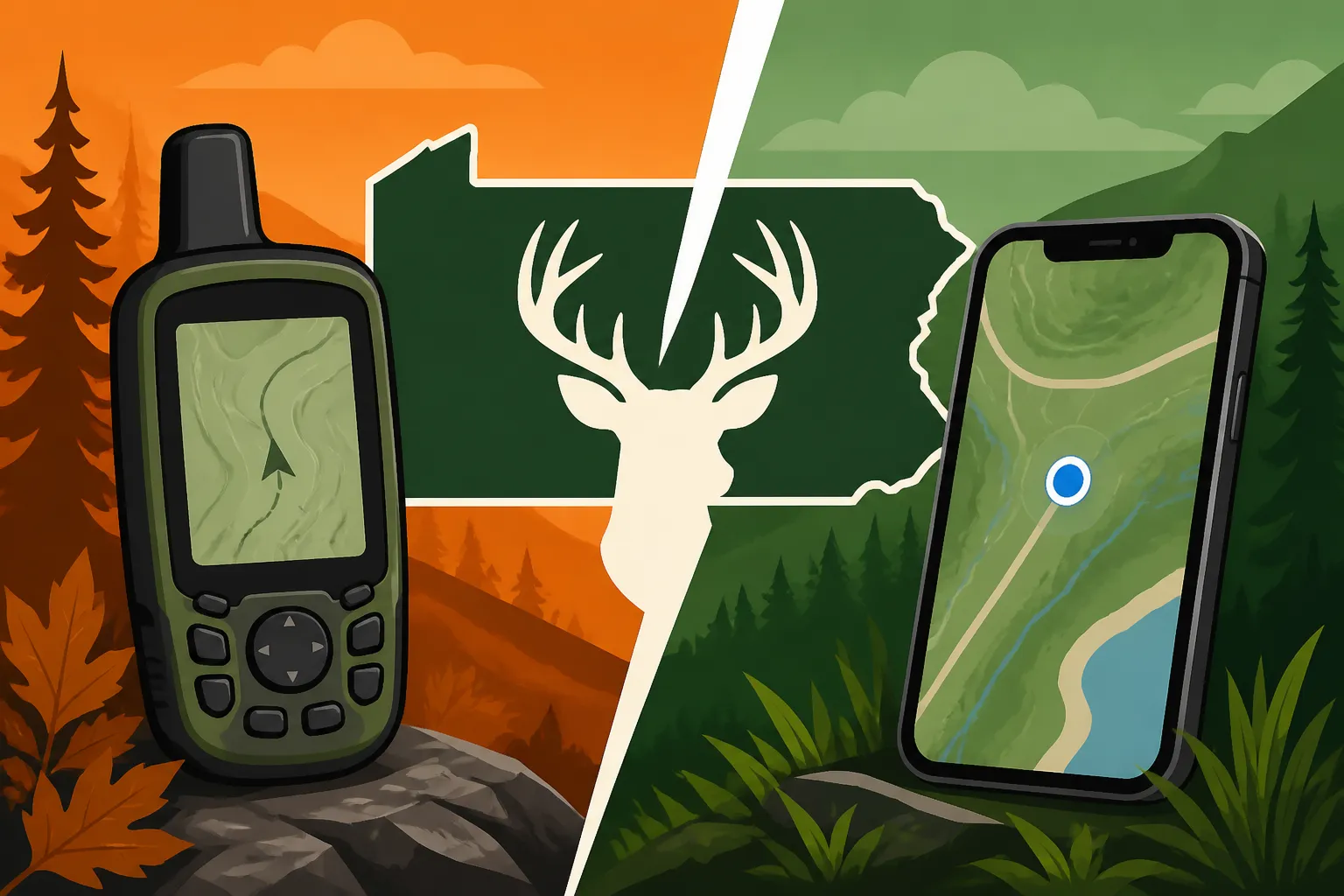
GPS Units Versus Phone Apps
Navigating the vast, wild stretches of Pennsylvania's hunting grounds can be a real challenge, whether you're trying to find your way back to camp in the dark or pinpointing that perfect oak flat you scouted weeks ago. The constant struggle of balancing reliable navigation with modern convenience often leaves hunters scratching their heads, wondering if they should stick with their trusty GPS unit or fully embrace the power of a smartphone app. This guide is here to untangle that knot, offering a deep dive into the real-world advantages and disadvantages of both dedicated GPS devices and popular hunting phone applications, helping you make the best choice for your next Pennsylvania adventure.
The Enduring Appeal of Dedicated GPS Units
For years, a dedicated GPS unit was the quintessential navigation tool for any serious hunter, and for good reason. They were built for the abuse of the outdoors, designed to perform when other electronics failed, and they had a singular purpose: getting you where you needed to go, and back again. There's a comfort in that kind of specialized reliability, especially when you're deep in the Pennsylvania's Big Woods for Deer.
Unmatched Reliability in Remote Terrain
One of the biggest arguments for sticking with a dedicated GPS unit is its sheer reliability, particularly when you venture far off the beaten path into Pennsylvania's most remote areas. These devices are purpose-built with robust antennas and chipsets designed to acquire and hold a satellite signal even under dense canopy cover or tucked into deep hollows where cell service is a distant memory. Think about hunting in the vast stretches of Tioga State Forest or the Hammersley Wild Area; your smartphone might be a brick there, but a good GPS unit will often still give you a location.
Beyond signal acquisition, battery life is another huge factor. Most dedicated GPS units run on standard AA or AAA batteries, which you can easily carry spares of in your pack. They are engineered for efficiency, often providing days, not just hours, of continuous operation. Imagine you're on a multi-day hunt, miles from your vehicle, trying to follow a faint deer trail after a fresh snow. Your phone might be dead from the cold after a few hours, but your GPS unit, with a fresh set of lithium batteries, will likely still be humming along. This independence from charging cables and fragile power banks is a significant advantage when you're truly relying on your gear to keep you safe and on track.
Specialized Features for the Serious Hunter
Dedicated GPS units aren't just reliable; they often come packed with specialized features tailored specifically for hunting and outdoor navigation. These aren't consumer-grade apps trying to do a little bit of everything; these are tools built for one job. For instance, creating and managing waypoints and track logs is often more intuitive and physically robust on a GPS unit. You can mark your treestand location, a rub line, a water source, or even the spot where you found fresh bear scat with just a few button presses, even with gloved hands on a cold morning.
Many units also offer the ability to load highly detailed topographic maps or custom land ownership overlays directly onto the device, providing critical information even without an internet connection. This can be crucial when you're trying to distinguish between public Pennsylvania State Game Lands and private parcels, especially in checkerboard areas. The physical buttons on a dedicated GPS unit are also a blessing when your fingers are cold, wet, or when you're wearing bulky gloves – something that can turn a touchscreen smartphone into a frustrating puzzle. These devices are built to withstand drops, splashes, and the general abuse that comes with spending days afield, often boasting IPX ratings for water and dust resistance that most smartphones can only dream of matching without a heavy-duty case.
The Rise of Hunting Phone Apps
In recent years, hunting phone applications have exploded in popularity, transforming how many hunters approach scouting, navigation, and even communicating in the field. With advanced smartphone technology and constant development, these apps offer a compelling alternative, or at least a powerful complement, to traditional GPS units.
Convenience and Constant Evolution
The most immediate advantage of a hunting phone app is the sheer convenience of having it on a device you already carry everywhere. Your smartphone is almost always with you, making it an incredibly accessible navigation tool. This means less gear to remember, less to charge, and one less item hanging around your neck. The learning curve is often shorter too, as most people are already adept at using their smartphone's touchscreen interface.
Beyond convenience, hunting apps are constantly evolving. Developers regularly roll out updates that include new features, improved map data, and bug fixes, often based on user feedback. This means your navigation tool is always getting better without you needing to buy new hardware. Many apps, like those developed by GoHunt, integrate real-time weather overlays, moon phase data, and even sunrise/sunset times directly onto your map screen, which can be invaluable for planning your approach or understanding animal movement. Sharing locations, waypoints, and even entire track logs with hunting partners is also incredibly easy, fostering better communication and coordination, especially when organizing a deer drive with Deer Drives With Three or Four Hunters.
Mapping Power and Data Integration
Hunting phone apps truly shine when it comes to their comprehensive mapping capabilities and the wealth of integrated data they can provide. These apps often leverage high-resolution satellite imagery, detailed topographic maps, and crucial public/private land ownership overlays that are regularly updated. Imagine sitting at home, planning your next hunt, and being able to virtually scout an area like Reading Aerial Photos for Big Woods Deer with incredible detail, identifying pinch points, bedding areas, and potential travel corridors long before you set foot in the woods.
Many premium hunting apps, including offerings from GoHunt, also provide additional layers of information that can be game-changers. This might include timber cut data, soil maps, or even historical weather patterns. The ability to switch between these layers with a tap of your finger allows for a dynamic and informed scouting experience. While a dedicated GPS can store map data, the visual presentation and the sheer volume of integrated, constantly updated information available through a phone app often surpass what older GPS units can offer. This makes them powerful tools for both pre-season planning and in-the-field adjustments.
Key Considerations for Pennsylvania Hunters
Choosing between a GPS unit and a phone app, or deciding to use both, requires careful thought, especially when you consider the unique challenges of hunting in Pennsylvania's diverse landscapes. From the rugged mountains to the sprawling farm fields, your navigation tools need to be up to the task.
Battery Life and Power Management
This is arguably the most critical factor when comparing the two. A dedicated GPS unit's superior battery life often means it can last a full weekend or even longer on a single set of batteries, especially if you manage power settings. Carrying a few spare AA batteries takes up minimal space and adds little weight. For your smartphone, however, battery life is often measured in hours, not days, especially when actively using a GPS app, dimming the screen, or in Cold Weather Sitting Strategy. Cold weather is a particularly brutal killer of smartphone batteries, draining them at an accelerated rate.
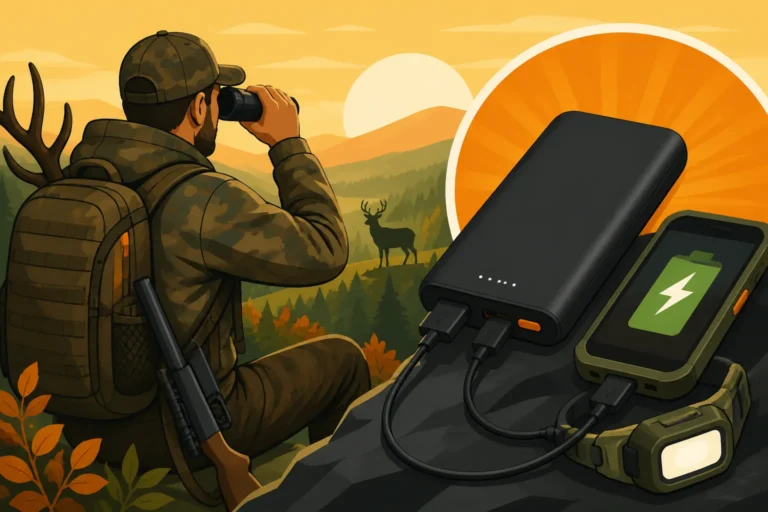
To combat this, you'll need a robust power management strategy for your phone. This usually involves carrying a high-capacity portable power bank, keeping your phone in airplane mode to conserve battery, and potentially even turning it off completely when not actively navigating. While power banks are effective, they add bulk and weight, and they too are susceptible to cold. For a multi-day backcountry hunt where resupply isn't an option, the proven longevity of a dedicated GPS unit is hard to beat. Always make sure your phone is fully charged before heading out, and consider an external battery pack as essential gear.
Map Accuracy and Offline Capabilities
Both types of devices can offer excellent map accuracy, but how they deliver it and how reliable it is without cell service varies. Dedicated GPS units typically come with pre-loaded topographic maps, and you can often purchase more detailed regional maps to install. These maps are stored directly on the device, meaning they work perfectly fine regardless of cell signal.
Hunting phone apps, on the other hand, rely on downloading map data. For true reliability in Pennsylvania's many cell-service-free zones, you must remember to download all necessary map layers and satellite imagery for your hunting area before you leave home. Many apps, like those from GoHunt, make this process relatively straightforward, allowing you to select large areas for offline use. However, if you forget, or if you stray outside your downloaded area, you could find yourself with a blank screen when you need navigation the most. Always double-check your downloaded maps, especially if you're exploring new ground or planning a hunt in deep wilderness areas like Hunting the Pennsylvania Wilds or parts of Allegheny National Forest Hunting. Make sure the map layers you need, like property boundaries and topo lines, are included in your offline downloads.
Durability and User Interface
Hunting is rough on gear. It involves exposure to rain, snow, mud, and inevitable bumps and drops. Dedicated GPS units are built like tanks. They're often waterproof, dustproof, and designed to withstand significant impact. Their screens are typically bright enough to read in direct sunlight, and physical buttons mean you can operate them easily with gloves on or with wet hands.
Smartphones, by contrast, are generally much more delicate. While a good protective case can go a long way, they are still susceptible to screen cracks, water damage, and performance issues in extreme temperatures. Using a touchscreen with gloves can be a real pain, and glare on a sunny day can make your map unreadable. If you're hunting in challenging conditions, especially when Clothing for a Pennsylvania December is essential or you're dragging a deer through thickets, the ruggedness of a dedicated GPS unit provides peace of mind. Consider how you'll handle your phone in these situations, and invest in a truly robust, waterproof case if you plan to rely on it as your primary navigation tool.
Making Your Decision: Which Tool Is Right for You?
Ultimately, the choice between a dedicated GPS unit and a hunting phone app isn't a one-size-fits-all answer. It comes down to your personal hunting style, the type of terrain you frequent, and your budget. Many hunters find that a combination of both provides the most robust and versatile solution.
Budget and Investment
The financial aspect can be a significant factor. A quality dedicated GPS unit represents a substantial upfront investment. While there are often no ongoing subscription fees for basic functionality, detailed map cards can add to the cost. However, once you own it, it's generally a one-time purchase that will last for many years.
Hunting phone apps, conversely, often have a lower barrier to entry, with many offering free basic versions. However, to unlock the most valuable features, like private land boundaries, high-resolution satellite imagery, and advanced scouting tools, you'll typically need to pay an annual subscription. Over time, these subscriptions can add up, potentially surpassing the initial cost of a mid-range GPS unit. Weigh the long-term cost of annual subscriptions against the upfront investment of a GPS unit when making your decision.
Your Hunting Style and Terrain
Consider where and how you typically hunt in Pennsylvania. If you primarily stick to well-known areas, have good cell service, and don't venture far from established trails, a phone app might be perfectly adequate. Its convenience and rich mapping features make it great for quick scouting and marking a few spots. Scouting With the Pennsylvania Mapping Center from home on a large screen is also much more pleasant with an app.
However, if your passion lies in venturing deep into remote wilderness areas, covering miles of rugged terrain like you would when tackling Boots and Packs for Steep Country, or hunting during harsh weather conditions, the reliability and durability of a dedicated GPS unit might be indispensable. If your hunts often involve Still-Hunting Pennsylvania Big Woods or exploring vast, trackless areas for days, the peace of mind a GPS provides is invaluable. Also, think about specific game. For Pennsylvania Black Bear Hunting in dense cover, precise navigation to retrieve a harvested animal is crucial.
The Hybrid Approach
For many experienced Pennsylvania hunters, the best solution isn't an either/or but a combination of both. Think of it as redundancy, a crucial element in any outdoor safety plan. Your smartphone, with its powerful app, can serve as your primary scouting and navigation tool for pre-season planning and in areas with reliable cell service. You can use it to pinpoint potential Where Big Woods Bucks Bed or Scrape Lines Along a Logging Road.
However, for those moments when your phone battery dies, or you lose signal deep in a remote drainage, a dedicated GPS unit acts as your bomb-proof backup. Keep it turned off and tucked away in your pack, ready to be deployed if your primary device fails. This hybrid approach gives you the best of both worlds: the advanced features and convenience of modern apps, combined with the unparalleled reliability of a dedicated outdoor GPS unit. It’s an investment in both efficiency and safety, ensuring you always know where you are, no matter what the unpredictable Pennsylvania wilderness throws your way. Remember, when it comes to navigation, having a backup plan is always a good idea, especially when you're counting on it to navigate you out of the woods after dark.
Disclaimer
This article is for general informational purposes only and does not constitute professional advice. Laws, prices and regulations vary by location and change over time. Consult a qualified professional for guidance on your specific situation.