Southeast Pennsylvania Game Lands
It's easy to feel like public hunting land is a mirage in the southeastern corner of Pennsylvania. With development seemingly everywhere and "No Trespassing" signs plastered on almost every mature woodlot, many hunters in counties like Berks, Chester, Lancaster, or York lament that there's simply nowhere left for them to go. But I'm here to tell you that's not entirely true! While different from the vast tracts of the "Big Woods," Southeast Pennsylvania is home to numerous State Game Lands that offer fantastic hunting opportunities if you know how to approach them. This guide will help you navigate the unique challenges and discover the hidden potential of hunting these often-overlooked public areas.
The Unique Challenges of Hunting in Southeast Pennsylvania
Hunting in Southeast Pennsylvania is a world apart from the deep forests of the northern tier or the mountains of the central part of the state. It comes with its own set of hurdles that can make even the most seasoned hunter scratch their head. But understanding these challenges is the first step toward overcoming them and finding success.
The Perception of "No Public Land"
One of the biggest frustrations I hear from hunters in this region is the feeling that there's just no public land left. It's an understandable sentiment. Drive through many of these counties, and you'll see sprawling subdivisions, busy highways, and agricultural fields stretching for miles, often bordered by private woodlots that are either posted or too small to offer meaningful hunting opportunities. This visual landscape can be incredibly discouraging, leading many to believe that public hunting is solely the domain of those who can travel hours north or west.
However, this perception often masks a reality: while not as vast as, say, Sproul State Forest, the Pennsylvania Game Commission has done a remarkable job acquiring and managing numerous smaller tracts of State Game Lands throughout the southeast. These properties might not jump out at you on a casual drive, but they are there, offering pockets of wildlife habitat amidst the human footprint. The key is knowing how to find them, and more importantly, how to think differently about hunting them. You won't find endless miles of unbroken timber here, but you will find productive edges, dense cover, and often overlooked sanctuaries that can hold surprising numbers of deer, turkeys, and small game.
Balancing Urban Sprawl with Wildlife Habitat
The rapid pace of development in Southeast Pennsylvania creates a complex checkerboard of urban, suburban, and rural landscapes. This fragmentation presents a unique challenge for both wildlife and hunters. Habitats are often smaller, more isolated, and directly adjacent to human activity. This means a deer might bed down in a thicket on a State Game Land, only to move into someone's backyard garden for a meal just a few hundred yards away. For hunters, this translates to smaller hunting areas, increased awareness of safety zones around dwellings and buildings, and the need to be incredibly respectful of neighboring private landowners.
The wildlife, particularly deer, often become highly accustomed to human presence. They learn to move at different times, use thicker cover, and exploit the bounty of suburban plantings. This isn't necessarily a bad thing for a hunter who understands these patterns. It just means your strategies need to adapt. You might not find the same wild, unpressured deer of the Pennsylvania Big Woods for Deer, but you'll encounter animals that are masters of evasion in a landscape they know intimately. Patience, observation, and meticulous scouting become even more critical in these environments where the line between wild and developed is often a mere property boundary.
Higher Hunter Density and Pressure
Let's be realistic: Southeast Pennsylvania is one of the most populated regions in the state. Naturally, with more people comes more hunters, and that translates to higher hunter density on public lands. Especially on opening day of archery or firearms season, or during prime rut activity, you might pull into a Game Lands parking lot only to find a dozen other vehicles already there. This can be deflating, making you feel like you're just another hunter in a crowded woodlot.
This higher pressure means deer on these Game Lands are often warier and more nocturnal, particularly after the first few days of a season. They quickly learn to avoid obvious travel corridors and gravitate towards the thickest, most impenetrable cover available. However, this also creates opportunities. Many hunters will stick to the easiest-to-access areas, or they'll move on if they don't see immediate results. This opens the door for those willing to put in the extra effort to scout deeper, walk further, or hunt during less popular times. Don't let a full parking lot discourage you entirely; it just means you need to be smarter and more persistent in your approach. Hunting Pressure on Pennsylvania Game Lands is a real concern, but it's not insurmountable.
Understanding Southeast Pennsylvania's Game Lands
So, what exactly are these Southeast Pennsylvania Game Lands like? Forget the expansive, contiguous tracts you might envision when you hear "public land." Here, it's a different game, and understanding its nuances is key to success.
The Network of Smaller, Scattered Tracts
Unlike the sprawling State Forests or the vast Allegheny National Forest Hunting grounds, State Game Lands in Southeast Pennsylvania are typically characterized by a network of smaller, often disconnected parcels. You might find a 200-acre tract here, a 50-acre piece there, and another 150-acre block a few miles down the road. These properties are frequently interspersed with private farmland, residential areas, or commercial development. This fragmented nature is a direct result of historical land acquisition patterns and the ongoing urbanization of the region.
This means your hunting strategy needs to be adaptable. You might not be able to spend an entire day traversing a single massive piece of ground. Instead, you might focus on a specific corner of one tract in the morning, then move to a different, smaller parcel in the afternoon that offers different habitat or pressure dynamics. The benefit of this scattered layout is that many of these smaller pieces can be overlooked, or they might serve as important travel corridors or bedding areas between larger private land holdings. They are often vital links in the chain of local wildlife movement. You'll need to use tools like the Pennsylvania Mapping Center or third-party apps like onX Hunt to clearly identify property boundaries and access points for these smaller, sometimes hidden, Game Lands.
Species Found on Southeast SGLs
While deer are undoubtedly the main attraction for many hunters, Southeast Pennsylvania Game Lands offer a surprising diversity of game species.
-
White-tailed Deer: Without a doubt, deer are the most prevalent big game animal. These deer are often larger-bodied than their big woods counterparts due to the richer agricultural food sources nearby. They are also incredibly adept at navigating human-influenced landscapes, using thickets, stream bottoms, and suburban fringes as cover. While not typically known for massive racks like some Western PA counties, these deer can certainly grow respectable antlers, especially if they reach maturity. Understanding Pennsylvania Deer Seasons and WMU Rules is crucial, as antler restrictions can vary.
-
Wild Turkeys: You might be surprised, but many of these smaller Game Lands hold healthy populations of wild turkeys. They thrive in the mix of mature timber, open fields, and dense undergrowth that characterizes many southeastern properties. You might hear gobblers booming on a spring morning or encounter flocks scratching in the fall. Spring Gobbler Hunting in Pennsylvania can be incredibly rewarding in these areas.
-
Small Game: For those who enjoy a brisk walk with a shotgun, the opportunities for small game can be excellent. Cottontail rabbits are abundant in briar patches and thick hedgerows. Gray squirrels are plentiful in oak and hickory stands. Even ring-necked pheasants can be found, especially on Game Lands where the Pennsylvania Game Commission conducts stocking efforts. Small Game Hunting in Pennsylvania offers a great way to explore these properties outside of deer season.
-
Black Bear: While less common than in central or northern PA, black bears are expanding their range, and sightings are becoming more frequent in some southeastern counties. Don't be surprised if you stumble upon bear sign, especially in areas with dense cover and good mast crops. While not typically the primary target here, it's something to be aware of, especially if you're in a WMU open to bear hunting.
General Rules and Regulations Specific to Southeast SGLs
Hunting on any State Game Land in Pennsylvania comes with a standard set of rules, but the density of development in the southeast makes some of these regulations even more critical to understand and follow meticulously.
-
Hunter Orange: Pennsylvania has specific Pennsylvania Hunter Orange Rules that apply across the state, but in areas with high hunter density and proximity to development, ensuring you meet or exceed these requirements is paramount for safety. During designated firearms seasons, this usually means 250 square inches of fluorescent orange visible 360 degrees.
-
Safety Zones: This is perhaps the most important rule to master in Southeast Pennsylvania. A safety zone is a 150-yard radius around any occupied dwelling, building, or camp, and hunting is prohibited within this zone. In a fragmented landscape where Game Lands butt up against private residences, you must be acutely aware of where these zones are. Trespassing, or even shooting into a safety zone from legal ground, can lead to serious legal trouble and give hunters a bad name. This is where tools like onX Hunt really shine, as they can overlay safety zones on the map, helping you visualize these critical boundaries.
-
Parking and Access: Parking is generally restricted to designated Game Lands parking lots. Do not block gates or park in areas that obstruct roads, even if it seems like a convenient spot. Always respect private property when accessing Game Lands; many smaller tracts may have limited, sometimes unofficial, access points. Always seek permission if you need to cross private land to reach a public parcel, even if it's just a few feet.
-
Treestand Rules: When hanging a stand on public ground, always be familiar with the Game Commission's regulations. Generally, stands must be portable, removed within a specific timeframe, and cannot damage trees. For more details, check out Treestand Setups in Pennsylvania Hardwoods. These rules are especially enforced on highly visible Game Lands in populated areas.
| Feature / Aspect | Southeast Pennsylvania Game Lands | Big Woods Pennsylvania Game Lands |
|---|---|---|
| Typical Size | Small, fragmented parcels (50-500 acres) | Large, contiguous tracts (thousands of acres) |
| Habitat Type | Mix of agriculture, woodlots, thickets, stream bottoms, suburban fringes | Expansive mature timber, deep hollows, mountainous terrain, clearcuts |
| Hunter Density | Generally higher, especially near population centers | Lower, but concentrated in easily accessible areas |
| Deer Body Size | Often larger due to agricultural food sources | Generally smaller, but can have larger antlers if mature |
| Deer Pressure | Highly pressured, more nocturnal, used to human presence | Can be pressured, but more opportunities for unpressured deer |
| Key Challenge | Navigating safety zones, private land boundaries, crowds | Covering vast ground, rugged terrain, finding deer in low densities |
| Best Tools | Detailed mapping apps (onX Hunt, GoHunt), local scouting | Topographic maps, compass, long-range optics |
| Primary Access | Designated small lots, often near roads/development | Forest roads, sometimes walk-in only, remote trailheads |
Strategies for Locating and Scouting Southeast Game Lands
Finding and effectively scouting these fragmented public lands requires a bit more intentionality than simply driving up a mountain road. It's about being strategic and utilizing all the tools at your disposal.
Leveraging Digital Mapping Tools
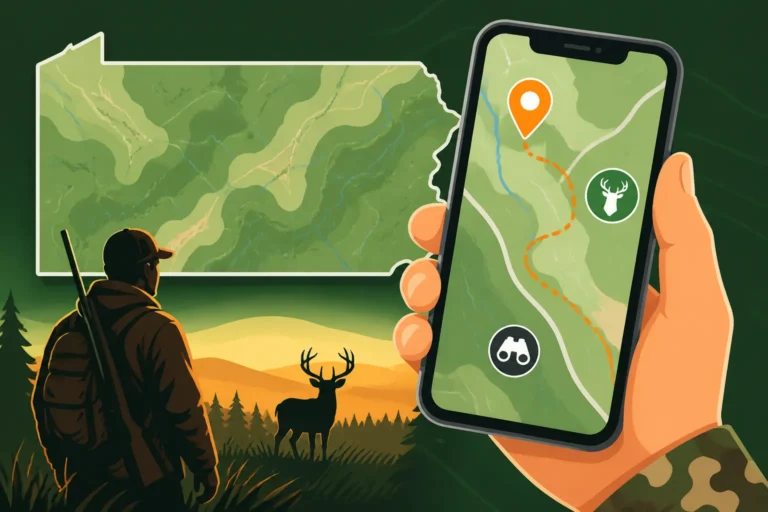
In the past, finding these smaller Game Lands meant poring over paper maps, cross-referencing county plat books, and a lot of trial and error driving. Thankfully, modern digital mapping applications have revolutionized this process. onX Hunt and GoHunt are invaluable resources for hunters in Southeast Pennsylvania, allowing you to quickly identify public land boundaries and analyze the landscape from the comfort of your home.
Here's how they help: You can literally zoom into your home county, turn on the public/private land ownership layer, and immediately see every State Game Land tract, often color-coded for clarity. These apps display boundary lines with incredible precision, which is absolutely crucial when Game Lands are bordered by small private parcels. You can identify potential access points, pinpoint parking areas, and, most importantly, visualize those critical safety zones around occupied dwellings. Finding Pennsylvania Property Lines becomes so much easier with these tools. Use them to identify:
- Hidden Corners: Look for areas of Game Land that are tucked away, perhaps requiring a longer walk or a less obvious access route. These are often where other hunters don't venture.
- Connecting Corridors: Sometimes, a small Game Land strip acts as a vital bridge between larger private woodlots or agricultural fields. These can be prime travel routes for deer.
- Habitat Diversity: Evaluate the aerial imagery to spot transitions between thick cover, mature timber, and open fields within or adjacent to the Game Lands. These "edges" are often hotspots for game.
Don't just use these apps to find the land; use them to study it. Mark potential stand locations, note areas of thick cover, and plan your entry and exit routes, always considering wind direction.
On-the-Ground Reconnaissance: Finding the "Hidden Gems"
While digital maps are an incredible starting point, there's no substitute for getting boots on the ground. This "on-the-ground reconnaissance" is where you truly find the "hidden gems" that maps alone can't reveal. I can't tell you how many times I've looked at a Game Land on a map and thought I had it figured out, only to find something completely different once I started walking it.
- Walk the Boundaries: Especially on smaller tracts, physically walking the perimeter can give you a clear understanding of where private land begins and ends, and where those safety zones lie. This prevents accidental trespassing or setting up too close to a house. Look for faded boundary markers or old paint blazes.
- Explore Deeply: Many hunters will stick to the easiest-to-access areas, often within a quarter-mile of a parking lot. Your job is to go beyond that. Push into the thickest, nastiest cover you can find – briar patches, laurel thickets, tangled swamp edges. This is often where pressured deer will bed down during daylight hours. Finding Ground Others Walk Past is a principle that applies perhaps even more strongly in these high-pressure areas.
- Look for Micro-Habitat: Pay attention to small details: a stand of persimmon trees, a hidden stream crossing, an old overgrown logging road, or a subtle change in elevation. These micro-habitats can be magnets for game. You might find a single mature oak tree dropping acorns in an otherwise barren area; that's a spot worth noting.
Scouting isn't just about finding fresh tracks; it's about understanding how the land lays, how cover transitions, and where game might feel safe. Visit these areas in the off-season, during summer, or after a fresh snow to see how animals are using the landscape without the pressure of hunting season.
Understanding Habitat and Edge Cover
In Southeast Pennsylvania, the concept of "edge cover" is king. Because of the fragmented nature of the landscape, game animals, especially deer, thrive where different habitat types meet. This could be where a woodlot transitions into a cornfield, where a thick briar patch meets mature timber, or where a stream bottom runs alongside a steep bank. These edges provide security, food, and travel corridors all in one.
- Agricultural Edges: Many Southeast Game Lands are directly adjacent to active farms. Deer will often bed down in the Game Land's timber or thickets and then move out into cornfields, soybean fields, or even alfalfa fields to feed. Setting up along these edges, especially where a travel corridor funnels deer, can be incredibly effective. Read more about Hunting Pennsylvania Farm Country Edges for specific tactics.
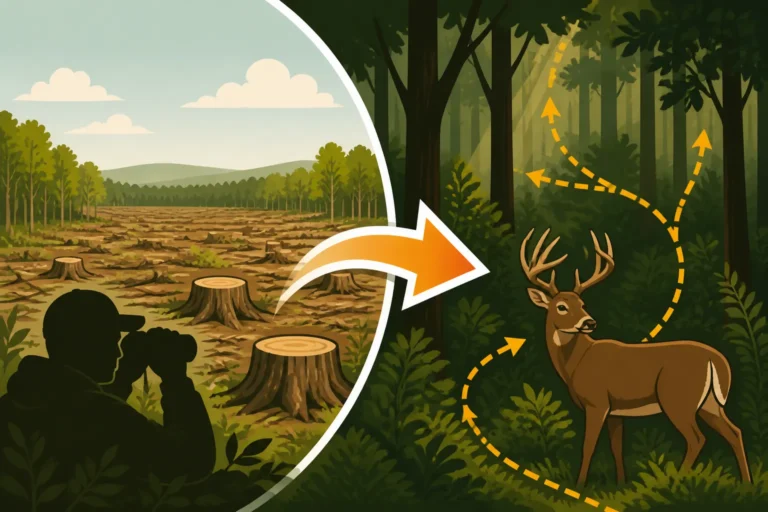
- Thick Regeneration: Look for areas that have been recently timbered or clear-cut on Game Lands. While initially looking messy, these areas quickly fill in with dense young growth, providing incredible bedding and browse for deer. Hunting the edges of these clearcuts can be very productive.
- Riparian Corridors: Stream and creek bottoms often provide excellent cover and travel routes, even through otherwise open country. The dense vegetation and natural topography along waterways offer security and can funnel game movement.
Understanding how game utilizes these edges means identifying the most likely points of travel. Look for pinch points, saddles, or benches that force deer into predictable patterns. These are the locations where you'll want to focus your hunting efforts.
Effective Hunting Tactics for Southeast SGLs
Now that you've found and scouted your Game Lands, how do you actually hunt them effectively? It's about adapting your approach to the specific characteristics of these smaller, often pressured public areas.
Still-Hunting and Stand Placement in Fragmented Cover
The broken nature of Game Lands in Southeast Pennsylvania lends itself well to two primary tactics: strategic stand placement and careful still-hunting.
- Stand Placement: Given the smaller size of many Game Lands, stand placement becomes critical. You're often dealing with limited visibility and shorter shooting lanes, so focus on high-traffic areas. Look for natural funnels, pinch points between thickets and open areas, or subtle terrain features that force deer movement. A stand placed overlooking a scrape line along a logging road or a rub line cutting through a small woodlot can be gold. Remember to always use a safety harness, and ensure your stand is legal for public land. Consider the wind and thermals, which can be tricky near agricultural fields or suburban areas. Your goal is to intercept deer moving from bedding to feeding areas, often at dawn and dusk.
- Still-Hunting: This is a fantastic method for covering ground on these smaller tracts, especially if you're not seeing much from a stationary stand. Still-Hunting Pennsylvania Big Woods provides a great foundation, but adapt it for smaller areas. Move slowly, deliberately, taking a few steps then pausing for several minutes to scan for movement. Use the terrain and cover to your advantage, slipping through thickets and along natural contours. The key is to be incredibly patient and observant. Look for small movements, an ear flick, or the horizontal line of a deer's back in a sea of vertical trees. This method allows you to actively seek out deer that might be bedded in dense cover or moving through less obvious travel routes.
Utilizing Safety Zones and Private Land Edges
Here's a tactic that requires extreme caution and meticulous planning, but can be incredibly effective: understanding how safety zones and private land edges influence deer movement. Deer learn very quickly where they are safe from hunting pressure. Often, this means they will bed or stage just inside a safety zone on private property, or along the very edge of a State Game Land property line, knowing that hunters typically won't pursue them there.
This creates a unique opportunity for ethical hunters. You can't hunt in the safety zone, and you certainly can't trespass on private land. However, you can set up your stand legally on the Game Land side of the property line, outside the safety zone, and intercept deer as they move out of that sanctuary area onto public land, or as they travel along the boundary. These edges often become high-traffic highways for deer moving between feeding, bedding, and safe zones.
Crucial considerations:
- Know Your Boundaries: Use onX Hunt or similar tools to know exactly where the property lines and safety zones are. There is zero room for error here.
- Wind Direction: Your scent will carry, and you absolutely do not want it drifting into occupied dwellings. Hunt only when the wind is blowing away from any houses or buildings.
- Shot Angles: Be acutely aware of your backdrop and potential shot trajectories. Ensure any shot taken is safe and will not carry beyond your target onto private land or into a safety zone.
- Communication (if possible): While not always feasible, sometimes knocking on a neighboring landowner's door (well before the season) to introduce yourself and let them know you'll be hunting the adjacent public land can build goodwill and prevent misunderstandings.
Small Game and Waterfowl Opportunities
While deer often steal the spotlight, Southeast Pennsylvania Game Lands offer fantastic opportunities for other species, and often with less competition.
- Small Game: Remember those thickets and briar patches? They're rabbit heaven. Grab a shotgun and a good pair of brush pants, and you can enjoy some fast-paced action. Oak and hickory ridges are perfect for squirrel hunting. Many Game Lands also have dedicated pheasant stocking programs, offering a classic upland hunting experience. Rabbit Hunting With Beagles in Pennsylvania or Squirrel Hunting Pennsylvania Hardwoods can be incredibly fun and productive ways to enjoy these properties. These hunts are also often less weather-dependent and can be a great way to introduce new hunters to the sport.
- Waterfowl: Don't overlook the potential for waterfowl. Many Southeast Game Lands are located along rivers, creeks, or near ponds and wetlands, offering jump-shooting opportunities for wood ducks and mallards, or even setting up for geese if the area has suitable habitat. Check local regulations and ensure you have the necessary migratory bird stamps. Areas like the Middle Creek Wildlife Management Area are renowned for waterfowl viewing and specific hunting seasons, though general Game Lands can also produce. Duck Hunting Pennsylvania Rivers can be a surprising pursuit in this region.
Hunting small game or waterfowl can also serve as an excellent scouting mission for deer and turkey. You'll be covering ground, observing animal movements, and getting a feel for the lay of the land without the intense focus of deer season.
Overcoming Pressure and Maximizing Success
Hunting pressured public land in Southeast Pennsylvania isn't about giving up; it's about getting creative and being more persistent than the next guy.
Hunting Mid-Week and Off-Peak Hours
This might sound obvious, but it's often the most overlooked strategy. Weekends, especially opening weekends of any season, will draw the most hunters. If you have the flexibility, try to hunt mid-week. The difference in hunter numbers can be astounding. Deer that have been bumped and made nocturnal by weekend pressure will often resume more natural patterns once the woods quiet down.
Similarly, consider hunting outside of the typical "first light and last light" windows. While these are often the most productive times, pressured deer might be moving throughout the mid-day, especially if they're relocating to new bedding areas or slipping through thick cover. A slow, methodical still-hunt during the middle of the day can sometimes surprise a deer that thinks all the hunters have gone home for lunch. Think of it this way: everyone else is doing the obvious. Your success often lies in doing the unexpected.
Finding Ground Others Walk Past
I've touched on this before, but it bears repeating: on heavily hunted public land, your greatest advantage is often your willingness to go where others won't. This means:
- Walk Further: Many hunters have a "comfort zone" of how far they're willing to walk from the truck. Push past it. Even an extra half-mile into a Game Land can put you in a completely different zone of pressure. Use your mapping app to find those deeper pockets.
- Tackle the Nasty Stuff: Briar patches, laurel thickets, steep ravines, swampy bottoms – these are the places deer go to feel safe. They might be miserable to navigate, but that's precisely why other hunters avoid them. If you're willing to put in the effort, you'll often be rewarded. Entry Routes on Steep Ground can be key to accessing these overlooked spots.
- Look for Subtle Terrain: Sometimes, it's not about big, dramatic features, but subtle changes. A small finger ridge, a barely perceptible bench on a hillside, or a hidden saddle can funnel deer traffic in ways that escape the casual observer. These are the details you pick up during dedicated scouting sessions.
Remember, every hunter has their own limits. By pushing your own physical and mental boundaries a little further, you can often find unpressured pockets of game within otherwise busy Game Lands.
Adapting to Localized Food Sources and Movements
Southeast Pennsylvania is a mosaic of different habitats, and deer here are highly opportunistic when it comes to food. Their movements will be heavily dictated by what's available, which can change rapidly throughout the season.
- Agricultural Rhythms: If Game Lands are near farms, deer will be drawn to corn, soybeans, alfalfa, and winter wheat. Pay attention to crop rotations and harvest times. A standing cornfield provides incredible cover and food; once it's cut, deer patterns will shift dramatically. Hunting a Standing Cornfield in Farm Country is a tactic worth mastering.
- Mast Crops: Don't forget the natural food sources. Oak trees dropping acorns, persimmon trees, and even crabapples or wild grapes can be deer magnets. A good mast crop can hold deer in a particular area for weeks. Conversely, if a key food source fails, deer will move on. Hunting After the Acorn Crop Fails means you need to pivot your strategy.
- Suburban Browse: While not directly on Game Lands, the pressure from nearby development means deer often browse in suburban landscapes. This influences their overall health and size, and their movement patterns may be influenced by safe routes to and from these areas. Consider what deer might be eating just off the public land and how they get there. Suburban Deer Hunting in Southeast Pennsylvania can offer insights into these dynamics.
The best way to stay on top of localized food sources is through ongoing scouting. Even a quick walk before or after a hunt to observe what's being eaten, or to identify fresh sign around different food types, can give you a significant advantage. The deer here are survivors, and understanding their motivations – primarily food and safety – will put you in the best position for success.
Disclaimer
This article is for general informational purposes only and does not constitute professional advice. Laws, prices and regulations vary by location and change over time. Consult a qualified professional for guidance on your specific situation.